
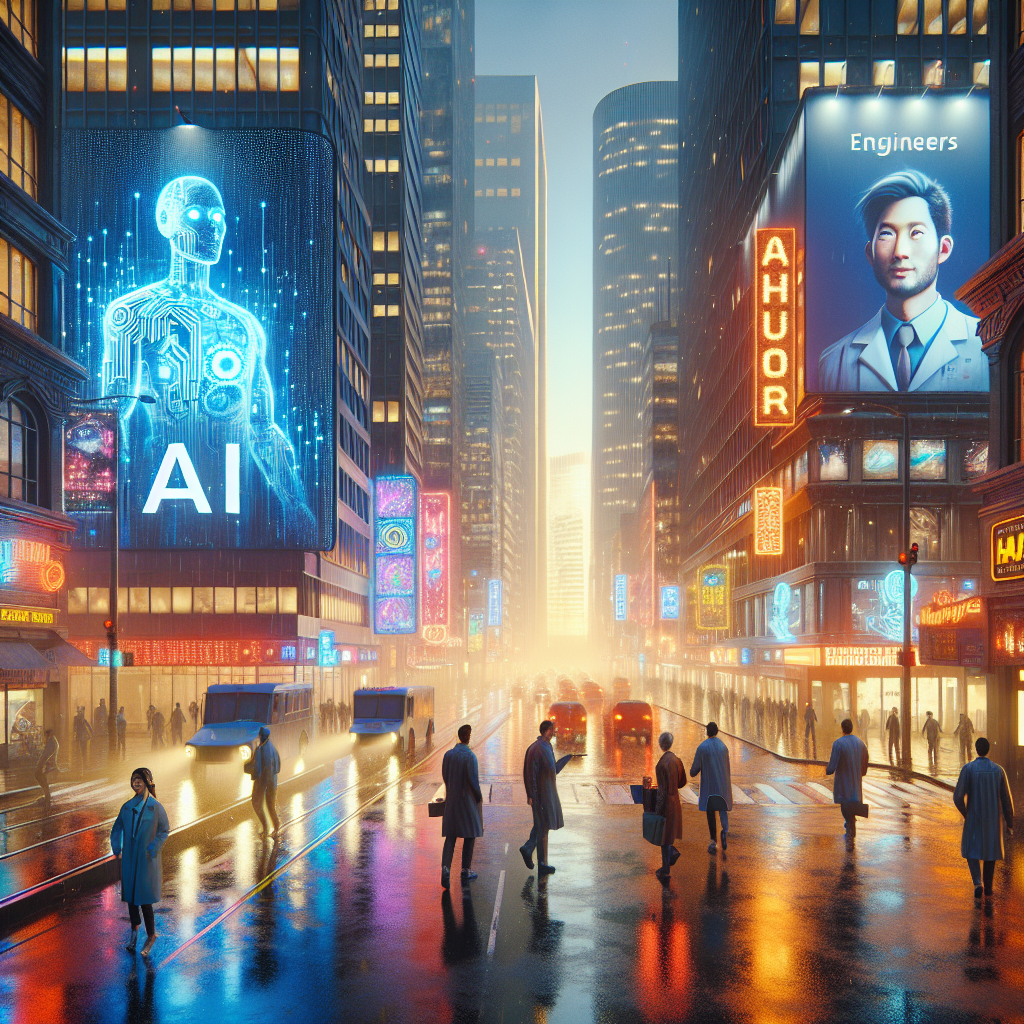
The Day the Billboards Changed: A City’s New Tech Reality
It’s spring 2025, and San Francisco’s skyline is cluttered not with hopeful startup logos but with towering digital billboards for OpenAI and Anthropic, their slick animations pulsing over Market Street like modern oracles[4]. On the ground, a startup founder—once defined by thrift-store hoodies and espresso-fueled optimism—paws through his notifications, scanning for interviews, just days after his team of 120 was cut to 12 overnight. The city, once a playground for “move fast and break things,” is now a proving ground for survival in a colder, sharper tech ecosystem.
What’s Really Going On — Why It Matters Now
San Francisco’s legendary tech scene isn’t dead—it’s been radically reborn.
The layoff tally since 2022: more than 48,500 jobs slashed in the Bay Area, with hiring shifting hard toward quality over quantity[1]. Where once a clever idea could land a seed check and a workspace, now survival means adapting to automation, artificial intelligence, and fierce competition for AI talent. Nearly 60% of tech managers are scouting for AI engineers; salaries soar as high as $185,425, trying to outpace the city’s unrelenting rent[1][2].
Tech now employs 11.6% of Bay Area workers—twice the national average—but office spaces are ghostly, vacancy rates topping 34%[1].
Meanwhile, venture capital floods leaders in AI and robotics, leaving old-school software fields to scramble for relevance[2][3].
Anatomy of the Shift: How Tech Morphs
Like a scene from a Netflix docudrama, AI isn’t just a technology, it’s the architect of this transformation.
- Startups: San Francisco attracts more than half the global AI funding, growing from scrappy beginnings to billion-dollar unicorns overnight.
- Big Players: OpenAI, Anthropic, and Inflection AI, each bringing in billions in fresh capital, stake claims that dwarf anything in the social media era[2].
- New Sectors Rise: Fintech (finance tech) and “Web3” (next-gen, decentralized internet) evolve, often powered by AI’s decision-making and analytics. Crypto has cooled, but fintech alone houses 1,500+ startups and $5B in fresh funding, as “trust” and “privacy” become the coin of the realm[2].
Through all this, AI startups occupy over 2.4 million square feet of city real estate—ten times more than just three years ago[2].
But those spaces are not bustling with YouTubers or kombucha tastings—they house engineers coding foundation models that might change how markets, medicine, and even government work.
Voices from Inside: Experts and Insiders Weigh In
“San Francisco isn’t a playground anymore,” says Elena Nguyen, a fictional analyst at BayMetrics. “It’s a research lab, a casino, and a battlefield—all rolled into one. Everyone races to master AI, quantum computing, network security. Hiring is laser-focused, remote jobs are the rule, and community is harder to come by.”
Mayor Daniel Lurie, speaking at the opening of OpenAI’s new headquarters, frames it differently: “This boom is unlike anything since the Gold Rush. We have the chance to lead in responsible innovation, but it comes with real costs to our city’s culture and daily life.”[3]
Regulators are in the mix, too: new rules for AI use, crypto transactions, and personal privacy emerge, trying to keep pace with technology’s breakneck speed[2].
The Human Cost: One Worker’s Journey
Picture Marcus, a fictional data scientist at a middling fintech startup. Last year, Marcus led a product line for small business loans, mixing data science with street-level friendliness. Today, he’s retraining as an AI prompt engineer, because his job now involves teaching large language models to think for the company’s users. Marcus’s wife asks if they should move back to Seattle—fewer robots, more room to breathe. But Marcus sees the magnetic pull of this city, its cycles of destruction and creation.
“I’m scared,” he confides. “But I also feel like I’m living the future in real time.”
Ripple Effects: Community, Industry, and Beyond
- Displaced Workers: Veteran engineers and casual designers now compete for AI-adjacent roles—they must “re-skill” or risk exit.
- Startups: Pivots are constant as funding now demands traction in automation, security, and remote work.
- Communities: Local businesses adjust. Rents wobble. Non-tech folks sense both opportunity and threat—the city is richer than ever, and lonelier, too[1][2].
Some analysts warn that “winner-take-all” dynamics—where only a few giants survive—could leave the city fragile. Others celebrate the innovation wave, betting that AI will unlock entirely new industries, just as biotech and semiconductors did before[3][4].
What’s Next / Could It Happen Again?
San Francisco thrives on reinvention. If the last era was about apps and likes, this new dawn is about algorithms, autonomy, and adaptability.
- Could traditional tech culture return? Only if AI’s grip loosens—unlikely, but possible if regulation tightens or global markets shift.
- Will the scene stabilize? Experts foresee AI’s dominance growing, but warn that another disruptive force—quantum computing, green tech, cyber-resilience—could reshape it again soon[1][2].
And so we leave the scene in motion:
Is San Francisco losing its soul, or has it found a new one in the age of artificial intelligence?
If you lived here, would you race to catch the tide—or run before it sweeps you away?
FAQ
What happened to San Francisco’s old tech scene?
The quirky, app-based startup culture shrank as global funding shifted to AI, robotics, and fintech in 2025. Giant layoffs, rising rents, and new demands for AI talent transformed the city and its workforce, shifting the tech scene from experimental “makers” to big AI firms and automation.
How do AI startups work in San Francisco’s tech industry?
AI startups develop algorithms and machine learning models that automate tasks, analyze big data, and even enhance healthcare and finance. They attract huge investments and hire top-tier talent, often changing how other companies operate and innovate.
Is it harder to get a tech job in San Francisco now?
Yes. Companies want specialists—especially in AI engineering, cloud computing, and data science. Cutbacks and higher skill demands mean applicants must be strategic and ready to adapt.
Are there still opportunities for small startups?
Absolutely—especially if they address automation, cybersecurity, or AI-driven services. However, the competition for funding and space is intense, requiring sharp focus and adaptability.
How is San Francisco’s tech reboot affecting life outside tech?
Local businesses face shifting demand, rents fluctuate, and non-tech workers sometimes struggle with rising living costs. Community ties are tested as remote work and automation reshape city routines.
What’s driving the change in San Francisco’s tech sector?
Major drivers include AI’s explosive growth, venture capital investments in automation, new regulations around data and crypto, and workforce reskilling to align with cutting-edge technology.
Could these tech changes affect other cities?
Yes. Trends in San Francisco often ripple out nationally and globally, especially as remote work and AI become industry standards.