
A Chilling Morning in Utah
The air was crisp on that September morning in Orem, Utah, as students and staff buzzed about Utah Valley University[1]. But in a single, shattering instant, the campus became the epicenter of a tragedy that would ripple far beyond state lines. A shot rang out during a public event—right-wing activist Charlie Kirk collapsed, struck by a bullet. Despite frantic efforts, Kirk didn’t survive[1].
By nightfall, authorities had a suspect in custody: Tyler Robinson, a name previously unknown, but soon to be forever linked with the case. But what truly shocked the nation wasn’t just the assassination—it was what investigators found next: bullet casings, some engraved with clandestine references to a popular online game, “Helldivers 2”[1].
From Gamer Culture to Capitol Hill
As news broke, so did the uncomfortable realization that the alleged shooter had left behind digital breadcrumbs. Robinson’s online history led authorities on a labyrinthine journey through the internet’s most influential social spaces: Steam, Discord, Twitch, and Reddit—platforms that have become digital town squares for millions[1].
The headlines were impossible to ignore. Many wondered: Could online platforms have played a silent role in radicalizing the shooter? Did algorithms amplify dangerous rhetoric? Were community safeguards strong enough—or were they failing when it mattered most?
The House Demands Answers
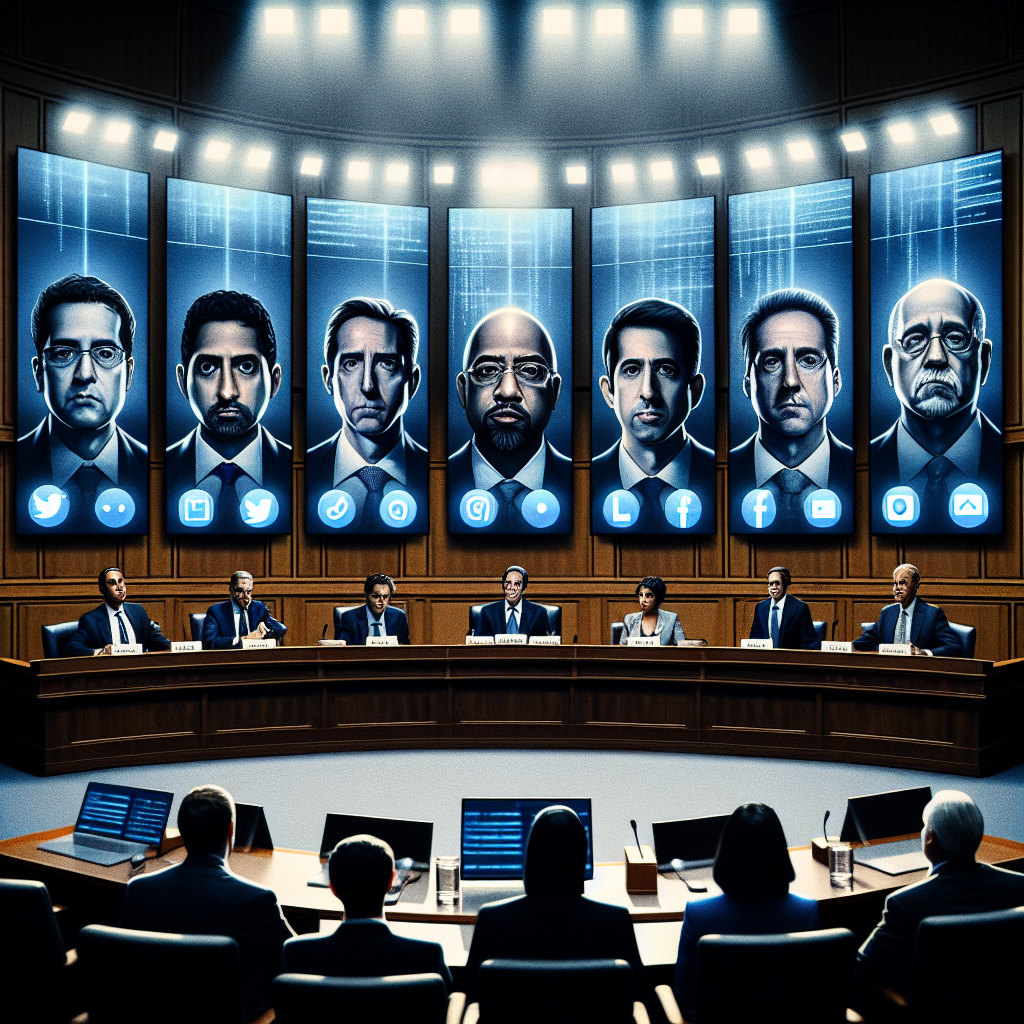
The United States House Oversight Committee wasted no time. Chair James Comer called the CEOs of those four digital giants—Gabe Newell (Valve/Steam), Humam Sakhnini (Discord), Dan Clancy (Twitch), and Steve Huffman (Reddit)—to testify in Washington[1]. Their task: to answer under oath how their platforms might have been used to spread extremism, and—crucially—what concrete measures they would implement to stop this from happening again[1].
Comer’s statement cut through the noise: “In the wake of this tragedy, and amid other acts of politically motivated violence, Congress has a duty to oversee the online platforms that radicals have used to advance political violence… The CEOs must explain what actions they will take to ensure their platforms are not exploited for nefarious purposes.”[1]
The Invisible Battle Over Digital Communities
At stake isn’t just the reputation of these companies—it’s the future of how we talk, play, share, and mobilize online. Steam, Discord, Twitch, and Reddit aren’t just tech services. They’re where rival fandoms clash, activists organize, and sometimes, dark corners ferment into echo chambers.
These platforms sit at volatile crossroads: Steam powers the world’s biggest gaming ecosystem. Discord connects millions of private chatrooms. Twitch is the home of livestreamed entertainment. And Reddit hosts a patchwork of hyperactive communities on every conceivable topic[1].
The risks? A single meme, post, or private chat thread can reach thousands in minutes—sometimes spreading joy, sometimes misinformation, sometimes hate.
The Anatomy of Rad(ical) Networks
“At its heart, the danger is scale and opacity,” explains Dr. Maya Shepherd, an analyst at the fictional Center for Digital Society. “What starts as a harmless joke in a niche Reddit thread can be weaponized—twisted, repackaged, and broadcast to millions via algorithmic feeds and viral sharing. The platforms can’t monitor every corner, and bad actors know this.”
Platform moderation relies on both automated systems—like AI scanning for threats—and human reviewers. But, as industry insiders admit, even the most sophisticated tools struggle to keep up with the ingenuity of determined extremists. Private Discord servers can become recruitment halls; seemingly innocuous Twitch streams can echo radical messages in code or joke[1].
One Family, Forever Changed
For every national headline, there’s a family like the Hendersons in suburban Salt Lake City. Their son, Ethan, loved streaming Helldivers 2 on Twitch, spending hours on Discord with friends. When news broke about the shooting and the gaming links, Ethan’s mother stared, heart pounding, at his computer screen. The line between “just a game” and real-world violence suddenly felt razor-thin.
Ethan reassured her: “Mom, it’s not the games. It’s about the people who twist things.” But trust—and the internet—felt just a bit less safe.
Industry on Edge, Reactions Across the Spectrum
The industry reacted with a predictable mix of caution and intensity. Some developers fired community managers for publicly commenting on the shooting[1]. Platform spokespeople promised renewed investments in moderation and user safety.
Lawmakers called for stronger oversight, while activists warned against blanket censorship. Digital rights groups argued for privacy protections, even as some voices demanded backdoors for law enforcement to root out potential threats.
What’s Next: Could It Happen Again?
The hearing is set for October 8, but the debate won’t end there. Platforms face a familiar challenge: how to encourage vibrant, creative communities without becoming hosts to radicalization and real-world violence. Congress wants accountability, but the tools needed—both legislative and technological—are complex and evolving.
Could another tragedy slip through the cracks, triggered or amplified by a message, meme, or live broadcast? Or will this moment force a technological and ethical reckoning that fundamentally reshapes our online lives?
What’s your verdict: Should digital platforms be held responsible for everything their users say and do—or is that a bridge too far? Let the conversation begin.
FAQ
Q1: Why are the CEOs of Steam, Discord, and Twitch called to testify before Congress?
A: They’re asked to explain how their platforms may have been used to spread extremism and what steps they will take to prevent platform abuse in the future[1].
Q2: What is the high-profile incident that triggered the hearings?
A: The assassination of political activist Charlie Kirk in Utah, with evidence suggesting the shooter referenced online gaming communities and content[1].
Q3: How do platforms like Steam or Discord monitor for abuse or radicalization?
A: They use a mix of automated algorithms and human moderators but face challenges in catching sophisticated or coded threats.
Q4: What are “most favored nation” clauses and how do they relate?
A: These are rules some platforms use to prevent better deals for games elsewhere, but they illustrate the broader scrutiny over how much control and influence these tech giants wield[3].
Q5: Could this happen again?
A: Experts say yes—unless both tech platforms and government develop more effective, collaborative safety measures.