
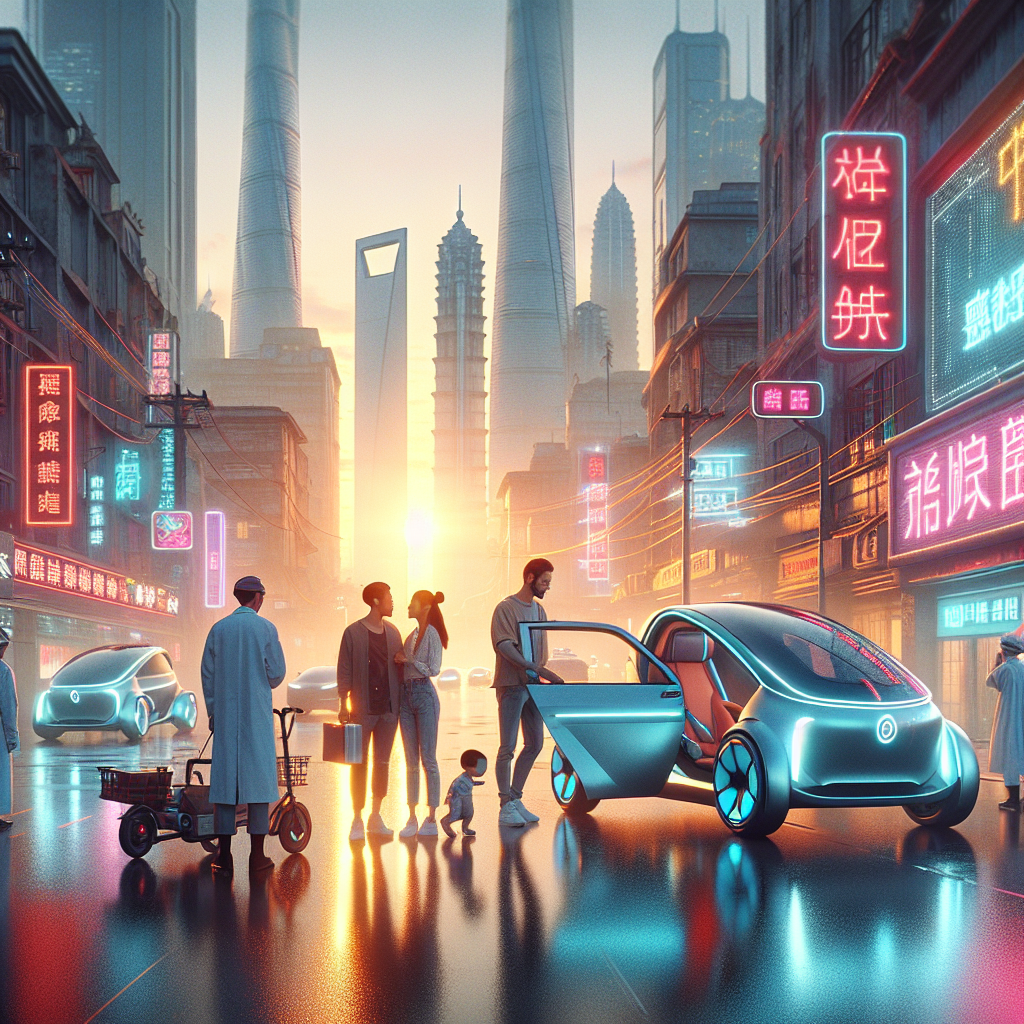
Shanghai, late summer: humidity clings to the city as dawn breaks, painting the skyline in blue neon and steel. At a docking lot lined with silent Teslas and Nios, a Rivian engineer kneels, peering beneath the frame of a sparkling new BYD sedan. Silence—then a breathless question for his American colleagues: “What are we missing?”
For years, whispers in Detroit and Berlin blamed China’s astonishingly low-priced electric vehicles on secret government tricks and cutthroat labor. But last week, Rivian CEO RJ Scaringe shattered that myth on a global stage: “There’s no magic when you take their cars apart,” he declared. “It’s technology. And it’s better.”[2][3][4]
The Myth of Cheap Labor and Subsidies
Let’s get this straight: China’s electric car boom didn’t arrive overnight on a Red Star express. For Western automakers, watching Chinese EVs conquer Europe at breakneck speed—it’s like witnessing your favorite indie band suddenly top the pop charts.
Scaringe, speaking candidly on two major podcasts this September, dismissed the idea there’s some hidden ingredient tucked in a Chinese EV’s welds. The cost advantage? Not a “miracle”—just a predictable result of subsidized development, vast economies of scale, and labor savings that Western automakers can’t easily match[1][2]. But these, he argues, are only half the story.
Look deeper, he urges, and you won’t find mystical widgets or secret alloys on those factory lines. “We’ve taken a ton of these cars apart,” he says. If there’s an edge, “it’s the compounding benefits of lower cost of capital.”[2]
Technology: The Real Disruptor
The real twist in this story isn’t price—it’s the quality and leapfrog technology packed into China’s newest electric cars. “The technology is much better,” Scaringe insisted to a rapt podcast audience[3][4].
It’s not just about batteries, either. We’re talking software that intuitively syncs with traffic lights, over-the-air updates that make vehicles smarter overnight, voice assistants that understand dialects and accents, and seamless integration between car, smart home, and city infrastructure[3]. As Scaringe warns, “If I were an existing [Western] manufacturer, I’d get less hung up on the cost and more focused on ‘the cars are actually better.’”[3][4]
China’s EV sector innovates at warp speed: manufacturers spend less time iterating on exhaust grilles and more time launching AI-infused infotainment, next-gen battery chemistries, and designs laser-tuned for urban cathedrals.
A Window Into the New Driver’s World
Let’s drop into the life of Mei Lan, a fictional Shanghai office worker. Each morning, her Nio EV greets her by name—a custom message appears on the dash, lighting up with weather and the day’s schedule synced from her phone. As she cruises to her son’s school, the car selects the least-polluted route, pings the garage to pre-cool her apartment, and queues up music for both generations.
For families like Mei’s, China’s EVs aren’t just cheaper—they’re better adapted to daily life, anticipating needs and offering comfort, security, and flexibility in one all-electric package.
The West’s Wake-Up Call
Global automakers and governments aren’t blind to these changes; they’re scrambling. China’s EV sales in the European market hit 11% by June 2024, triggering a flurry of economic alarms[1]. In response, the European Union imposed swift tariffs, with the US slapping 100% duties on Chinese electric cars—doubling down on both caution and rivalry[1][2].
But Scaringe is blunt: tariffs and trade walls may buy time but not a future. Key materials—like nickel and rare earths—still come from international suppliers, and technology transfer won’t be halted by taxes alone[1][2]. Rivian and Tesla, he argues, can keep pace technologically, but many Western rivals risk drifting further behind.
Could It Happen Here? What’s Next?
The question isn’t whether Chinese-style innovation can cross oceans—it’s what happens when it does. Scaringe warns that technology leadership is the true global currency, predicting a day when consumers everywhere judge EVs not by where they’re built, but how smart, adaptable, and delightful they’ve become[3].
Looking ahead, industry insiders hint at a new era: smart-car alliances, global standards for battery tech, and maybe—just maybe—a truce driven by climate urgency and shared ambition. For now, as the world lines up to buy the future, it’s clear: the race is about engineering, not envy.
So: If great cars can be designed anywhere, and technology knows no borders—can Western automakers afford to keep looking for “magic,” when the real secret is out in the open?
FAQ: Chinese EV Technology and Global Competition
-
Why are Chinese electric vehicles (EVs) so affordable compared to Western models?
Chinese EVs benefit from government subsidies, lower labor costs, and economies of scale—but their biggest edge is advanced technology and rapid innovation[1][2][3]. -
What technology advantages do Chinese EVs have?
Standouts include integrated smart features, AI-driven infotainment systems, seamless connectivity, and battery advancements that improve range and charging speeds[3][4]. -
How are Western governments responding?
The US and EU are enforcing tough tariffs and barriers on Chinese EV imports, aiming to protect domestic industries and win time for local innovation[1][2]. -
Are Western carmakers innovating as quickly?
Rivian and Tesla are close, but most established brands lag behind, especially in software integration and consumer-focused tech[3][4]. -
Could these Chinese EVs reshape US and European markets?
Eventually, yes—tech advantages will likely force global automakers to adapt or partner, even if tariffs delay direct competition for now[1][2][3].