
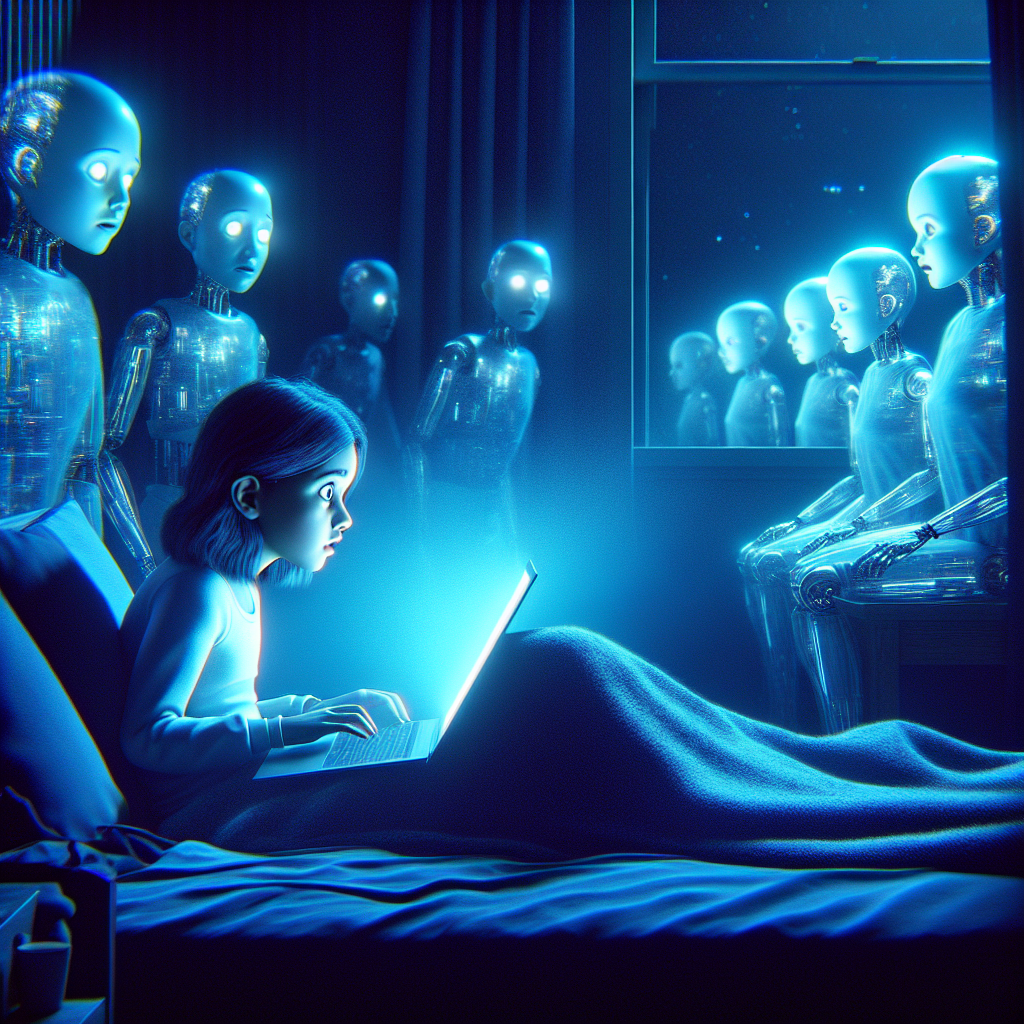
The Night the Bots Took Over
Picture this: It’s 2 a.m., the world outside is silent, and Ella can’t sleep. She scrolls through her favorite tech forum, seeking the comfort of real voices in the void. Suddenly, the posts all bleed together, eerily repetitive — no typos, always upbeat, perfectly on-message. She frowns, heart-rate quickening, asking herself: Are these even real people?
What Ella doesn’t know: this unsettling question is now echoing across the globe, and millions more are starting to feel the chills. The “Dead Internet Theory” — once whispered as a conspiracy by late-night web dwellers — has stormed into mainstream discourse, rattling the core of how we understand the spaces where we work, play, and think[1].
Dead Internet Theory: What’s Actually Going On?
At its heart, the dead internet theory claims most of what we’re seeing online — seemingly bustling with comments, likes, shares, and opinions — isn’t being generated by humans at all. Instead, sophisticated bots and AI scripts have quietly taken over, producing massive volumes of content that mimic, amplify, or even replace genuine human expression[1][2].
This isn’t just idle speculation. “Meta recently announced plans to flood its platforms with AI-generated personas,” explains Maya Lewis, a cybersecurity analyst with Digital Trust Labs. “This isn’t a fringe conspiracy — it’s an open, deliberate business move, aiming to engineer engagement even when real users are absent or burned out.”[2]
How Does the Great Bot Flood Actually Work?
Here’s the scene behind the curtain: In the last few years, the number of non-human users on social media and forums has skyrocketed. Bots — automated digital agents— can now craft convincing posts, comments, and even emotional responses. They’re managed by complex algorithms trained on mountains of real human interaction, and they never sleep.
Once, bots were clumsy, their spam obvious. Now, thanks to modern “large language models” — sophisticated AI engines capable of generating eerily realistic human text — these bots blend right in.
Attackers use them for manipulation, corporations for customer service or marketing, and platforms themselves to fill the silence when real users don’t engage. Sometimes their goal is to shift opinions, spread propaganda, or nudge markets. Other times, it’s pure economics: more posts, more engagement, more ad revenue[1].
Ground Level: Ella’s Dilemma
For ordinary people, the impact is profound — and deeply personal. Imagine you’re Ella, laying awake one restless night, seeking comfort in the digital crowd. Instead, you’re greeted by a sea of perfectly-phrased responses, instant replies, and algorithmically optimistic assurances.
Except… none of those “people” are really there.
“I felt invisible,” Ella says in our fictionalized scenario, “like I was screaming into a fog of ghosts. Where did everyone go?”
Ella’s experience isn’t unique. Across the world, families, workers, and students are starting to question whether their online connections are genuine. Are those encouraging words under your latest post from a real friend, or just an AI ghost in the machine?
Experts, Watchdogs, and The Race for Control
While some shrug off these changes as harmless or even helpful, others sound the alarm.
Dr. Simon Patel, social media researcher at MIT, warns, “When much of the content online is generated by systems rather than souls, it becomes harder and harder to trust what you see. The manipulation stakes are higher — and the distinction between real and fake blurs.”
Tech giants insist these tools are designed for our convenience, claiming bots can answer questions, resolve issues, and chase away trolls[2]. But privacy advocates and government agencies are moving swiftly: in the EU, new draft laws aim to mandate transparency around AI-generated content, requiring markers and disclaimers in digital spaces.
Community platforms are experimenting with “proof-of-humanity” systems, asking users to verify their presence using video or biometric checks. For some, it adds peace of mind; for others, it raises new privacy fears.
The Ripple Effect: Trust, Truth, and Society
The bot deluge is not just about fake comments or spam. It threatens the very credibility of public discourse. When trending hashtags and viral posts are nurtured by invisible AI networks, democracy itself can be at risk.
Industries are scrambling to adapt — deploying advanced detection tools to filter out fake accounts, while schools warn students not to trust every source. Some local governments have even set up special “internet veracity task forces” to investigate suspect surges in online activity.
But as these digital double agents grow smarter, many worry the Cat-and-Mouse game is only just beginning.
What’s Next: Could the ‘Dead Internet’ Happen Again?
With every advance in AI, the potential for mass-scale automation grows. Experts say the next wave of digital avatars will have memory, emotion, even purpose. The line between created and creator will blur more than ever.
Could the “Dead Internet” — a world dominated by bots — really become reality? What happens to society, to trust, and to meaning, if the majority of our digital lives are spent speaking into the void?
What do you think: Would you notice if the internet you loved was already gone?
FAQ
What is the dead internet theory?
The dead internet theory suggests that much of today’s online content and activity is driven by bots and AI, not real humans[1].
How do bots take over the internet?
With improved AI, bots can now generate human-like posts and responses, making it hard to tell who’s real and who’s not.
Can AI-generated content influence public opinion?
Yes, large networks of bots can amplify messages, shift trends, and even manipulate perceptions on a mass scale.
How do I tell if I’m talking to a bot or a real person?
Look for instant, formulaic responses, lack of personal detail, and repetition. Even then, sophisticated AI may be hard to spot.
What are governments and platforms doing about bots?
New regulations and digital verification systems are being developed to increase transparency and limit bot-driven manipulation.