
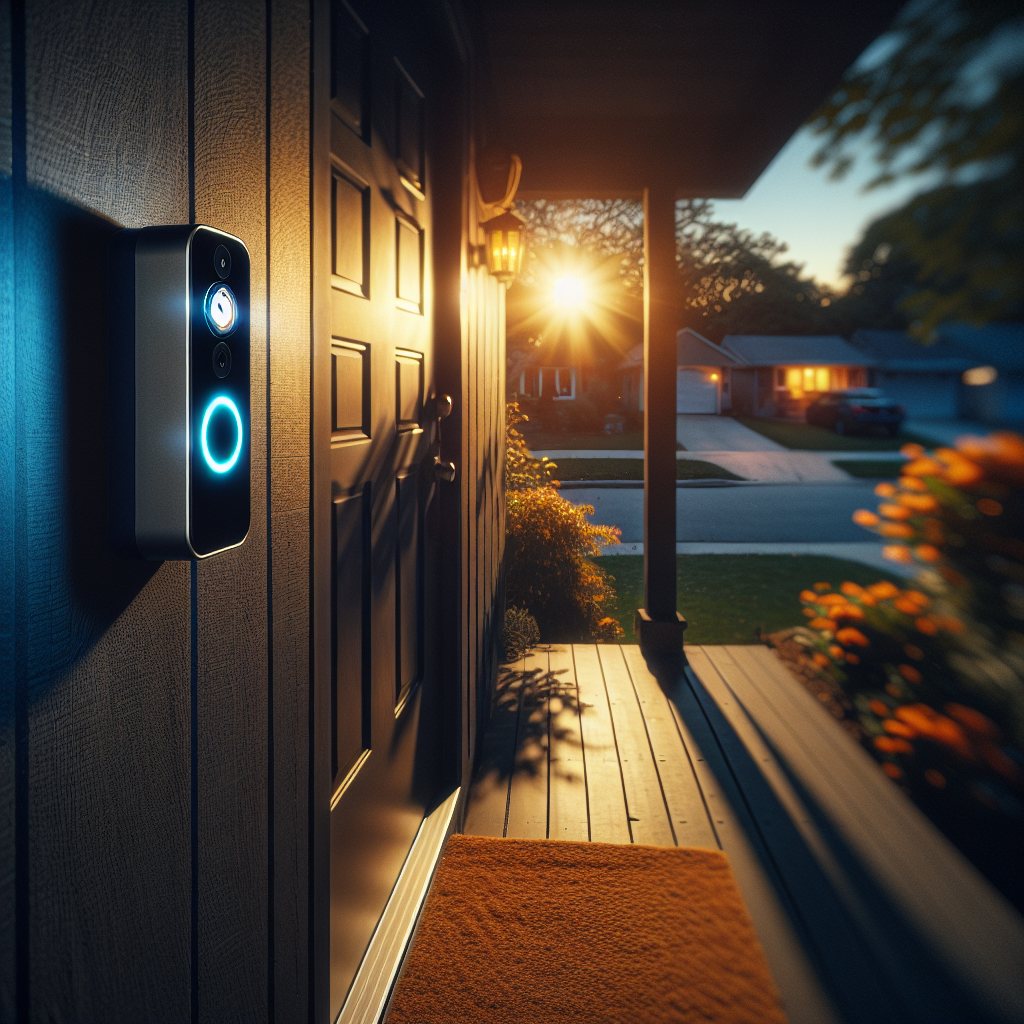
The doorbell rang at 3:47 PM on a Tuesday in suburban Phoenix. Sarah Martinez glanced at her phone—a delivery driver, waving at her Ring camera. She smiled, tapped “speak,” and told him to leave the package by the garage. What she didn’t know was that in six months, that same footage could be streamed live to local police without her explicit consent, warrant, or even notification.
This is the new reality Ring is building, and it’s happening right now.
The Surveillance Doorbell Makes Its Comeback
Jamie Siminoff is back. The founder who turned Ring into a household name before selling it to Amazon has returned to lead the company he created, and he’s brought something with him: the original surveillance-first philosophy that privacy advocates spent years fighting against[1].
Ring isn’t just reversing course on privacy protections—it’s accelerating in the opposite direction. The company is reintroducing features that allow police departments to request footage directly from users’ devices, bypassing many of the safeguards implemented after years of public outcry[1]. But the most alarming development is the introduction of live-stream access for law enforcement, a feature that transforms millions of American doorsteps into potential real-time surveillance networks.
The timing couldn’t be more significant. This announcement comes just months after May 2025, when Ring users across the nation discovered mysterious login attempts on their accounts—a mass event that Ring dismissed as a “glitch” rather than acknowledging as a security breach[2]. The incident left millions questioning whether their home security devices were actually secure at all.
How Police Access Actually Works
Understanding the mechanics reveals why this matters so deeply. Previously, if police wanted Ring footage, they needed either a warrant or the explicit, informed consent of the device owner. The process created friction—deliberate friction that protected constitutional rights.
Under the reimagined system, law enforcement can submit requests through a streamlined portal. Ring users receive notifications, but the default settings and interface design guide them toward compliance rather than refusal. For live-stream access, the barrier becomes even thinner. Police can request real-time feeds during active investigations, turning private security cameras into public surveillance infrastructure without the public oversight that traditionally governs such systems.
Siminoff has declared Ring will be rebuilt as “AI first”[1], though what artificial intelligence means for a doorbell camera remains deliberately vague. Privacy researchers fear this signals the introduction of facial recognition and behavioral analytics—technologies that could automatically flag individuals, track movement patterns, or identify people across multiple camera networks without their knowledge.
The Human Cost of Techno-Convenience
Consider Marcus Thompson, a community organizer in Atlanta. Last year, he helped coordinate peaceful demonstrations for voting rights. His route home passed seventeen houses with visible Ring doorbells. Under the new system, police could theoretically request live feeds from those devices, tracking his movements in real-time without a warrant, building a location history from the security cameras of neighbors who never consented to surveillance.
This isn’t theoretical paranoia. Police have already used Ring footage to monitor protestors and obtained recordings without warrants or user consent[1]. In a post-Dobbs America, where abortion is criminalized in multiple states, the implications become chilling. Immigration enforcement could use doorbell cameras to track undocumented individuals. Domestic violence survivors could be located through their abusers’ surveillance requests.
The Regulatory Vacuum
Despite the gravity of these developments, regulatory response has been notably absent. While data breach disclosure laws exist across all fifty states[2], no comprehensive federal framework governs how law enforcement accesses private surveillance networks. Ring operates in a legal gray zone where consumer privacy laws haven’t caught up to technological capability.
The Federal Trade Commission has previously sanctioned Ring for security failures, but these new features don’t violate existing regulations—they simply exploit the absence of protective legislation. State legislators are beginning to take notice, with proposed bills in California and New York that would require explicit opt-in consent for any law enforcement access to home security footage.
What Happens Next
Ring’s transformation represents a broader shift in how technology companies view the relationship between innovation, profit, and civil liberties. The “AI first” approach prioritizes capability over consent, efficiency over privacy, and market dominance over democratic accountability.
Whether this becomes the new normal depends entirely on public response. Ring competitors like Google Nest and Arlo are watching closely, ready to either follow Ring’s lead or capitalize on privacy-conscious consumers fleeing the platform. The next twelve months will determine whether home security evolves into neighborhood surveillance or whether consumer backlash forces a different path.
Technology should make us safer, not surveilled. The question isn’t whether Ring cameras work—it’s who they’re working for.
Is your doorbell watching you, or is someone else watching through it?
FAQ
What is Ring’s new police access feature?
Ring is reintroducing direct police access to user footage and adding live-stream capabilities, allowing law enforcement to request real-time feeds from home security cameras with reduced privacy barriers.
Can police access my Ring camera without permission?
Police still need user consent or a warrant, but the new streamlined system makes it significantly easier for law enforcement to submit requests and for users to unknowingly comply.
What happened during the May 2025 Ring incident?
Users discovered numerous unauthorized login attempts on May 28, 2025, which Ring attributed to a system glitch rather than a security breach, though questions remain about account security.
How does Ring footage surveillance affect civil liberties?
Law enforcement has previously used Ring footage to monitor protestors and track individuals without warrants, raising concerns about Fourth Amendment protections and surveillance abuse.
What does “AI first” mean for Ring cameras?
While Ring hasn’t detailed specifics, privacy experts worry this signals the introduction of facial recognition, behavioral analytics, and automated tracking systems.