
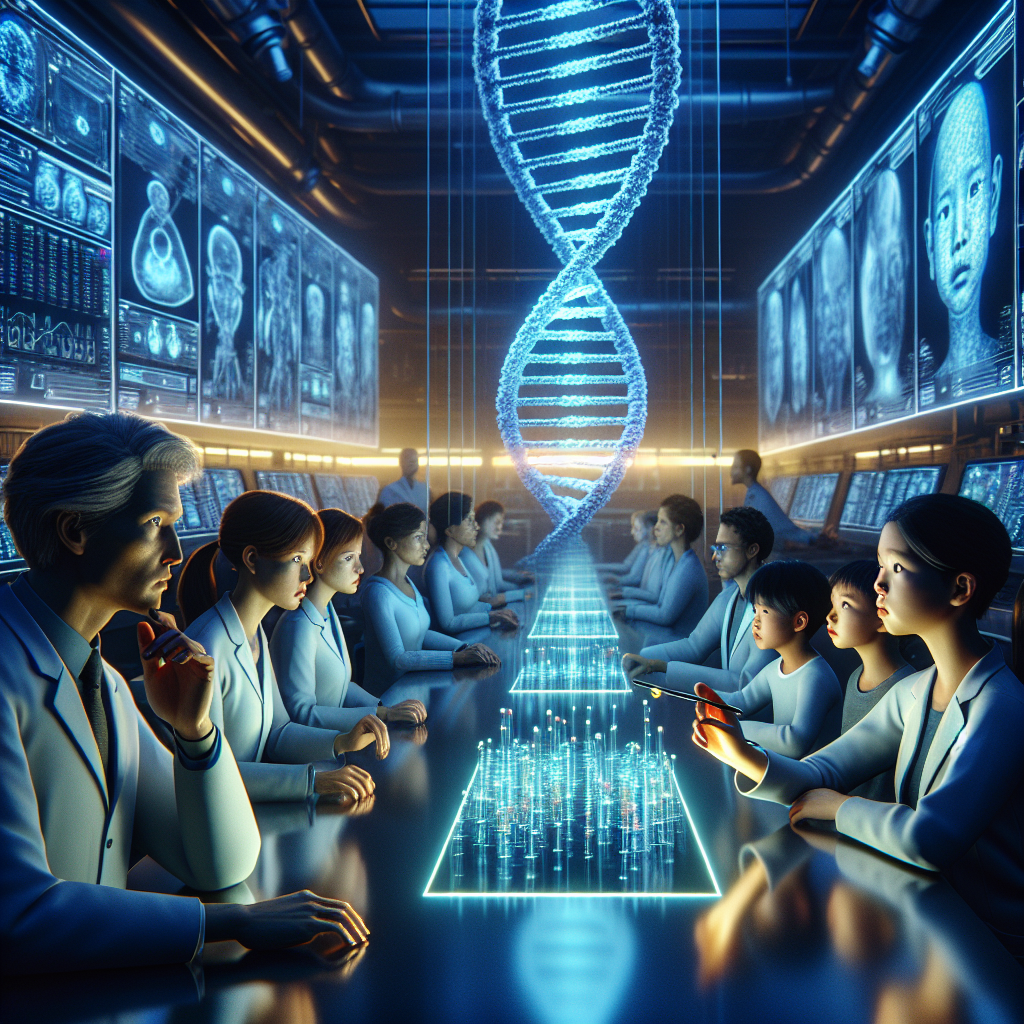
Lights out in a small Chicago apartment. A mother holds her son close as test results ping onto her phone—ushering in, for her family and for humanity, a future no one could have predicted. This is the dawn of CRISPR, a tool that claims not just to heal but to rewrite what it means to be human. In bedrooms, in biotech labs, in government offices, a single question echoes: If you could change your DNA… would you?
The Moment Everything Changed
Years ago, gene editing was the stuff of science fiction—a realm of super-soldiers and designer babies. In 2012, scientists Jennifer Doudna and Emmanuelle Charpentier took a bacterial defense trick and repurposed it into something stunning: CRISPR[2][4]. With a name that reads like an encrypted message—Clustered Regularly Interspaced Short Palindromic Repeats—CRISPR could edit DNA, the blueprint of life, with a precision never seen before.
Nothing in medicine, agriculture, or even law would remain untouched[3][4]. The question was no longer if we could change the code of life, but if we should[9].
The Power to Rewrite Ourselves
CRISPR’s mechanism is elegantly brutal. Imagine molecular scissors, programmed to snip DNA at just the right spot. A special molecule, called a guide RNA, acts like a GPS, leading the Cas9 enzyme to its exact target[2][4][9]. Once the DNA is cut, the cell’s own repair process can patch in new instructions—fixing a defective gene or erasing a dangerous mutation[2][4][5].
For Lucy Rojas, the mother in Chicago, it meant hope. Her son’s sickle cell anemia—a life sentence, once—might soon be cured with a single infusion of edited blood cells. It’s already reality for some: in 2023, the FDA approved the first CRISPR-based therapy for sickle cell disease, setting off a global wave of medical ambition[4][5][10].
Yet for every child’s reprieve, a new question emerges: Who decides what gets altered, and who pays the price?
Bigger Than Medicine: The CRISPR Effect
CRISPR didn’t stop at medicine[8][9]:
- Agriculture: Scientists grow wheat immune to drought, bananas undetectable to deadly viruses[9].
- Biodiversity: Entire species are edited—sometimes to save them, sometimes to reshape ecosystems.
- Eco-Engineering: The promise and peril of “gene drives” threaten to tip the balance of habitats forever.
In China, farmers debate the safety of CRISPR-edited crops. In the U.S., bioethics committees scramble, battlegrounds of ideology and law. Silicon Valley investors pour billions into startups, chasing the promise of a world where genetic “bugs” are debugged as easily as updating an app. One Wall Street analyst puts it bluntly: “This is the iPhone moment for biology. Only bigger.”
Human Faces, Real Risks
Meet Marcus, a fictional high schooler from Ohio living with muscular dystrophy. Today, his life revolves around doctor visits and electric wheelchairs. Tomorrow, his parents see gene-editing news and wonder: could CRISPR erase his disease before his next birthday, or introduce dangers unknown[9]?
With every breakthrough, new risks loom:
- Off-target effects: CRISPR can cut unintended DNA, sometimes with harmful results[9].
- Ethics and inequality: Will only the wealthy afford genetic fixes? Could we accidentally widen the gap between have and have-nots?
- Regulatory chaos: Around the globe, some countries ban human enhancement, while others quietly advance, creating “gray markets” for genetic alteration[4][10].
Governments are racing to keep up. The European Union drafts urgent new standards. In the U.S., the FDA launches review panels, while the Pentagon figures out how to defend soldiers and citizens from potential “designer pathogens.” As the legal and ethical lines blur, one thing is clear: nowhere on earth is immune to this debate.
What’s Next? The Unfolding Story
The speed of change is dizzying. As gene-editing clinics open in Seoul, London, and São Paulo, experts warn: “We are rewriting our heirs’ biology—a responsibility as profound as any in history.”
Could it happen again? Absolutely. This is only the first act. CRISPR is already spawning even sharper, more precise tools, like “prime editing,” now racing through labs worldwide[4].
In the end, this unfolding drama is about all of us. If you had the chance to edit your child’s future, remove a family curse, or even alter how you age—would you? If not you, who should decide?
So, r/technology—where do you draw your line in the code?
FAQ
What is CRISPR gene editing technology?
CRISPR is a groundbreaking tool that lets scientists cut and change DNA precisely, like using molecular scissors. Initially found as a bacterial defense system, it’s now used to treat diseases and edit genes in plants, animals, and people[1][4].
Who invented CRISPR?
Dr. Jennifer Doudna and Dr. Emmanuelle Charpentier adapted CRISPR for genome editing, earning a Nobel Prize for their discovery[2][4].
How does CRISPR work in medicine?
It can target and fix faulty genes. For example, it’s being used to cure genetic diseases such as sickle cell anemia and other rare conditions[4][5].
Is gene editing with CRISPR safe?
While promising, there are risks—including unintended changes to DNA (off-target effects) and unknown long-term consequences. Clinical testing and monitoring are ongoing[9].
How are governments regulating CRISPR?
Regulation varies. Some countries lead with strict oversight, while others have fewer rules or outright bans, especially for human gene editing[4][10].
Could CRISPR technology be misused?
Yes. Concerns include designer babies, biohacking, and weaponizing genes. This fuels urgent debates on law, ethics, and access[4][9].
What does the future hold for CRISPR?
New innovations like prime editing and “gene drives” are expanding possibilities and risks. The gene editing revolution is just starting[4].