
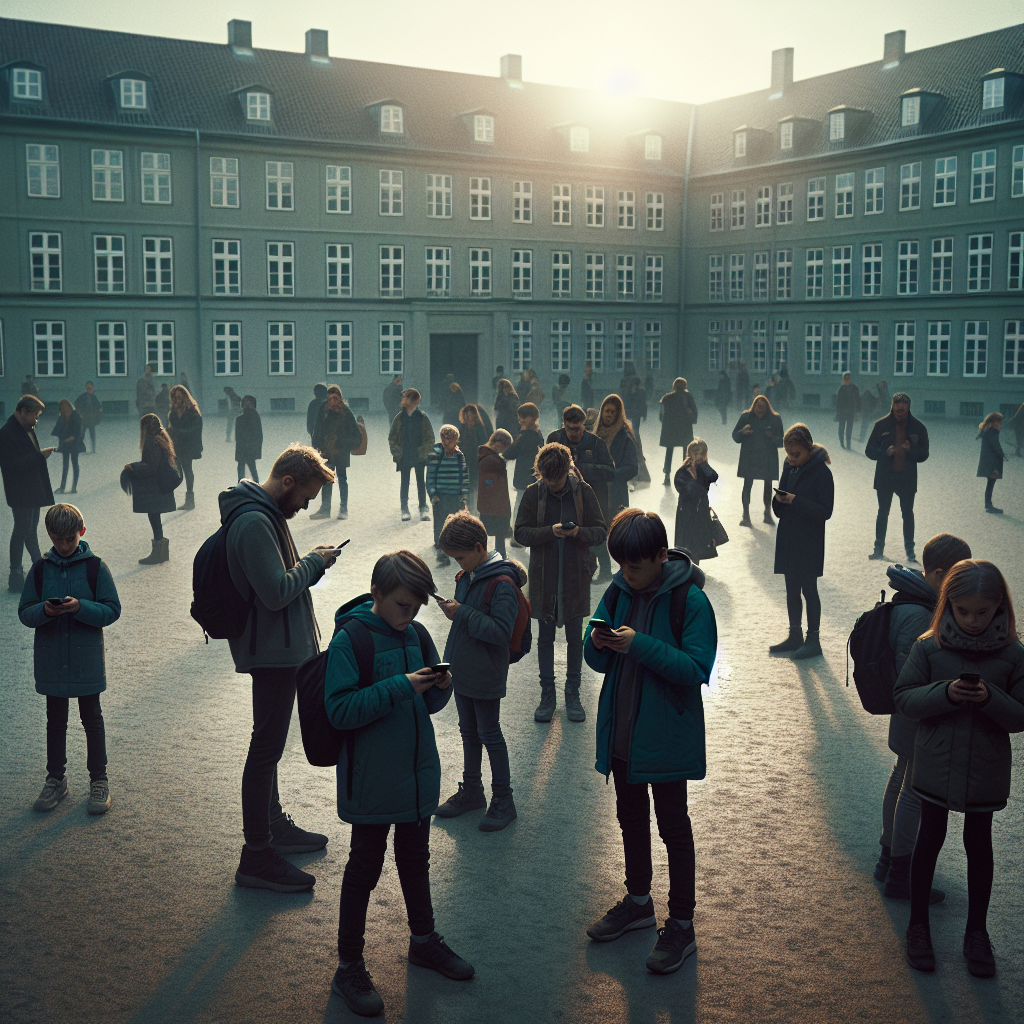
The Day Childhood Fought Back
Picture a pale October morning in Copenhagen. Parents huddle outside a school, their faces etched with concern, clutching steaming coffee as their children—wide-eyed seventh-graders—confess to feeling more alone than ever, despite being continuously “connected.” In parliament, Prime Minister Mette Frederiksen rises, her words slicing through the hush: “Social media is stealing our children’s childhood.” The room is silent, but for the shuffling of politicians’ notes. Denmark, land of hygge, bikes, and high trust, is about to take on Big Tech in a battle for its youngest generation’s minds[1].
What’s Happening—and Why It Matters
Denmark’s government, alarmed by a surge in youth anxiety, depression, and social withdrawal, has proposed a nationwide ban on social media use for children under 15[1][2]. With only rare exceptions—if parents explicitly grant permission for 13- and 14-year-olds—no TikTok, Instagram, Snapchat, or YouTube will light up on the phones of Denmark’s pre-teens. For the first time, a European democracy is not just finger-wagging at Silicon Valley—it is cutting children’s access at the source.
Prime Minister Frederiksen didn’t mince words: “We have unleashed a monster… Never before have so many children and young people suffered from anxiety and depression.” Digitalization Minister Caroline Stage echoed her, telling reporters, “We must move from digital captivity to community.”[1]
Why now? The social costs are staggering. In Denmark, 60 percent of boys aged 11 to 19 rarely meet friends in person, while 94 percent of seventh-graders already have social media profiles—despite being years below the age many platforms claim as their minimum[1].
The Mechanics: How the Ban Works
The ban will block under-15s from signing up for, or accessing, major social networks in Denmark. For children aged 13 and 14, a parental opt-in is required—a digital permission slip, if you will[1][2]. Tech companies will be compelled to perform more robust age verification, with stiff penalties for violators.
According to ministry insiders, the plan involves a mix of age-gating and surveillance-resistant ID checks. It’s an approach Australia is also pioneering, with similar age bans and multimillion-dollar fines for platforms that fail to comply[1]. The aim: eliminate backdoors and loopholes that allowed kids to slip past existing, easily faked age screens.
Expert Voices: “We Were Too Naive”
Danish officials admit they waited too long to step in. “We have been too naive, leaving our children at the mercy of tech companies,” Stage confessed at a press conference[1]. Child psychologist Dr. Jens Larsen, a frequent government advisor, puts it starkly: “Social media is designed to maximize engagement, not wellbeing. The algorithm doesn’t care if a 12-year-old is anxious. It just wants them to scroll.”
Yet not everyone is convinced. Social scientist Pernille Jager notes, “Digital life is deeply embedded now—bans could drive kids to riskier, underground forums.” Meanwhile, the Danish Confederation of Parents cautiously supports the move, but warns implementation will be key to ensuring children aren’t simply left isolated.
A Danish Family at the Crossroads
For the Andersens—a fictional but typical Copenhagen family—the announcement splits the dinner table. Twelve-year-old Alma pleads to keep chatting with overseas friends on Instagram, her mother frets over Alma’s plummeting sleep and rising anxiety, while her father, a software engineer, wonders if the government’s sweeping move is too blunt an instrument.
Their story mirrors countless households pulled between fear for their kids’ safety and awareness of just how central digital life has become.
A Global Wave of Child Tech Protections
Denmark is not alone. Australia, France, South Korea, Finland, Italy, the Netherlands, Turkey, and China are all racing to establish stricter digital age limits—including bans, digital curfews, or outright blocks during school hours[1]. Platforms like Roblox and Snapchat, under mounting pressure, have begun fortifying their own parental control and age checks[1].
But this is new, bolder terrain: Denmark is betting big that forced digital disconnection is better than digital harm. Already, other nations are watching closely—will the law provide a model for Europe, or spark an intense backlash?
Ripple Effects: Industry, Family, and Community
Tech giants, facing not just Danish legislation but a growing chorus of similar threats worldwide, may need to rethink how they design, market, and monitor their products for minors. Privacy advocates warn against overreach and surveillance, while educators worry about the “digital gap” between online and offline skills.
Families, meanwhile, will face new dilemmas: Will cutting kids off from their digital social lives lead to loneliness, or revive face-to-face friendship? Will communities step in to provide richer alternatives, or will the next generation simply find workarounds?
What’s Next / Could It Happen Again?
The Danish government plans to implement the ban within a year, but the debate is only beginning. Could the ban be the spark that incites a pan-European movement? Or will parents and children demand a different balance, with stronger education, not just restriction?
As the world holds its breath, one question hovers over every school, every living room, every startup lab: Is protecting childhood worth risking a digital disconnect?
Could this be the dawn of a new digital childhood, or the start of a generational divide?
FAQ
What is Denmark’s social media ban for children?
Denmark’s proposed law would block social media for children under 15, with parent-approved exceptions for ages 13–14. Major platforms must enforce strict age checks or face penalties.
Which platforms are affected?
All major social media sites—TikTok, Snapchat, YouTube, Instagram, Facebook, and others—will be covered.
Why is Denmark doing this now?
The government cites rising child anxiety, depression, and social isolation linked to high social media and screen exposure.
How will enforcement work?
Platforms must use robust age verification methods and risk multimillion-dollar fines for non-compliance.
Are other countries doing this?
Yes. Australia, France, South Korea, and others are debuting similar bans or curfews targeting youth social media use.