
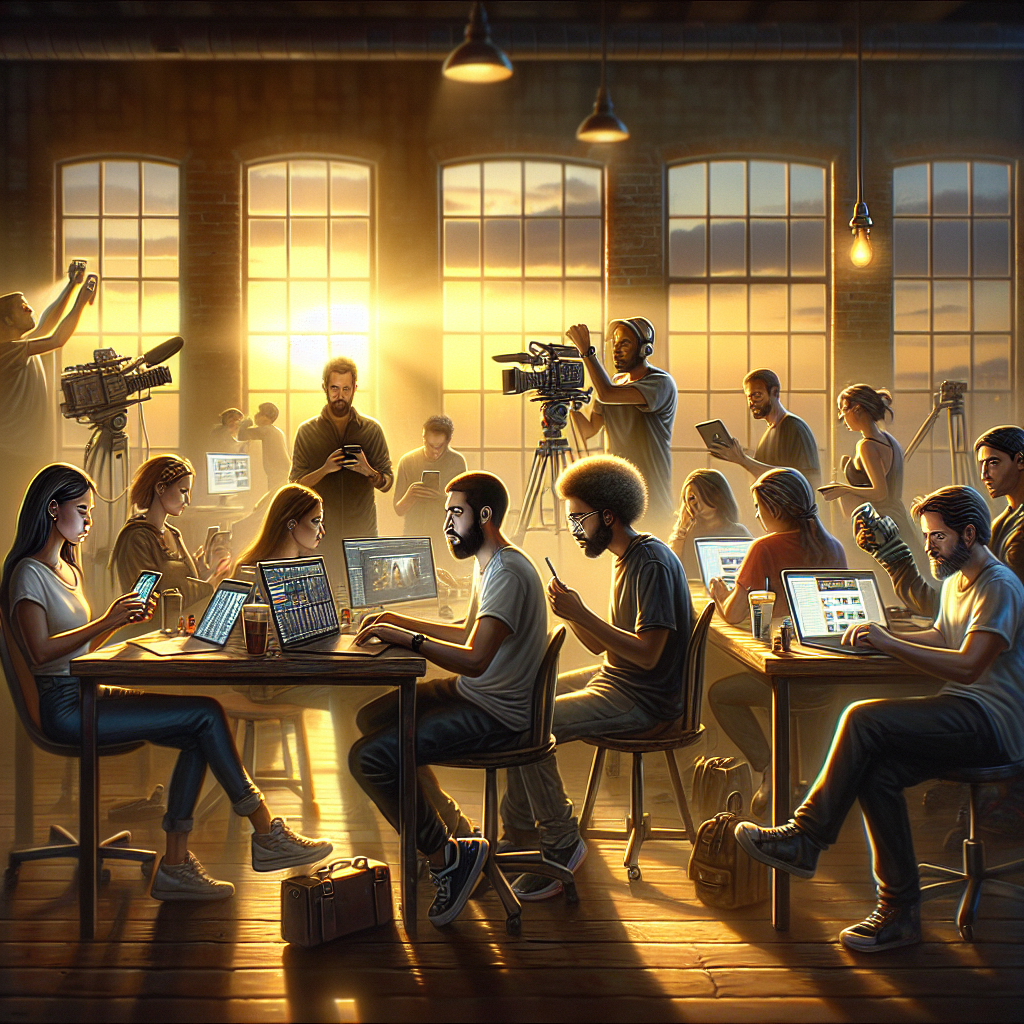
The sun rises on a city that never truly sleeps. Deep inside a cramped apartment, a young woman presses “Upload” on her laptop. It’s a DIY video about restoring old sneakers. She’s not famous. Yet. But in this ordinary moment, she joins a movement that’s reshaped entertainment, minted new millionaires, and set off a digital gold rush. Her video, like billions before it, enters the vast, chaotic universe of YouTube — a place where fortunes aren’t just made, they’re engineered, one view at a time.
The Billion-Dollar Stage (And Who Stands On It)
YouTube isn’t just a place to lose hours watching cat fails or learn how to fix a leaky faucet. In 2025, it’s the world’s largest stage, with creators at its core[1]. Since 2007, YouTube has ripped up the old Hollywood playbook, channeling more than a hundred billion dollars to the people brave (and obsessed) enough to make magic in their bedrooms and backyards.
How much is a hundred billion? It’s nearly double the value of the world’s top movie studios, eclipsing traditional media giants. And that number is still climbing — faster every year — as YouTube projects creator earnings to surge past $18 billion in 2024 alone, up 20% year-on-year[1].
But this isn’t a closed club. Success comes in genres as diverse as gaming, family vlogs, tech reviews, and prank wars. The top earners — names like MrBeast — haul in $82 million a year with wild stunts and generosity-driven spectacles[3]. Yet for millions of “middleweight” creators with a million subscribers or less, a living wage — or even a taste of wealth — is well within reach[3].
The Real Innovation: Paychecks for Pixels
But how do these creators actually get paid? Picture this: every time you watch a beauty tutorial or binge on a gadget review, you’re fueling a high-speed, data-driven revenue machine.
YouTube’s system is deceptively simple:
- Ads play on videos; brands pay YouTube big money for access to billions of eyeballs.
- Creators pocket 55% of the ad revenue while YouTube keeps the rest (for every dollar brands spend, creators get 55 cents)[2].
- The rest comes from channel memberships (think Netflix subscriptions but for individuals), Super Chats (live stream tips paid out during events), and sponsorship deals[1].
It’s not the wild west—there’s a strict pay structure. For every 1,000 ad views, creators could pocket anywhere from $5 to $30 depending on their niche, location, and audience engagement[2]. Comedy and gaming skew low; finance or tech, much higher. Take a million-view video: if half are counted as paid ad views and the ad rate is $10 per thousand, the creator leaves with more than $27,000 for a single viral smash[2].
Short-form videos (YouTube Shorts) have their own pool. Here, creators and YouTube split a pre-determined chunk of revenue for eligible views, with music licensing finally given a fair, if complex, cut[2].
A New Middle Class (And the Dreamers Who Fuel It)
Meet Nia, the sneaker restorer. Once anonymous, she now pulls in $10,000 a month in ad revenue on a million-subscriber DIY channel, juggling brand deals and fan shout-outs[3]. Videos shot on a phone brought her financial independence, pulling her family out of debt and inspiring legions of fans to unlock opportunity in unlikely places.
For Nia—and for millions more—YouTube isn’t just a job. It’s a ticket out, a proving ground, and a community. Stories like hers light up every corner of the map: truck drivers, teachers, parents, nurses, comedians, gamers. Their backgrounds are widely diverse, but their grind is the same.
The Ripple Effect: Governments, Regulation, and the Creator Economy
With such massive sums on the table, governments, unions, and critics are paying close attention. Tax agencies scramble to keep up with self-employed creators reporting six-figure incomes from their bedrooms. Lawmakers in the EU and US push for guidelines to curb abusive contracts, algorithmic bias, and to ensure fair splits in revenue. “Creators are the backbone of a digital economy,” says fictional tech policy analyst Dr. Lena Wong. “But the system’s fragility—algorithm changes, copyright disputes, and shifting ad rates—means every YouTuber lives with a degree of risk.”
Major brands, meanwhile, chase viral creators as advertising partners — and Hollywood is never far behind, snapping up online stars to star in films or launch product lines.
Communities adapt, building creator schools, legal clinics, and wellness foundations to help the millions who find themselves famous, overnight and sometimes unprepared.
What’s Next? Could It All Change Tomorrow?
The story isn’t close to finished. YouTube faces new storms—competition from TikTok and other short-form upstarts, growing calls for union power among creators, and algorithm tweaks that can make or break incomes overnight.
But as tech evolves and audiences grow, one question looms: Can YouTube’s hundred-billion-dollar promise survive the next wave of digital disruption, and who will shape that future?
If YouTube can turn bedroom creators into millionaires today, what will be possible tomorrow? How would you rewrite the rules?
FAQ
-
How does YouTube pay creators in 2025?
Creators earn revenue from ad views, channel memberships, Super Chats, brand sponsorships, and Shorts, pocketing about 55% of the ad income[2]. -
How do new YouTubers start earning?
By joining the YouTube Partner Program — requiring 1,000 subscribers and 4,000 watch hours — creators unlock monetization and start splitting ad revenue with YouTube[2]. -
What are the highest-paying YouTube niches?
Finance, tech reviews, and business content tend to earn the highest ad rates, while entertainment and vlogs often earn less[2]. -
Is YouTube still profitable for newcomers in 2025?
Yes, but competition is fierce. Unique content and community engagement are essential[1]. -
What risks do YouTube creators face?
Income instability from algorithm changes, copyright issues, demonetization, and evolving regulations remain top challenges[1].