
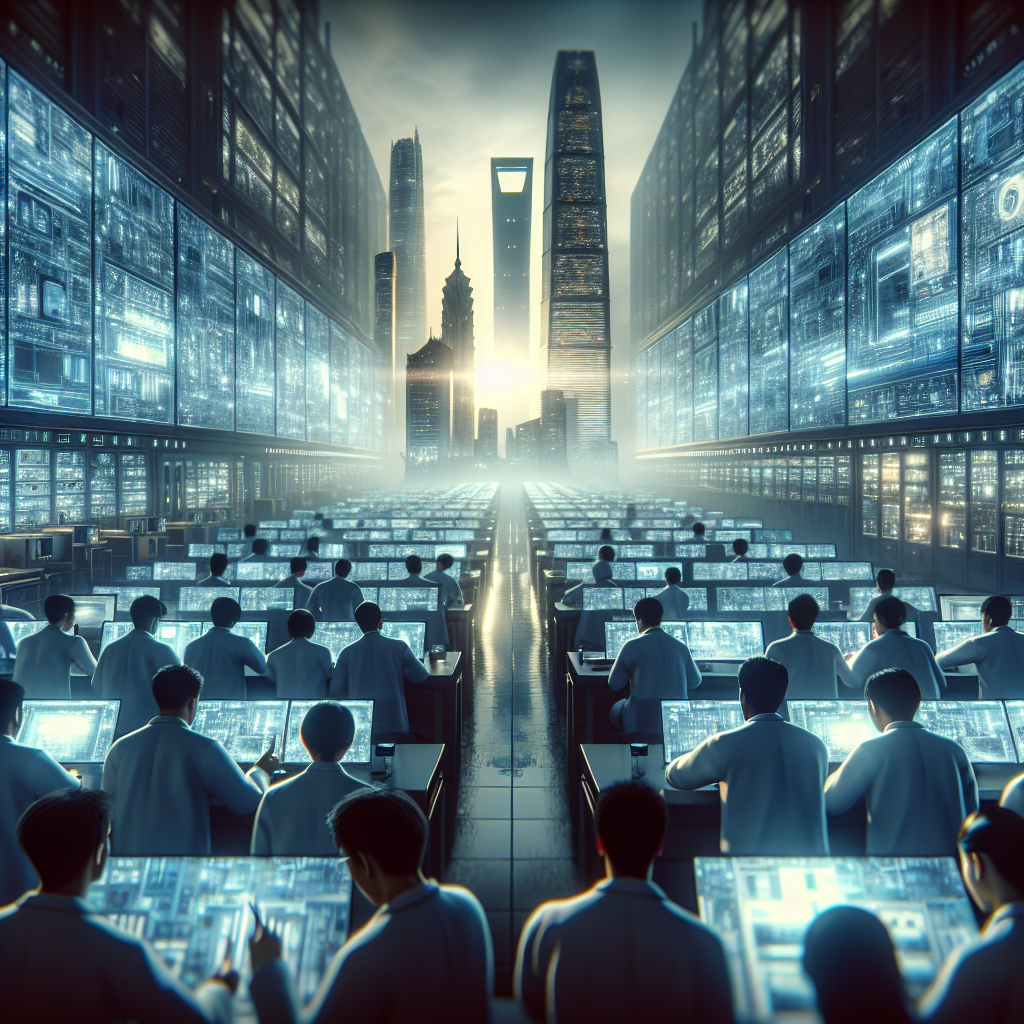
Shanghai, just after dawn: In the hushed neon glow of the city that never truly sleeps, thousands of programmers, engineers, and entrepreneurs rush to makeshift workstations. This morning, however, the code they write is shadowed by something unmistakably different—an order from the very top, one that could change the fate of the world’s largest tech ecosystem.
The Ban That Shocked the Tech World
On a foggy September morning in 2025, news rippled through China’s bustling avenues and Wall Street’s hushed conference rooms: China had just banned its biggest tech companies from buying Nvidia’s iconic AI chips[1]. ByteDance, Alibaba, and other titans were suddenly cut off from the very hardware fueling the global artificial intelligence boom. Nvidia stock slid. Western analysts blinked. For Silicon Valley and Shenzhen alike, this was much more than a trade spat.
At the heart of the ban was the RTX Pro 6000D, a gleaming sliver of silicon engineered for China—and the brain behind everything from social media recommendation engines to logistics algorithms optimizing the country’s sprawling supply chains. But almost as soon as Nvidia started shipping these special models, regulators issued a halt. Domestic suppliers and internal emails echoed with a single message: “Stop everything related to foreign chips. Start sourcing local.”[1]
Why Now? The Geopolitics of Algorithms
The official line, delivered with the characteristic tight-lipped discipline of the Cyberspace Administration of China (CAC), was about “strengthening China’s domestic semiconductor industry and securing digital sovereignty.”[1]
But the real narrative is bigger. The United States, having banned sales of Nvidia’s most powerful chips to China during the Biden administration, sparked a technological arms race. With American policymakers fearing their chips could supercharge Chinese military or surveillance tools, access was throttled. In response, Beijing doubled down on “self-reliance”—a code word for technological independence—but this ban marks its boldest play yet.
Tech analyst Lin Hua, speaking on state television, put it plainly: “This is the next Sputnik moment. Dominate AI, and you dominate everything—from economics to national security.”
How It Works: The Silicon Shakedown
So what is really at stake? At their core, AI chips—semiconductors specifically engineered for the colossal calculations AI models require—are as vital to today’s tech infrastructure as oil was to the 20th century. Without them, dreams of sharp-faced robot workers and eerily accurate voice assistants don’t just stall—they vaporize.
For a decade, Nvidia’s chips set the global standard, thanks to designs optimized for “parallel processing”—breaking up enormous digital tasks into bite-sized commands run simultaneously. By restricting access to these chips, China is effectively shutting off the main artery connecting its tech sector to the beating heart of global AI innovation[1].
Voices from the Ground: One Engineer’s Story
Chen Wei, a fictional but entirely plausible engineer at a Shenzhen AI startup, wakes to a stream of panicked WeChat messages.
“We’re stuck. The cloud isn’t scaling, and the new model’s too slow on domestic chips,” his team leader texts.
Filled with uncertainty, the team pivots—crunching on homegrown silicon, sacrificing features, rewriting code line by painstaking line. Chen’s parents, both factory workers, ask over dinner, “Will your job be safe?” Chen only shrugs. For millions like him, the news isn’t just about chips. It’s about livelihoods, dreams, and an entire digital identity.
The Dominoes Fall: Global Reparcussions
In Silicon Valley, tempers flare. Nvidia, already facing an antitrust probe from China, feels the pressure as its last, tailored products for China—creations once hoped to dodge export cracks—are swept away by policymakers[1]. Nervous venture capitalists whisper about “decoupling” and “a splintered internet.”
Meanwhile, within China, giants like Alibaba and ByteDance scramble to boost their own chip research arms. Jack Ma—recently re-emerged at the helm of Alibaba—declares a renewed R&D blitz, hoping to turn Alibaba into China’s answer to Nvidia[1].
For Western chipmakers, the message is chilling: Access to the world’s largest consumer market isn’t just at risk—it’s vanishing.
What’s Next? Could It Happen Again?
As semiconductor foundries grind into overdrive in China’s industrial corridors, observers wonder: Can domestic chips finally rival their American counterparts? Regulators claim they’re close. International experts are skeptical—at least for now.
The real question: Is this the end of one global tech stack… or the messy, determined birth of two separate internets, each powered by homegrown innovation?
In the coming years, the chip war may define far more than what’s inside your smartphone. It could redraw geopolitical borders, redefine alliances, and forever alter the technology powering everything from your morning coffee to the next scientific leap.
Could your next phone or app be made in a parallel tech universe—completely cut off from the rest of the world?
FAQ
Why did China ban its tech companies from buying Nvidia chips?
The ban aims to boost the domestic semiconductor industry, reduce dependence on U.S. tech, and respond to U.S. export controls on advanced chips[1].
What are Nvidia AI chips used for in China?
They power everything from AI-powered social media to logistics planning and scientific research, making them vital to tech firms’ competitiveness[1].
Will this impact regular consumers in China?
In the short term, consumers might experience slower upgrades in AI-powered apps and services; businesses could struggle with performance gaps on domestic chips.
Are Chinese chips as powerful as American ones?
Official statements claim near-parity, but most international experts believe there’s still a performance gap—though it’s narrowing as investment pours in.
What does this mean for the global AI race?
The ban accelerates the split between Western and Chinese tech ecosystems. It could fuel independent innovations but may limit collaboration and raise development costs worldwide.