
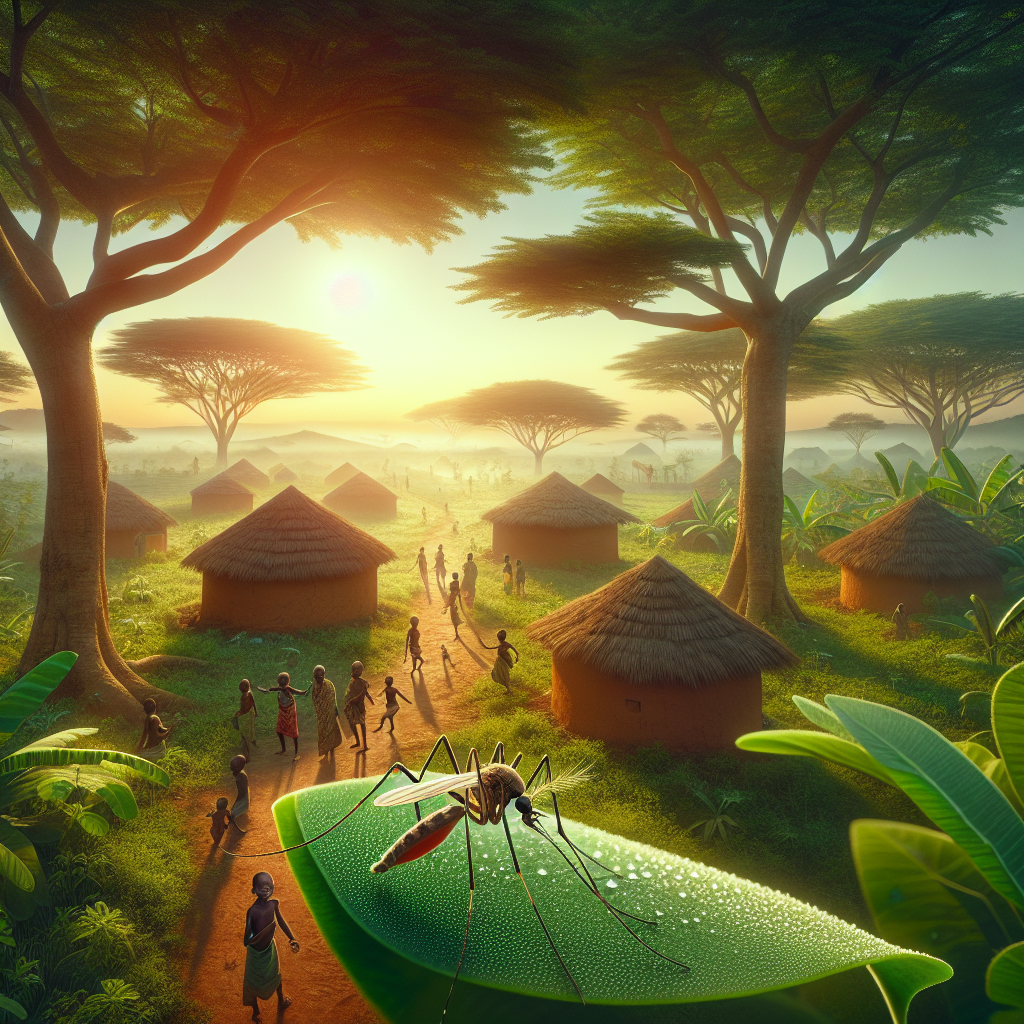
Picture this: It’s dawn in a small village in Burkina Faso. The sun rises slowly, painting the horizon with gold and crimson. Children chase one another through dewy grass while a mother balances a basket, dreams for her family swirling in step with the dust at her feet. But in the shadows, the whine of a mosquito disrupts the morning calm—a tiny, relentless reminder of the dangers that come with living here.
For decades, malaria has haunted places like this—an invisible adversary, slipping through nets and rising with the moon. Enter Bill Gates and his foundation, armed with a bold, headline-grabbing idea: What if we could stop malaria at its source by releasing special mosquitoes, ones that have had their genes—think of genes as the tiny instruction manuals inside every living thing—surgically re-written so they can’t spread the disease? Sounds like science fiction, right?
But this isn’t a trailer for the next blockbuster—it’s real life. Gates’ “modified mosquitoes” project promised to turn the tide in humanity’s eternal battle with malaria. In simple terms, researchers wanted to release mosquitoes that can’t carry malaria, with the hope that over time, these new bugs would take over, leaving the older, dangerous ones to fade away.
Yet, as global headlines cheered the breakthrough, the people in Burkina Faso paused. They asked a question too often ignored: “Who gets to decide what risk looks like for us?”
The Big Proposal
Imagine being offered a miracle—one that could save your children, your neighbors, even your country. But now imagine it’s a miracle that hasn’t been fully tested, one that changes the wild in ways no one can fully predict. That’s the choice Burkina Faso faced when international researchers, backed by the Gates Foundation, proposed releasing these altered mosquitoes across their land.
The pitch sounded simple: Fewer dangerous mosquitoes, less malaria, better lives. The team behind the project insisted on the safety and enormous potential of their plan. The science, they explained, was like creating a ripple in a pond: introduce enough change and the entire surface transforms. But villagers and leaders in Burkina Faso saw a different picture.
The Power of “No”
Let’s make this personal. Picture yourself being asked to let strangers tinker with your backyard—the air, water, and insects you’ve known since childhood. Would you easily say yes? What if the risks weren’t just yours, but your children’s, your community’s, your entire way of life?
For Burkina Faso, the answer was clear. They valued their right to decide, to challenge outsiders’ assumptions. Many locals worried: What happens if something goes wrong? What if the new mosquitoes create new problems, ones they can’t see until it’s too late? What if they lose something precious—control over their own lands?
Their “no” sent shockwaves far beyond their borders. In a world racing toward technological fixes, Burkina Faso chose to slow down, asking for a pause, for trust, for respect. Their stance was not just against a scientific experiment—it was a declaration that people have power, even in the face of billion-dollar foundations.
A Story That Echoes
Let’s return to our village at dawn, this time with a visitor—a scientist, notebook in hand, ready to explain. But instead of speaking, they listen. They hear about customs passed down through generations, about ancestors and traditions. The villagers tell stories of drought, of resilience, of times when outsiders promised help but brought only change—unfamiliar, uncontrollable.
In this fictional scene, a young boy turns to the scientist and asks, “If your mosquitoes make things worse, will you still be here to help us?” The question hangs in the air, heavy with centuries of history.
The Dilemma We All Share
At its heart, this isn’t just Burkina Faso’s story. It’s everyone’s. Maybe you don’t live near the equator or worry about malaria, but think—how often do we all face choices about technology we don’t fully understand? Self-driving cars, artificial intelligence, even the food on our plates—each one promises wonders, but each comes with unseen strings.
We hunger for solutions, but sometimes, the wisest choice isn’t to speed ahead, but to ask more questions. Sometimes, “no” is less about fear and more about wanting a say in the future.
What Happens Now?
Burkina Faso’s decision doesn’t mean the end for ideas like gene-edited mosquitoes. But now, the world is watching. Technological wonder, after all, means little if people don’t trust the hands at the wheel. Real progress only happens when the people in the story get to write their own ending.
So, next time you read about a miracle fix or a tech breakthrough, remember Burkina Faso’s dawn—the hope, the fear, and, above all, the power of a single, courageous “no.”
Would you trust an invisible solution if you couldn’t ever turn it off? If this happened in your town, what would you say—and why? Let’s talk.