
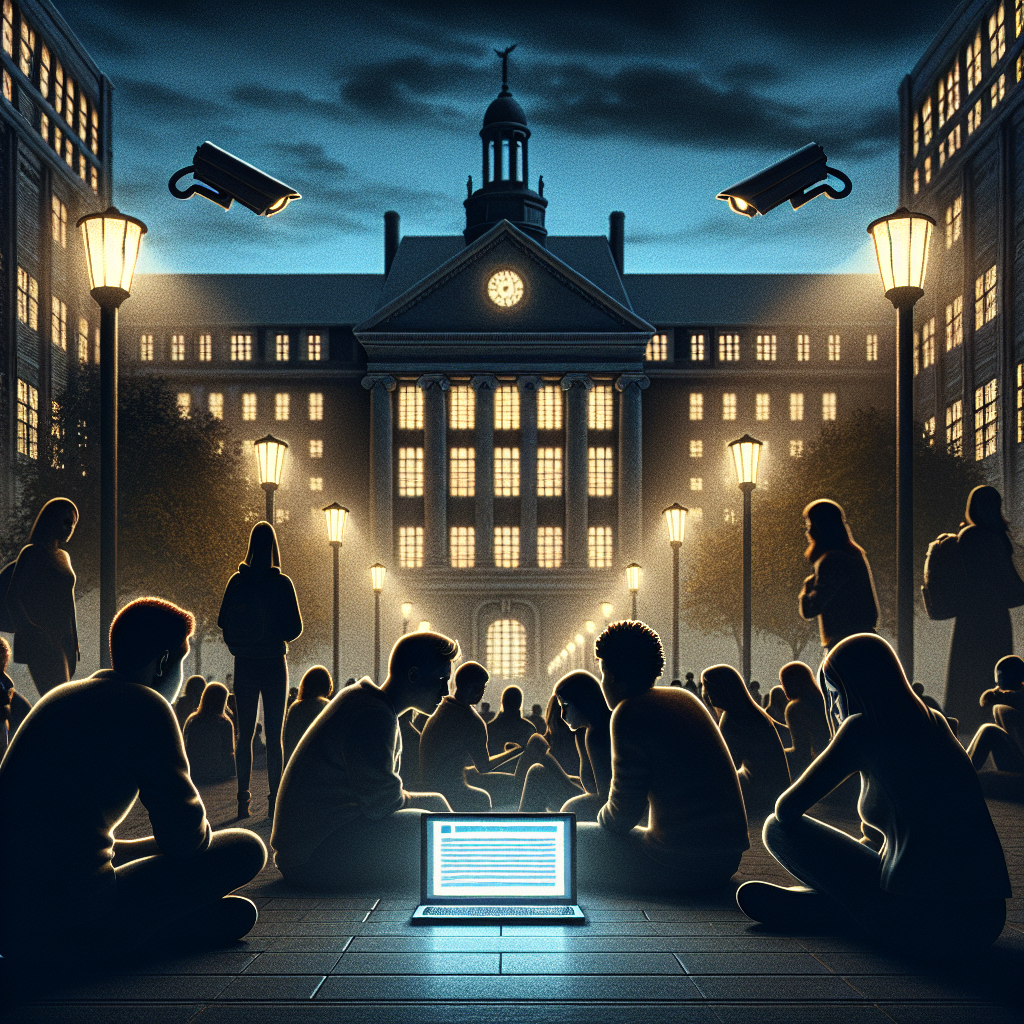
Opening Scene: The Midnight Email
It’s just after midnight when a UC Berkeley student’s phone buzzes quietly under her pillow. Blurry-eyed, she checks her email. A campus-wide notice appears: “Your personal information may have been shared with the federal government.” Panic rises like a wave. She isn’t alone — 160 students, staff, and professors are jolted into a new reality: their names, identities, and campus lives have been swept up in a national investigation.
Why This Moment Matters
In an age when data breaches and privacy scandals feel as routine as morning coffee, the stakes at UC Berkeley weren’t digital thieves or faceless hackers. This time, it was the university itself — under federal pressure — delivering the personal details of its community members to the Trump administration[3]. The reason? A sprawling federal probe into allegations of antisemitism, part of a wave of inquiries gripping universities across the country.
That early morning message marked more than lost privacy. It spotlighted a rapidly shifting battle for control — over data, power, and the shape of free expression on campus.
Inside the Hand-Off: How It Happened
The saga began not with sinister code or a shadowy cybercriminal, but with a letter from Washington. The U.S. Department of Education’s Office for Civil Rights demanded that UC Berkeley hand over an extensive list of names, files, and documentation related to reported incidents of antisemitism on campus[3].
According to sources familiar with the case, Berkeley’s legal team debated: comply and protect its federal funding, or refuse and risk harsh legal and financial consequences. Ultimately, the university, under guidance from the University of California’s Office of the President, gave up the names on August 18[3]. The list landed on federal servers, and the reality set in: the academic institution had become a gatekeeper and a conduit in one of the nation’s most politically charged debates.
A Human Angle: One Student’s Story
Imagine being “Tara,” a fictionalized doctoral candidate, whose activism and identity as a Jewish student suddenly become a matter of record in a federal file. Tara receives the same campus letter — nothing about what she’s accused of, no hint of evidence or process. Suddenly, every seminar discussion and activist meeting feels watched. “Now I have to consult lawyers just to know if it’s safe to do my research,” she confides to friends[3]. Fear isn’t just hypothetical. It’s in the library, the lecture hall, the lines at the coffee shop.
Expert Takes: A Crisis of Trust
Judith Butler, a globally respected philosophy professor and one of the individuals affected, called the university’s move “echoes of McCarthyism”— recalling a 1950s era when lists and investigations targeted academics for their political beliefs[3]. “How are they going to use that information to further repress us?” asks one student activist. Data privacy attorneys warn: “Sharing identifying information without full disclosure or consent undermines basic rights and erodes community trust.”
A former Department of Education official, speaking off the record, frames it differently: “When universities enter federal investigations, there are no easy choices. Compliance is often mandatory, but transparency and due process must never be sidelined.”
Ripples Across the Nation
Campus protests had already intensified after the October 2023 violence in Israel and Gaza, with heated debates around antisemitism and free speech erupting everywhere. But when Berkeley’s data disclosure story broke, the backlash spread: student groups condemned what they called “chilling tactics,” while some political leaders insisted strict federal oversight was overdue. University presidents scrambled to review information-sharing policies, fearing similar demands[3].
Meanwhile, privacy watchdogs rang alarm bells — warning that today’s handoff might become tomorrow’s blueprint for sweeping new surveillance, on campus and beyond.
Could It Happen Again?
Government requests for campus data aren’t exactly new — but the scale, urgency, and lack of transparency in this case have experts worried. According to analysts, the pressure won’t ease: “As divisions over campus speech grow and federal scrutiny intensifies, more institutions could face gut-wrenching decisions like Berkeley did,” says a higher education policy analyst.
What’s Next / Could It Happen Again?
Berkeley’s top lawyer, David Robinson, bluntly told affected individuals: “The investigation is ongoing. The university may be subject to additional production obligations”[3]. In other words, the data handoff may just be the beginning.
Now, the question hovers across campuses nationwide: What price will universities — and their students — pay for compliance? Will there be new safeguards, or will handovers become the norm in the age of digital records and political polarization?
Provocative discussion prompt:
If your campus, workplace, or community was asked to hand over your data in the name of a federal probe, would you want to know? Where should the line be drawn between justice, safety, and your right to privacy?
FAQ
What actually happened in the UC Berkeley personal information case?
UC Berkeley gave the names and some personal information of 160 students, staff, and faculty to the federal government as part of a probe into antisemitism allegations[3].
Why did the university do this?
The institution was responding to a legally binding federal investigation under the oversight of the Department of Education’s Office for Civil Rights, with potential risks to their federal funding[3].
What kind of information was turned over?
Names, campus roles, and details tied to reported incidents of alleged antisemitism were included. The full extent of the data remains unclear[3].
Have students or staff taken legal action over this UC Berkeley data sharing?
Some affected individuals are exploring legal advice and expressing concern about due process, privacy, and potential harm, but no major class action has yet emerged[3].
How does this compare to a typical data breach or ransomware incident?
Unlike hacks or breaches orchestrated by external attackers, this case centers on an internal, administrative handoff of data compelled by federal mandate[3].
What are universities doing to protect privacy now?
Many campuses are urgently reviewing their information-sharing and privacy policies in light of federal investigations and mounting advocacy for individual rights.