
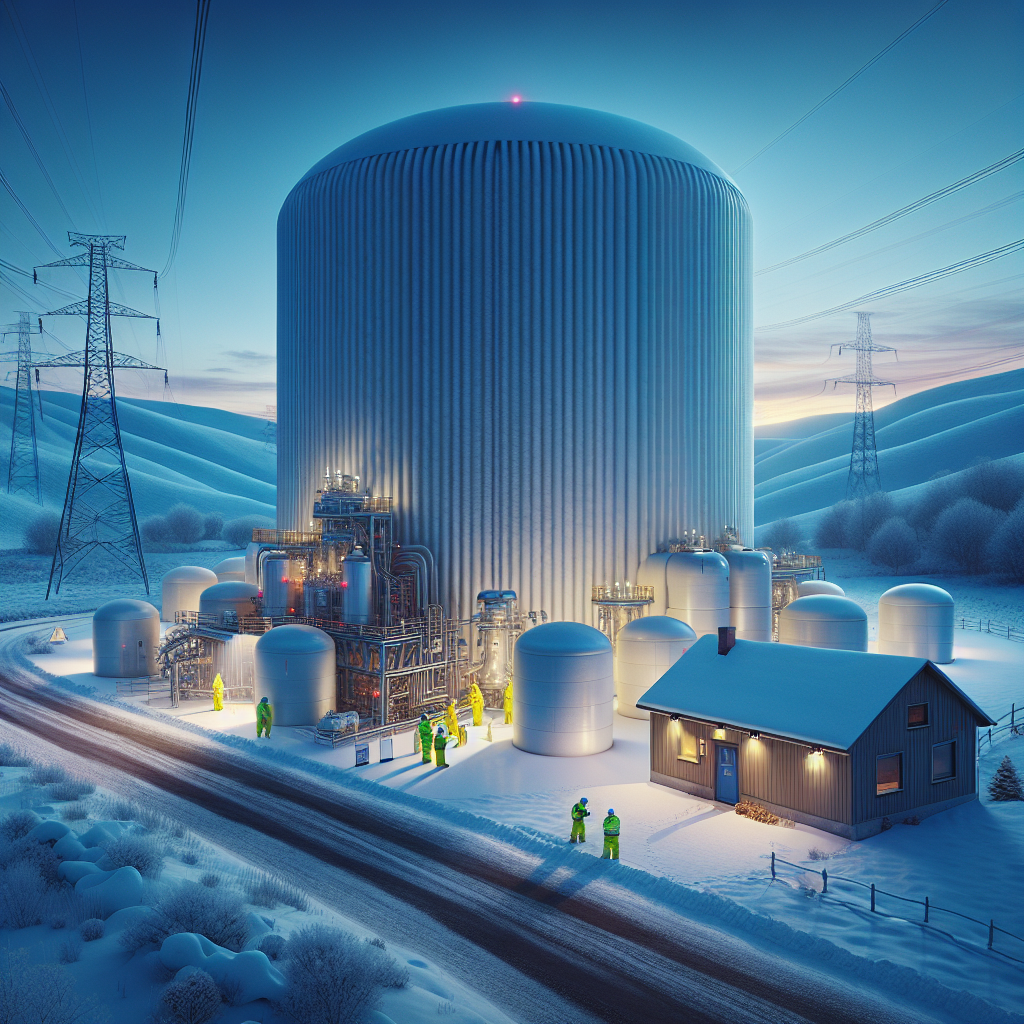
A Night in Idaho: The Birth of the Future
It’s 2 AM in Idaho National Lab, and a small group of engineers huddle around a steel cylinder glowing faintly with heat—a vessel of literal potential. For twenty years, molten salt reactors were relegated to textbooks, whispered about in glass-walled conference rooms and niche Reddit posts. Tonight, something changes: the world’s first modular molten salt reactor (MSR) kicks off its test cycle, promising a seismic shift in energy as profound as the birth of the microchip.
Why the Buzz: A Silent Revolution Heats Up
MSRs aren’t your grandpa’s nuclear plant. Instead of solid uranium rods submerged in water, these reactors run on a mixture of molten salts—hot as lava, safer than steel vaults. This mixture serves as both the fuel and coolant. The result is a low-pressure system that’s virtually immune to the sort of meltdown scenarios haunting the collective memory since Chernobyl and Fukushima[1][2].
So, why does this matter right now? Climate change is accelerating. Solar and wind energy are oversold by intermittency problems—clouds, nights, stalled wind. MSRs could supply immense, steady power with fewer worries about catastrophic failure and nuclear waste. Suddenly, “the grid” means something new: affordable, clean, and always-on energy[3].
How It Works: Nuclear Power, Distilled and Redefined
Imagine a chemistry set scaled up to industrial size. Inside an MSR, radioactive elements—usually uranium or sometimes thorium—are dissolved directly into a molten fluoride salt. As nuclear fission happens, the salt flows in and out of a graphite-lined chamber, safely contained even as it reaches temperatures around 700°C (1,292°F)[1][2].
Unlike conventional reactors, MSRs operate under ambient pressure—just like the air you’re breathing now. That makes sudden, explosive releases almost impossible. The salt itself is chemically stable; if there’s a leak, it solidifies rapidly, trapping radioactive materials like flies in amber[2].
For the science-curious:
- Load-following technology means the reactor can ramp its output up or down as demand shifts—a natural partner for wind and solar, which ebb and flow with the weather[1].
- In most MSR designs, spent fuel is reprocessed onsite, potentially squeezing every last watt from the radioactive mix and slashing the life-cycle waste problem[2][4].
- Modular architecture allows units to fit on a flatbed truck, slashing installation time—and cost—compared to giant nuclear plants.
Expert Opinion: “It’s Not the ’60s Anymore”
Dr. Hannah Greene, an energy systems analyst, shrugs off the skeptics: “The old problems with graphite degradation and core life are being solved by better materials science. What we have now is a reactor that outsmarts its ancestors. The hardest challenge is really regulatory inertia—not physics.”
A U.S. Department of Energy spokesperson echoes the optimism: “MSRs represent everything we want in carbon-free infrastructure—scalability, safety, and adaptability. Our concern is making sure the tech is as robust in real life as it is on paper.”
Life Changed: The Family Next Door
Meet the Watsons, a family in Wyoming whose ranch runs on the region’s first modular MSR. Morning coffee brews as wind whips across snow-dusted hills. Before the reactor, winters brought brownouts and diesel generators growling at dawn. Now, power is as reliable as sunrise. Their kids charge e-bikes, parents stream work calls, and neighbors ask when their own “reactor-in-a-box” will arrive.
It’s not magic. Inspectors make monthly rounds, and engineers—trained on simulators—run emergency drills for scenarios ranging from salt leaks to cyber sabotage. But the sense of normalcy is unmistakable. Nothing here feels radioactive; everything feels possible.
Aftershocks: Industry and Political Wake-Up Call
When Wyoming flipped the switch, headlines followed. Utilities see modular MSRs as “grid reserve” batteries—charging up energy like a volcanic cell, then releasing it when wind and solar stall. Governments respond with grants and cautious optimism, even as some environmental groups sound alarms about proliferation and unknowns in salt management.
China and Scandinavia race to prototype their own reactors, betting on not just energy independence but lucrative exports. Oil industry lobbyists pivot, retraining staff for “salt systems management” and nuclear safety. Europe eyes the modularity as a patch for aging infrastructure.
What’s Next: Could It Happen Again?
MSRs aren’t plug-and-play yet. Issues like long-term salt chemistry, core material fatigue, and regulatory bottlenecks remain. But with urgent emissions cuts needed worldwide, modular MSRs stand ready for their next act.
Could a flaw in salt containment—or a cyber-attack—stop the revolution before it spreads? Will regulators embrace disruption, or slow it all down?
Is the molten salt reactor the technology that finally puts climate anxiety to rest?
FAQ
-
What is a modular molten salt reactor?
A nuclear reactor powered by molten salt mixtures, designed for safer, smaller, and more flexible energy production. -
How do MSRs compare to traditional nuclear reactors?
They run at low pressure, are less prone to catastrophic failure, and can adaptively load-follow with renewables. -
What are the main risks or drawbacks?
Challenges include developing long-life materials and managing salt chemistry over decades; some issues remain to be fully tested. -
Is waste from MSRs less dangerous?
MSRs can burn more fuel and reprocess onsite, slashing long-lived waste, though some waste management is still needed. -
How soon will MSRs be widespread?
Prototypes are being built now. Widespread adoption depends on regulatory approval, cost reductions, and successful pilot projects.