
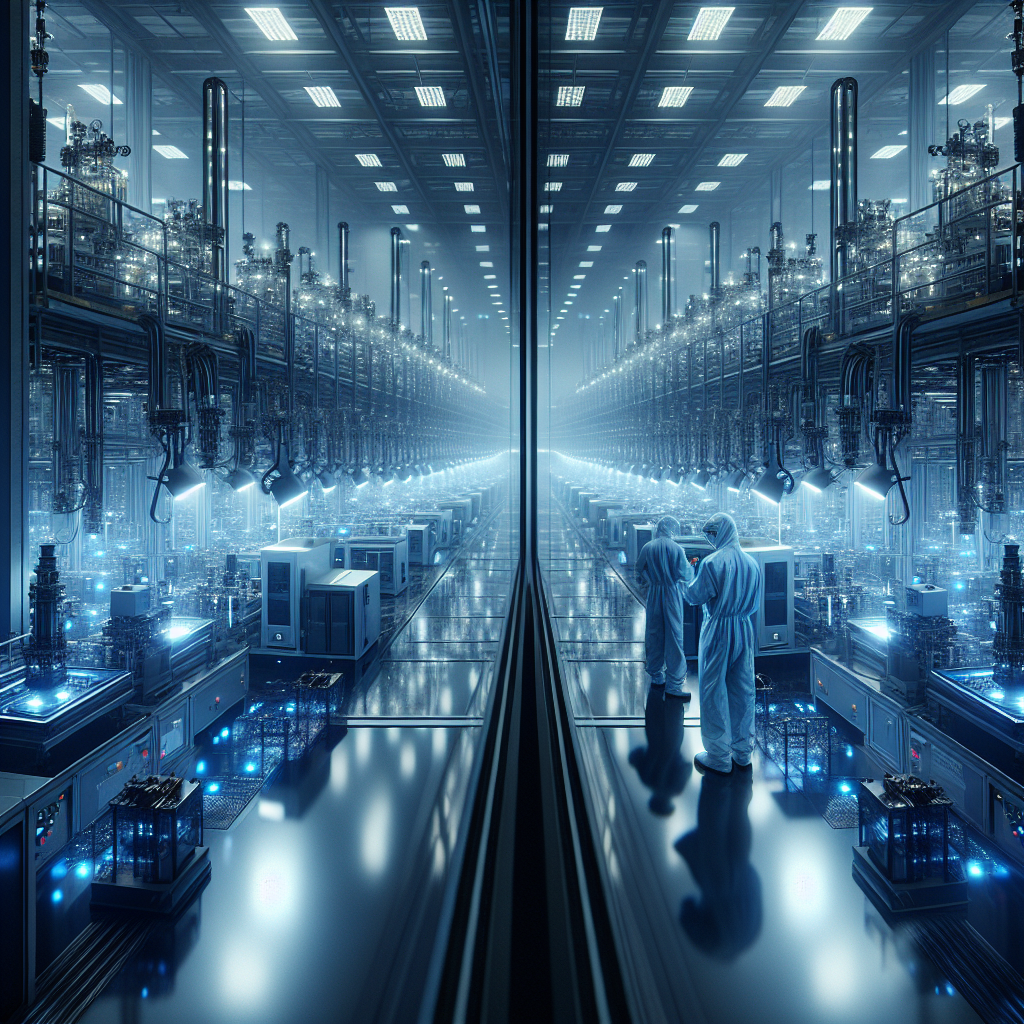
Taipei, 2:37 a.m.—Inside a humming cleanroom the size of a football field, impossibly delicate microchips slide down a conveyor belt, bound for every corner of the planet. In these moments, Taiwan isn’t just an island; it’s the beating heart of the digital world.
The world’s most advanced semiconductors—those hidden brains powering your phone, your car, your country’s defense systems—are born here. And, as U.S. Treasury Secretary Scott Bessent made clear last week, that concentration has become “the world’s biggest single point of failure” for the tech economy, eclipsing even oil in its strategic gravity[3][1][2].
The Breaking Point: A Secretary’s Warning Echoes Globally
Bessent’s interview on Fox News jolted markets and sent a cold shiver through Washington’s corridors[1][2][3]. His message: if Taiwan’s semiconductor fabs (factories), especially those run by TSMC, were stopped—by geopolitics, disaster, or blockade—the global economy could face a meltdown reminiscent of the darkest hours of past oil crises.
“99% of the high-performance chips are produced in Taiwan,” Bessent warned. “In terms of risk management… we have got to bring back to the U.S. or our allies” a major share of semiconductor production. Unlike ordinary parts, these chips are the brains behind everything from electric vehicles to cloud servers to missile defense networks[3].
Just as the 1973 Oil Embargo choked the world’s fuel supply, the sudden loss of Taiwan’s silicon lifeline could instantly freeze hyperconnected economies[1][3].
How Did One Island Become So Vital?
Taiwan’s rise wasn’t accidental. In the late 1980s, as chip fabrication became ever more complex, TSMC dared to specialize ruthlessly, turning chipmaking into a science bordering on alchemy. They excelled at producing “leading-edge” chips: impossibly small, fast, and power-efficient. Suppliers clustered nearby, forming a tight-knit ecosystem, each link reinforcing the next.
Tech giants from Apple to Nvidia rely on these chips. But with nearly all advanced fabrication found on this single, densely-populated island, the world’s fortunes became bound to one fault line.
Why is this dangerous? Semiconductors, unlike sneakers or smartphones, can’t merely be rerouted or rebuilt overnight. Creating them at scale requires years, billions in infrastructure investment, and expertise as rare as pilot’s gold[3].
The Anatomy of Catastrophe: One Black Swan Away
Imagine this: Maya, a young ER doctor in Berlin, switches on her hospital’s new AI-powered imaging scanner. Except, this morning, it won’t boot. Global supply chains are in chaos. An earthquake struck off Taiwan—chip shipments have halted. Her phone flashes news alerts: the world’s manufacturing lines are silent. Car plants idle. Servers flicker off in data centers. Banks slow, unable to process trades.
This isn’t just a sci-fi thought experiment. It’s the downstream effect of over-reliance on one geographic hub—a “single point of failure,” per Bessent’s now-infamous phrase[3].
Governments Scramble: De-Risking Begins
If COVID-19 was the world’s grim stress test, Taiwan’s chip dependence is the ultimate vulnerability. Bessent compared it to a ticking time bomb[1].
So, what’s being done?
- The U.S. is pushing to “de-risk”—moving chip manufacturing home or to friendly allies.
- Massive tech bills—think the CHIPS Act—offer subsidies for new American fabs, even as debates swirl on tariffs and local requirements[3].
- Japan, South Korea, and the EU are racing to build up their own chip “fortresses.”
- TSMC itself is hedging, constructing plants in Arizona and elsewhere—though these are years from full operation[3].
According to tech analyst Ji-Hyun Kang, “Nobody can flip a switch and recreate Taiwan’s capabilities overnight. This will take a decade, billions in investments, and a deep partnership between governments and private industry.”
Why You Should Care: From the Pentagon to the Parking Lot
This isn’t just a tech industry headache. When chips get scarce, the ripple effects hit everyone:
- Automakers slash output, driving up car prices.
- Medical device shortages slow critical treatment.
- Mobile phones and laptops delay their launches.
- Cloud services and finance suffer outages or slowdowns.
For families like the Lis, who run a battery startup in Detroit, chip shortages didn’t just pinch profits—they stifled innovation. “We had a prototype ready but waited months for a single chip to test it,” said co-founder Sophie Li. “One earthquake, one blockade, and the world grinds to a halt.”
What’s Next / Could It Happen Again?
Can this doomsday device be defused? Bessent believes the answer is a hard, expensive pivot: distribute chipmaking across the U.S., EU, and Japan; fund STEM education; and build supply chain resilience for tomorrow’s digital economy[3].
But the path is long, political, and fraught with technical landmines. Until then, the world will keep its eyes fixed on Taiwan: an unlikely island holding the pulse of the global future.
So as factories trill through the night and silicon slides down the lines—ask yourself: If the world’s heart misses a beat, who pays the price?
If Taiwan sneezes, does the whole tech world catch a cold? Join the discussion below.
FAQ
What is the Taiwan semiconductor risk?
Taiwan’s dominance in advanced chip production means a disruption—natural or geopolitical—could massively disrupt the global tech supply chain.
Why are most advanced chips made in Taiwan?
TSMC pioneered specialized, ultra-advanced manufacturing decades ago, attracting a web of suppliers and customers, making it the “foundry” for virtually all cutting-edge chips.
What are governments doing about the Taiwan chip dependence?
The U.S., EU, Japan, and others are investing billions to build domestic chip factories, hoping to “de-risk” from a single geographic chokepoint.
How could a Taiwan disruption affect everyday people?
Car prices might soar, electronics could face delays or shortages, and essential services—from hospitals to cloud storage—could face outages or slowdowns.
Can any other country replace Taiwan’s chipmaking soon?
Not quickly. It could take a decade or more and substantial investments to match Taiwan’s current capabilities.
Is this only a technology problem?
No. It’s an issue of economic security, national defense, and even everyday convenience—all tied to one small, vital island.