
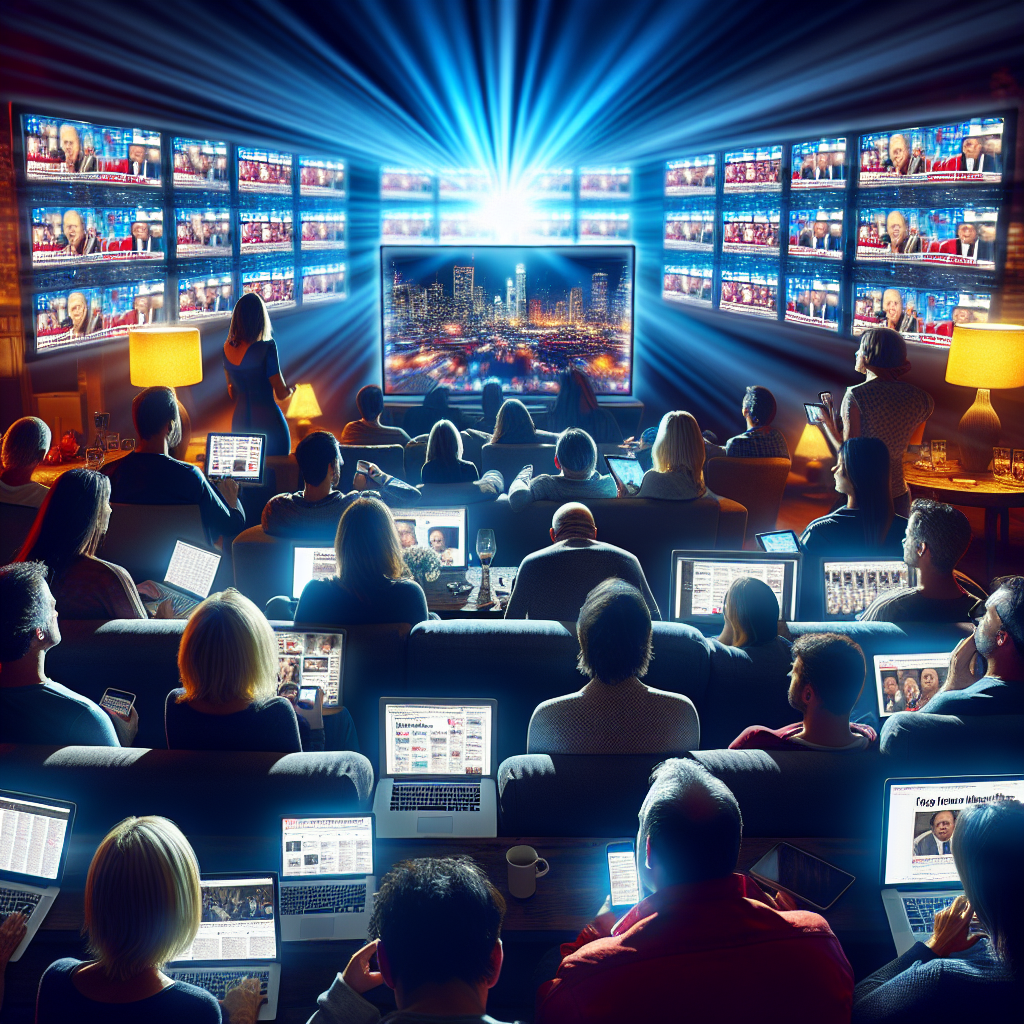
A Night That Broke the Internet
Imagine this: the glow of late-night TV flickers across millions of living rooms, only to abruptly fade to black in a quarter of American households. On September 23, 2025, Jimmy Kimmel—one of the last kings of classic late-night—returned to the air after a suspension, his words charged with controversy and anticipation. Amid media blackouts orchestrated by 66 local stations, Kimmel prepared to deliver what would become the most-watched, most talked-about monologue in recent memory. What happened next would jolt both old-guard broadcasters and the digital frontier—rewriting the rules of media power in one unforgettable broadcast[1][2][3].
When Broadcast Walls Crumble
That night, 6.3 million viewers tuned in—the most for any regular Kimmel episode in a decade, defying the blackout imposed on nearly a quarter of US households[1][2]. But what truly broke the chains of television tradition wasn’t the TV audience. It was the digital avalanche, moving at the speed of a click: On YouTube, Kimmel’s monologue was watched more than a million times per hour, quickly climbing into the tens of millions across YouTube and social media platforms[1][2].
Why did it matter? Because for the first time, the reach of a “canceled” broadcast was not only preserved but amplified by the very forces meant to silence it—and the public saw it happen in real time.
Anatomy of a Digital Uprising
There was no hack, no technical wizardry—just the raw power of open platforms. ABC’s airwaves were blocked in dozens of cities by station owners Nexstar and Sinclair. But within minutes, fans and critics alike turned to YouTube, TikTok, and X (formerly Twitter). Kimmel’s monologue, laced with jabs at government overreach and broadcast censorship, went viral overnight. Digital platforms, typically dismissed as “secondary,” now became the primary stage[1].
As NBC analyst Roberta Park put it, “The blackout was intended to undercut Kimmel. Instead, it undercut the very idea of TV as a gatekeeper. For the first time, you couldn’t stop the message—only help it go further.” Moments like this, she explained, prove that old broadcasting can no longer contain big cultural events. These must now be engineered for every platform, everywhere, instantly.
Free Speech, Censorship — and the Human Toll
Kimmel’s words hit hard. He called out the Chairman of the FCC, who’d reportedly delivered a mafia-style warning to broadcasters: “We can do this the easy way or the hard way,” alluding to increased oversight if stations didn’t take action against Kimmel[3]. Politics—fueled by then-President Trump’s calls for Kimmel and his peers to be fired—collided headlong with public outrage over the appearance of censorship.
But it wasn’t just about media moguls and power plays. For everyday viewers, the stakes felt immediate. Take Lauren, a fictional Millennial in Des Moines: Her local ABC affiliate went dark, replaced with static, but an alert on her phone buzzed with a YouTube link. “I wasn’t a Kimmel fan,” she later remarked, “but I clicked. I wanted to see what was so dangerous they tried to block it.” Lauren wasn’t alone—millions who might never watch late-night TV got pulled into a national conversation, guided by algorithms and thumb-taps, not antennas.
Outrage and Opportunity: The Big Reboot
By morning, Kimmel wasn’t just back on TV—he’d become a meme, a rallying point, a case study in free speech and the new meaning of “live.” Networks scrambled, issuing defensive press releases. ABC hyped their ratings win. The FCC issued a carefully lawyered statement denying coercion, while media analysts declared these blackouts a “boomerang effect” that backfired spectacularly[1][2].
Politics played a key role. Trump’s comments, broadcast and re-shared millions of times, helped fuel both outrage among Kimmel’s defenders and hundreds of think-pieces dissecting late-night’s future. Attempts to silence only gave the story more oxygen, and the viral momentum proved unstoppable.
Could It Happen Again?
As the dust settled, even the most senior TV execs admitted a new world had arrived. Legacy broadcasters, once invincible, now scrambled for multiplatform strategies—no longer “airing” events, but launching them into the digital bloodstream. Experts warn that any effort to mute dissenting voices, left or right, will likely escalate future conflicts into even larger, more viral events.
“You can pull a show from the air,” says veteran media analyst Dana Yu, “but you can’t pull it from the cloud. The genie’s not going back in the bottle.”
What’s Next?
As political battles over media control intensify, and with both sides laser-focused on shaping public discourse, the real question is: who owns the media megaphone now? The next blackout—accidental or deliberate—might just spark another digital wildfire.
So, if voices can’t be silenced, and viral moments can’t be contained, have we just witnessed the birth of a truly unstoppable, crowd-powered media age? Or is this just the eye before the next storm?
FAQ
Q: How did Jimmy Kimmel’s 2025 comeback episode break late-night TV tradition?
A: Kimmel’s return saw record viewership, with 6.3 million tuning in on TV and tens of millions watching online, proving YouTube’s dominance and shifting the balance away from traditional broadcasts[1][2].
Q: What made Kimmel’s YouTube win so significant?
A: The episode’s viral reach—driven by digital platforms—transformed a local blackout into a national event, showing that traditional censorship can be outmaneuvered by open online channels[1][2][3].
Q: Did government attempts to influence the broadcast increase its impact?
A: Yes. Political pressure and FCC warnings only fueled the episode’s popularity, highlighting how efforts to suppress voices can backfire in the digital age[1][3].
Q: How did ordinary people experience the blackout and digital surge?
A: Many, like the fictional Lauren, found themselves drawn to Kimmel’s monologue online after being locked out by local blackouts, showing a shift in how Americans access news and entertainment.
Q: What’s the broader impact on media and democracy?
A: The event spotlights a changing media landscape: broadcasters must now adapt to multiplatform audiences, and attempts at censorship risk instant, massive backlash.
Q: Could this happen with other live events or shows?
A: Absolutely. The Kimmel incident sets a precedent—all major broadcasts are now just one viral moment away from bypassing legacy gatekeepers entirely.