
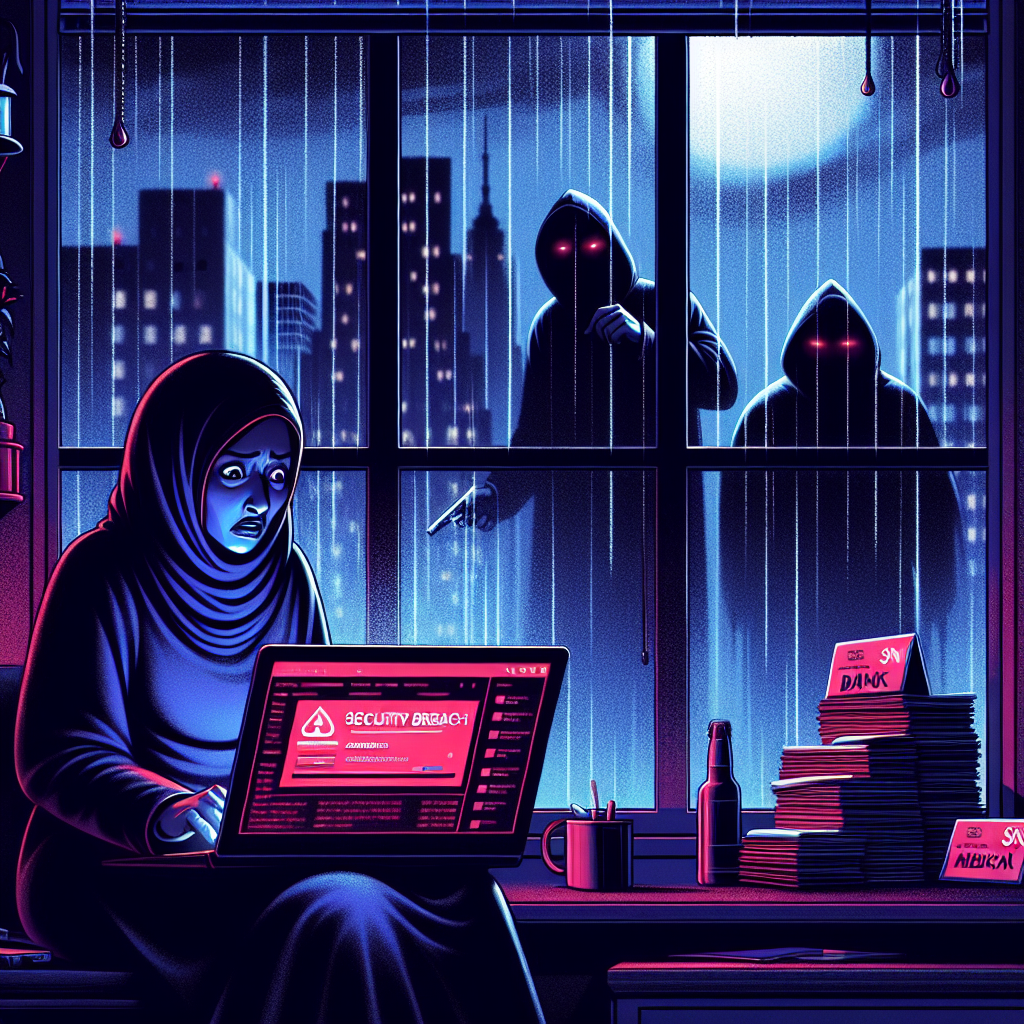
Picture this: You wake up to a notification that your credit card has been declined at a gas station 200 miles away. Seconds later, your inbox explodes—bank alerts, unrecognized login attempts, a flurry of password resets. You scramble to your computer, but it’s already too late. Strangers are living inside your digital life, and you’re powerless to lock the doors[1].
This isn’t a scene from a dystopian thriller. It’s the daily reality for millions caught in the crosshairs of the latest wave of mass data breaches—where thieves don’t just steal money, they hijack identities, loot personal histories, and weaponize the very data that makes us who we are.
The Breach Epidemic
2025 has been a year of digital reckoning. Cyberattacks reign supreme, with over 1,300 incidents reported in the U.S. alone during just the first half of the year, impacting more than 114 million victims[3]. But this isn’t a story about numbers. It’s about people—the way one security slip can unravel a life, a business, a family.
Take Sarah, a nurse in Milwaukee. Several months ago, her personal information was part of a credit union breach[1]. She received a generic notification email, shrugged, and moved on. But slowly, her phone began ringing with urgent-sounding voices claiming to be from her bank. “We need your PIN to secure your account,” they said. Messages popped up, warning her of suspicious purchases she never made. Then, one afternoon, she got locked out of her own accounts—her email hijacked, her credit score plummeting. “It felt like being stalked,” she says (anonymous scenario, constructed from breach reports). “Except the stalker could be anyone, anywhere, and I had no way to fight back.”
Anatomy of a Nightmare
So, how does this happen? The answer lies in our digital architecture—a fragile ecosystem where one weak link can bring down entire networks.
Third-Party Time Bomb
Today’s attacks aren’t always direct assaults. Often, hackers target trusted vendors—companies that provide software, analytics, or cloud services to bigger brands. In the TransUnion breach, attackers exploited a third-party app integration, slipping in through an inconspicuous side door[1]. The app, posing as a Salesforce tool, gave persistent access to millions of records—names, birthdates, and critically, Social Security numbers.
Supply Chain Surprise
Supply chain attacks, where a vulnerability in one company cascades to all its customers, are exploding. In the first half of 2025, 79 such breaches affected 690 different organizations, exposing data from nearly 80 million individuals[3]. The lesson? Security is only as strong as the weakest link in a vast, interconnected chain.
Infostealer Menace
The 184-million-credentials dump—allegedly harvested by infostealer malware—shows the next frontier: malware that silently steals everything you type, every password you save, every autofill your browser remembers[1]. The database, left unencrypted and exposed online, was a digital gold mine—open to anyone who knew where to look.
AI-Driven Deception
Meanwhile, criminals are leveling up. AI now crafts phishing emails so convincing, even seasoned tech users click—personalized, urgent, flawless. Once inside, attackers pivot effortlessly, moving from email account to bank login, from social media to government portals.
The Human Toll
These breaches aren’t just data points. They’re identity theft in slow motion. Once your Social Security number is out there, it’s a ticking time bomb. Thieves can open credit lines, file fake tax returns, even impersonate you to police. Recovery can take years—hours spent on hold, forms filled in triplicate, credit scores stuck in purgatory[1].
Imagine explaining to your 10-year-old why they can’t get a student loan in a decade because someone stole their future before they even knew it was at risk.
The Response—And the Ripple Effect
Companies, caught off guard, scramble to contain the damage. TransUnion offered two years of free credit monitoring—a band-aid on a gaping wound[1]. Law firms circle, promising class action lawsuits. Credit unions post warnings about imposter calls, a desperate bid to prevent a second wave of theft[1].
Governments, always a step behind, urge vigilance but offer few real defenses. In the U.S., breach notification laws are patchwork—some states demand immediate alerts, others don’t. No consistent standard exists for compensation, identity restoration, or even basic cybersecurity training.
The real impact? A crisis of trust. People stop signing up for services. Businesses hesitate to innovate, fearing liability. The internet, once a global town square, feels more like a digital Wild West—where every click could be your last.
The Attackers—Shadows in the Machine
Who’s behind this? Groups like ShinyHunters, running extortion-as-a-service operations, have turned hacking into a gig economy: breach, sell, repeat[1]. Sometimes, the culprits are lone wolves, probing for profit. Other times, it’s state-backed actors, testing defenses, gathering intelligence.
Motives vary—money, chaos, geopolitical leverage. But the effect is the same: a world where your data is never really yours.
What’s Next—And Could It Happen Again?
This isn’t a temporary glitch. It’s the new normal. As long as companies prioritize convenience over security, as long as governments fail to act, breaches will keep coming—bigger, faster, more devastating.
AI will make attacks even harder to detect. Quantum computing could shatter today’s encryption. The Internet of Things will weave data into every corner of our lives—from your fridge to your front door.
So, what can we do? Demand transparency. Invest in education. Force companies to build security in, not bolt it on. And maybe, just maybe, start thinking of personal data as something sacred—not just a line in a database.
A Provocative Question
As the line between our digital and physical selves blurs, are we ready for a future where identity theft isn’t just a crime—it’s a form of digital erasure?
FAQ
What exactly is a supply chain attack in cybercrime?
A supply chain attack targets a trusted vendor or partner of a larger company, exploiting their access to compromise multiple organizations at once—like poisoning the well that everyone drinks from[3].
How does infostealer malware work?
Infostealer malware is a type of malicious software that secretly records everything you type, save, or auto-fill on your computer—passwords, credit cards, personal messages—then sends it all to hackers[1].
Why are Social Security numbers so dangerous in a data breach?
Unlike a credit card, you can’t just cancel and replace a Social Security number. Once stolen, it can be used to impersonate you for years—applying for loans, filing taxes, even getting medical care[1].
What is identity theft protection, and does it really help?
Identity theft protection services monitor your credit and personal information for signs of fraud. They can alert you to suspicious activity, but they can’t prevent breaches—only help you respond faster[1].
Can changing my password really stop cybercriminals?
Changing passwords helps, especially if you use unique ones for each account. But if malware has already stolen your credentials, resetting alone isn’t enough—you need to scan your devices for infections and enable multi-factor authentication everywhere possible[1].
How can I spot a phishing attack?
Look for urgent or threatening language, mismatched email addresses, and requests for sensitive info. When in doubt, contact the company directly—never click links in unexpected messages[3].
Is there any place my data is truly safe?
No single service is bulletproof, but using encrypted storage, unique passwords, and multi-factor authentication significantly reduces your risk. Ultimately, safety depends on both technology and vigilance.
Keyword
identity theft protection for data breach victims
LSI
cyberattack aftermath, credit monitoring services, personal data security, breach notification, phishing prevention, digital identity recovery, post-breach support
MetaDescription
A gripping look at the 2025 data breach crisis: how thieves exploit weak links, the real cost to victims, and what it means for the future of digital trust. Stay informed—protect your identity now.