
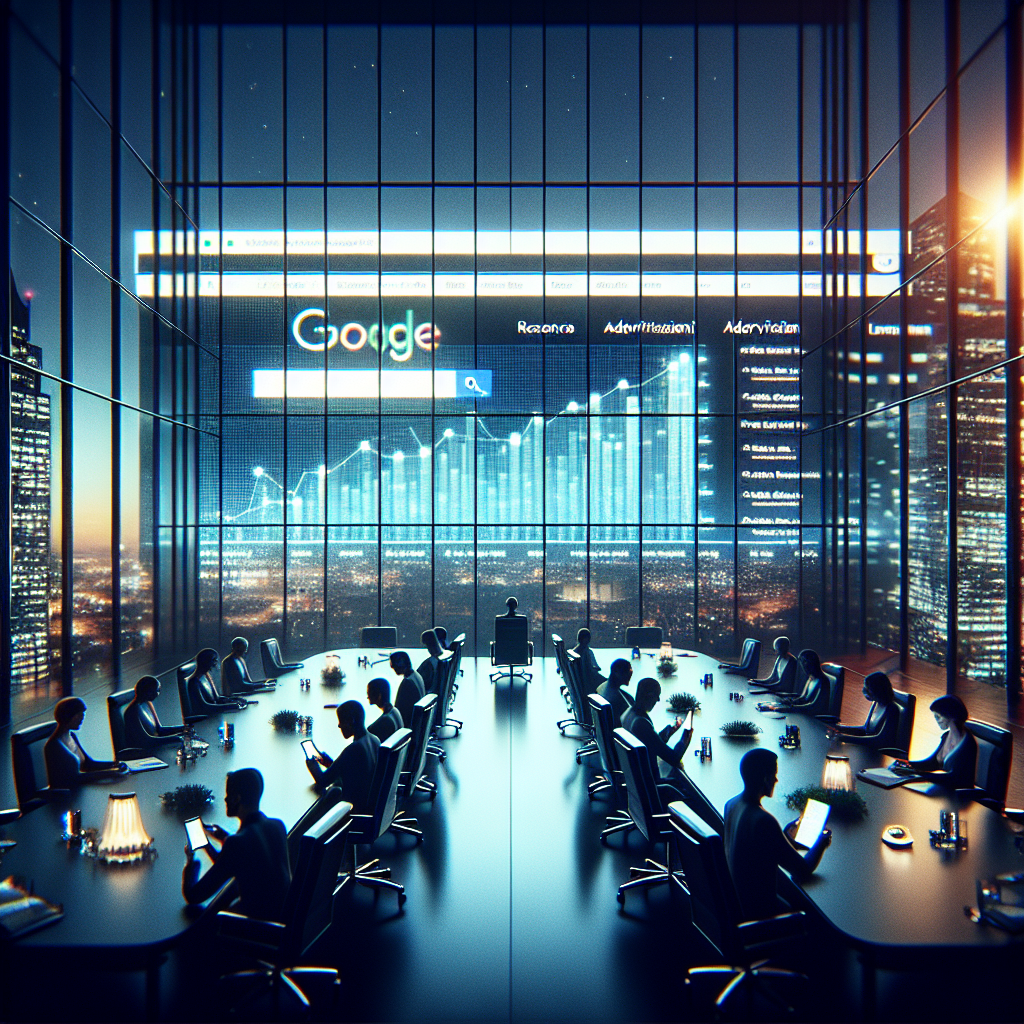
On a gray Tuesday morning in Mountain View, a product manager walks into a conference room clutching a laptop and a dream.
On her screen: a radically simpler Google homepage, stripped of clutter, tuned for real answers instead of ad-laced links.
On the wall: a slide labeled “User Delight.”
Around the table: finance, sales, growth, legal.
By the end of the hour, the dream is dead.
Why? Because every pixel she wants to reclaim from ads and “engagement modules” touches a revenue line that props up one of the most profitable machines in human history. And that is the quiet, suffocating paradox at the heart of Big Tech today.
Google, Meta, Amazon, and their peers are now so large, so financially optimized, that the very systems that once made them unstoppable are the same systems that make real change almost impossible.
Welcome to the era of the Great Tech Paradox.
The Company That Can Change the World, But Not Its Homepage
On paper, Google is the kind of company that can reinvent anything.
In practice, it struggles to even reinvent search.
For two decades, Google’s core business model hasn’t really changed: show you a search box, capture your intent, sell that intent to advertisers. The more you search, the more data Google has; the more data it has, the better the ads; the better the ads, the more money it makes.
That money turned into power — and power calcified into structure.
By 2024, a U.S. federal court found that Google had illegally monopolized the general search market, pointing straight at the multibillion‑dollar default search deals that made Google the preset option on phones and browsers.[3] Those contracts — with Apple, Samsung, browser makers and more — didn’t just protect Google’s lead; they sealed the ecosystem.[3]
Regulators noticed. Users felt it. Competitors suffocated outside the walled garden.
How the Default Became Destiny
The default sounds boring.
It isn’t.
Economists call it “default bias”: people almost always stick with whatever is preselected. That tiny bit of friction — searching how to change a setting, digging into menus — is enough to keep billions of users right where companies want them.
According to antitrust experts, the court concluded that Google’s 90‑plus percent search share rested not only on product quality, but also on its contracts making Google the default option on devices and browsers worldwide.[3] In simple terms: if you bought a phone, you were buying into Google’s search whether you realized it or not.
Those deals were so central that Google paid tens of billions of dollars a year to keep them in place. They weren’t an add‑on to the business. They were the business.
It worked — until it didn’t.
A Judge Pulls the Brake on the Money Machine
In late 2025, U.S. District Judge Amit Mehta did something quietly radical: he ordered Google to limit all default search and AI app deals to one year.[1][2][4] No more multi‑year, set‑and‑forget contracts. Every 12 months, the table resets.
For Google, this is more than a legal footnote. It’s a forced heartbeat of uncertainty.
The company now has to renegotiate, justify, and fight for its defaults every single year — on phones, browsers, and even emerging AI assistants.[1][2][4] Rivals get a new shot at prime placement not every decade, but every contract cycle.[4]
One antitrust scholar put it bluntly: the court’s remedy targeted the “biggest asset” behind Google’s dominance — its distribution and its data — by both cutting off exclusionary contracts and compelling Google to share parts of its search data with competitors to narrow the “scale gap.”[3]
In other words: the fortress still stands, but the gates are cracked open.
Inside the Machine: When Optimization Becomes a Trap
If this were just a legal drama, the story would end there. It doesn’t.
Because the real paradox isn’t only about contracts and courts. It’s about optimization.
Big Tech runs on dashboards: daily active users, ad click‑through rate, time on site, revenue per search. Every product decision flows through those numbers, and those numbers are trained — like a muscle — to expect growth.
Shrink ad load to make search cleaner? The dashboard screams.
Let users leave faster with better answers? Time‑on‑site drops.
Ship a privacy feature that cuts data collection? Targeting weakens, ad prices wobble.
“The system punishes anything that looks like short‑term pain,” says a fictional but all‑too‑believable former Google ads strategist, “even if it’s obviously the right long‑term move for users.”
This is how innovation dies in places built to innovate: not in a single meeting, but in 10,000 micro‑decisions where the spreadsheet quietly wins.
The Human Cost: One Family, One Feed, One Fight
Imagine a family in Ohio.
Maya, a nurse, googles symptoms late at night because calling a doctor is too expensive. The results page looks less like a clean list and more like a casino floor: ads up top, AI answers in the middle, a maze of “People also ask” boxes below.
Her 13‑year‑old son, Eli, lives on a video platform owned by another tech giant. The recommendation algorithm has slowly nudged him from gaming clips into darker, more extreme content — not because anyone at the company wanted that, but because outrage and obsession keep him watching, and watching fuels the machine.
Maya doesn’t know the term engagement optimization, but she feels its effects.
Her search for help feels commercialized.
Her son’s feed feels weaponized.
To her, antitrust rulings and contract limits are just headlines. But they are part of a broader attempt to wrest control of these invisible systems back toward the public interest.
Governments Strike Back — But Gently
The United States, long hesitant to truly challenge Big Tech, is now stacking cases. In search. In digital ads. In app stores.[3][6] Europe has already fined Google billions for abusive practices and is layering new “gatekeeper” rules on top.[5]
The remedy playbook is changing. Instead of simply slapping fines on past behavior, regulators are trying to reshape the future:
- Shorter, non‑exclusive default contracts, so competitors get a fair shot.[1][2][4]
- Data‑sharing mandates, so smaller players can train better search and AI tools.[3]
- Limits on bundling services to choke off rivals before they grow.[3][5]
But notice what they are not doing: breaking up the giants. Courts and experts argue that trying to cleave Chrome from Google, or ads from search, would be “messy” and potentially ineffective at fixing the underlying conduct.[3]
So instead, regulators are trying to rewire the incentives without killing the host.
What’s Next / Could It Happen Again?
Could the same monopoly dynamics reappear in AI?
Absolutely.
The judge’s latest order explicitly ropes in AI defaults — the assistants and generative tools that will increasingly answer our questions before we even type them.[1][2][4] If search was the first battleground, AI assistants are the sequel.
The question is whether the world has learned enough, fast enough, to avoid replaying the last 20 years — this time with models instead of web pages.
Because the Great Tech Paradox isn’t really about Google alone.
It’s about any system that becomes so big, so optimized, that it can no longer choose what’s right over what’s merely profitable.
So here’s the question for all of us, users and regulators and builders alike:
When the next default screen appears in front of a billion people — will we even notice that we can still choose?
FAQ
Q1: What is the “Google antitrust default search ruling”?
It is a U.S. court decision that found Google illegally maintained a monopoly in general search and ordered remedies including ending exclusionary default search contracts and limiting future default deals to one year.[1][2][3][4]
Q2: How does limiting Google’s default search contracts to one year help competition?
Annual contracts force regular rebidding, giving rival search engines and AI assistants more frequent opportunities to be the preset option on phones and browsers instead of being locked out for many years.[1][2][4]
Q3: Does this ruling mean Google has to break up or sell Chrome?
No. The court rejected breakup remedies like forcing Google to divest Chrome, focusing instead on behavioral changes such as ending exclusionary deals and sharing some search data with competitors.[1][3]
Q4: How does this affect generative AI and AI assistants?
The same one‑year limit now applies to default placement of Google’s AI tools, aiming to prevent Google from locking in dominance as search shifts toward conversational and generative AI experiences.[1][2][4]
Q5: What does this mean for everyday users of Google Search?
Changes may appear gradually, such as more visible options to pick alternative search engines or AI tools during device setup, and potentially more innovation driven by real competition instead of long‑term exclusive defaults.[1][2][3]