
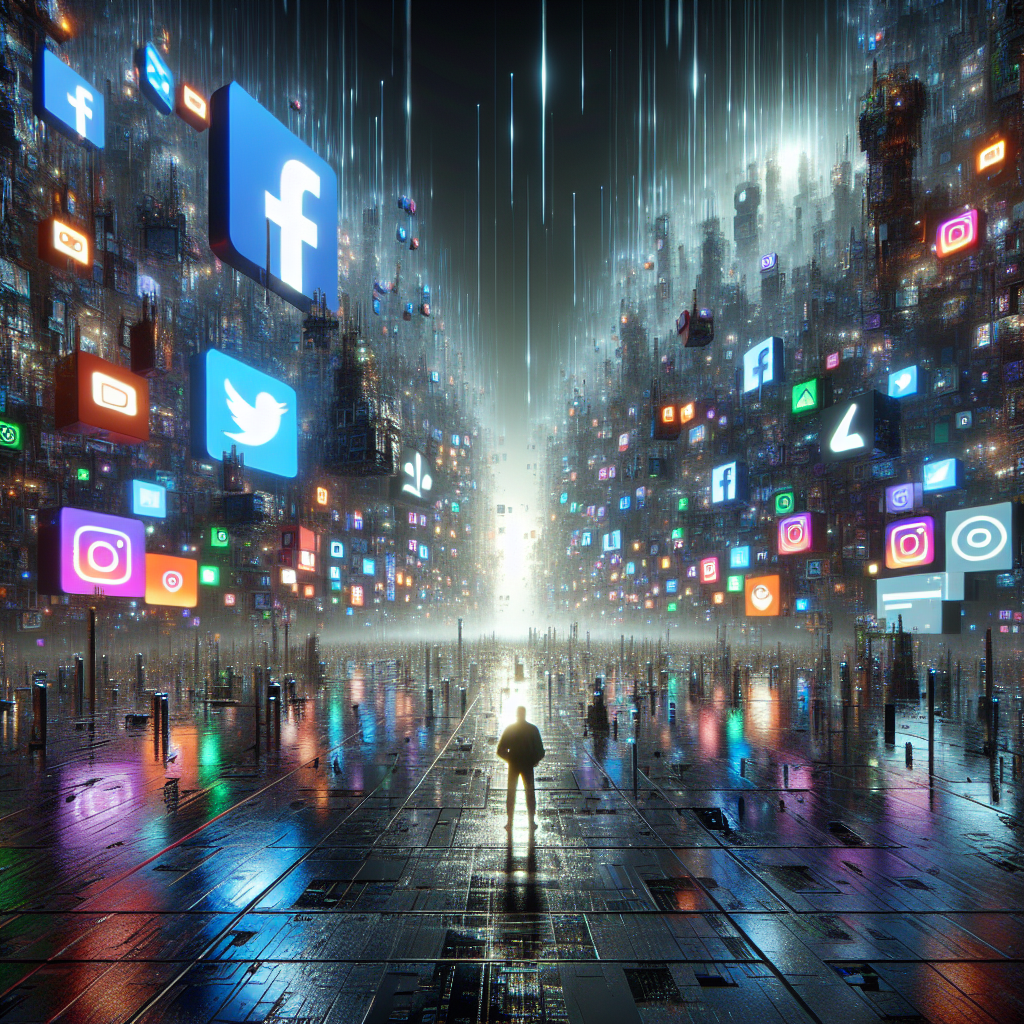
The Moment You Realize the Internet Feels… Off
You open your favorite shopping app to buy a simple charging cable.
Instead you’re hit with junk: fake brands, sponsored garbage shoved above real products, sketchy “AI summaries” pretending to be reviews. You scroll, scroll, scroll — but the feeling won’t leave.
Something broke.
Not your phone. Not your Wi‑Fi.
The internet itself.
Over the past decade, our feeds, search results, shopping sites, and streaming platforms have quietly transformed from useful, even magical tools into noisy, manipulative, ad-stuffed traps.[1][3][4] This slow decay has a name now — a rude, funny, brutally accurate one: enshittification.[1][2][4]
What “Enshittification” Really Means
Writer and activist Cory Doctorow popularized the term enshittification to describe a pattern: online platforms get worse on purpose over time.[1][2][4]
In plain English, enshittification is:
The gradual, deliberate degradation of digital services as companies squeeze users and business partners for ever more profit.[1][2][4]
It’s not random. It’s a playbook.
Doctorow and later analysts describe it as a three- (sometimes four-) stage process:[1][2][3][4]
-
Stage 1 – Be Good to Users
Platforms start out genuinely great.
Cheap rides. Clean search results. Useful timelines. Few ads. The goal: hook people, grow fast, and become the place everyone has to be. Network effects — the value that comes from everyone being there — kick in hard.[2][4] -
Stage 2 – Squeeze Users for Business Customers
Once users are locked in, companies quietly start degrading the experience.
More ads. More tracking. More friction to leave. The platform chases advertisers and sellers, using your attention as bait.[1][2][3][4] -
Stage 3 – Squeeze Businesses Too
Now that businesses are also dependent on the platform, it turns on them as well.
Higher fees. Pay-to-play ranking. Opaque algorithms that can tank a seller overnight.[1][2][3][4] -
Stage 4 – The Terminal Pile of Shit
Users hate it. Businesses hate it. But everyone is trapped by high “switching costs” — the money, time, and social connections it would take to move somewhere else.[1][2][4]
That’s enshittification: value flowing from users and businesses up to the platform owners, while the experience for everyone else spirals.
From Promise to Pile-Up: How Big Tech Broke the Internet
You can see this pattern almost everywhere:[1][2][3][4]
- Social media shifted from simple chronological feeds to algorithmic outrage machines full of ads and “recommended” junk.[3][4]
- Search engines increasingly surface SEO spam and AI-stuffed content ahead of high-quality information.[1][3][4]
- E-commerce platforms bury real products under fake brands, counterfeits, and paid placement.[1][3]
- App stores extract huge cuts from developers while controlling what can exist on your phone.[2][3][4]
Platforms used to compete to serve us. Now they compete to see how far they can push us without losing us.
A key move here is lock-in — designing systems so you can’t practically leave:[1][2][4]
- Friends, photos, and history trapped on one social network.
- Devices that break if you don’t use the official app.
- “Right to repair” blocked so you must pay the manufacturer.[1][2][4]
Once you’re trapped, the enshittification dial starts turning.
One Family’s Quiet Internet Collapse
Picture a perfectly normal family.
Maya uses a big marketplace to buy kids’ school supplies. Her partner, Luis, drives for a gig app on weekends. Their teenager, Noor, depends on one social platform to keep up with friends, events, and art commissions.
At first, it all works:
- Maya gets fast shipping and real reviews.
- Luis gets decent per‑ride pay and clear rules.
- Noor sees posts from actual friends.
Then, slowly:
- Maya’s search results fill with low-quality knockoffs and “sponsored” listings that look like real recommendations.[1][3]
- Luis’s pay per ride drops while fees rise; the company’s algorithm changes are secret, and support is a chatbot.[4][6]
- Noor’s feed becomes a mess of “recommended” content, rage-bait videos, and unwanted ads, while posts from close friends vanish.[3][4]
No one moment feels like a breaking point. But by year five, the family is exhausted — trapped in platforms they hate, because that’s where the sellers, the riders, and the friends still are.
That is how enshittification feels on the ground: not a glitch, but a slow-motion betrayal.
Why This Keeps Happening
Enshittification isn’t just about greedy CEOs — it’s about the system that lets them get away with it.
Experts point to three big drivers:[1][2][3][4][6]
- Weak antitrust enforcement: For decades, regulators allowed tech giants to grow, merge, and acquire rivals with little resistance.[2][3][4]
- High switching costs: When all your contacts, data, and work live on one platform, leaving becomes nearly impossible, even if alternatives exist.[2][4]
- Legal and technical lock-in: From DRM (digital locks on devices and content) to app stores and patent trolling, companies use law and code to limit user control.[1][2][3][4]
As one antitrust analyst might put it: “Tech wasn’t just innovative; it was unregulated innovation, and we’re now living with the side effects.”
The Pushback: Regulators, Workers, and Users Strike Back
The enshittification wave hasn’t gone unanswered. Around the world:[1][2][3][4][6]
- Regulators have begun forcing interoperability, limiting app store fees, and challenging mega-mergers.
- Right-to-repair movements are winning laws that let users and independent shops fix devices, undermining lock-in.[1][4]
- Tech workers are organizing and blowing the whistle on abusive design, algorithmic harms, and surveillance.[1][3][6]
- Consumers are turning to ad blockers, alternative platforms, and browser extensions to reclaim some control.
But these responses are still fragmented, often outpaced by how fast platforms can “twiddle” their systems — making endless small changes to maximize profit while staying just ahead of outrage and regulation.[4]
What’s Next / Could It Happen Again?
Here’s the uncomfortable truth: enshittification is not a bug — it’s a business model.[1][2][3][4]
Unless the underlying incentives change, any new platform that reaches scale faces the same temptation:
Be good, get big, then cash out by degrading the experience.
Stopping that cycle will likely require:
- Stronger antitrust and competition law with real teeth.[1][2][3][4]
- Enforceable interoperability and data portability, so leaving is actually possible.[2][4]
- Worker and user power inside tech companies to resist the worst abuses.[1][3][6]
The question is not whether the internet can be wonderful again. Technically, it can.
The question is:
Will we accept an enshittified internet as inevitable — or is this the moment we decide it doesn’t have to be this way?
FAQ
What is enshittification in tech?
Enshittification in tech is the steady worsening of online platforms as companies first attract users, then exploit them for advertisers and business customers, and finally squeeze those businesses too, degrading the service for everyone except shareholders.[1][2][4]
How does platform enshittification affect everyday users?
Platform enshittification hits users through more ads, more tracking, lower-quality search results, paywalls, dark patterns (deceptive design), and fewer real choices, while making it hard to leave due to lock‑in and high switching costs.[1][3][4]
Why are digital platforms becoming more enshittified over time?
Digital platforms tend to become more enshittified over time because once they gain monopoly-like power, weak regulation and high user dependence let them prioritize short-term profit extraction over user experience without losing their base.[1][2][3][4]
Can governments stop enshittification of the internet?
Governments can slow or reverse enshittification with tougher antitrust enforcement, rules against self-preferencing, right-to-repair laws, data portability mandates, and limits on exploitative app store and ad market practices.[1][2][3][4]
What can users do about enshittified websites and apps?
Users can push back by using ad blockers, supporting interoperable and open-source alternatives, backing right-to-repair and antitrust efforts, and collectively moving to better services when viable options appear.[1][3][4][6]
Is enshittification inevitable for every big tech platform?
Many analysts argue enshittification is likely — not inevitable — for large platforms under current incentives; with stronger regulation, user mobility, and worker power, services can grow without decaying into extraction machines.[1][2][3][4][6]