
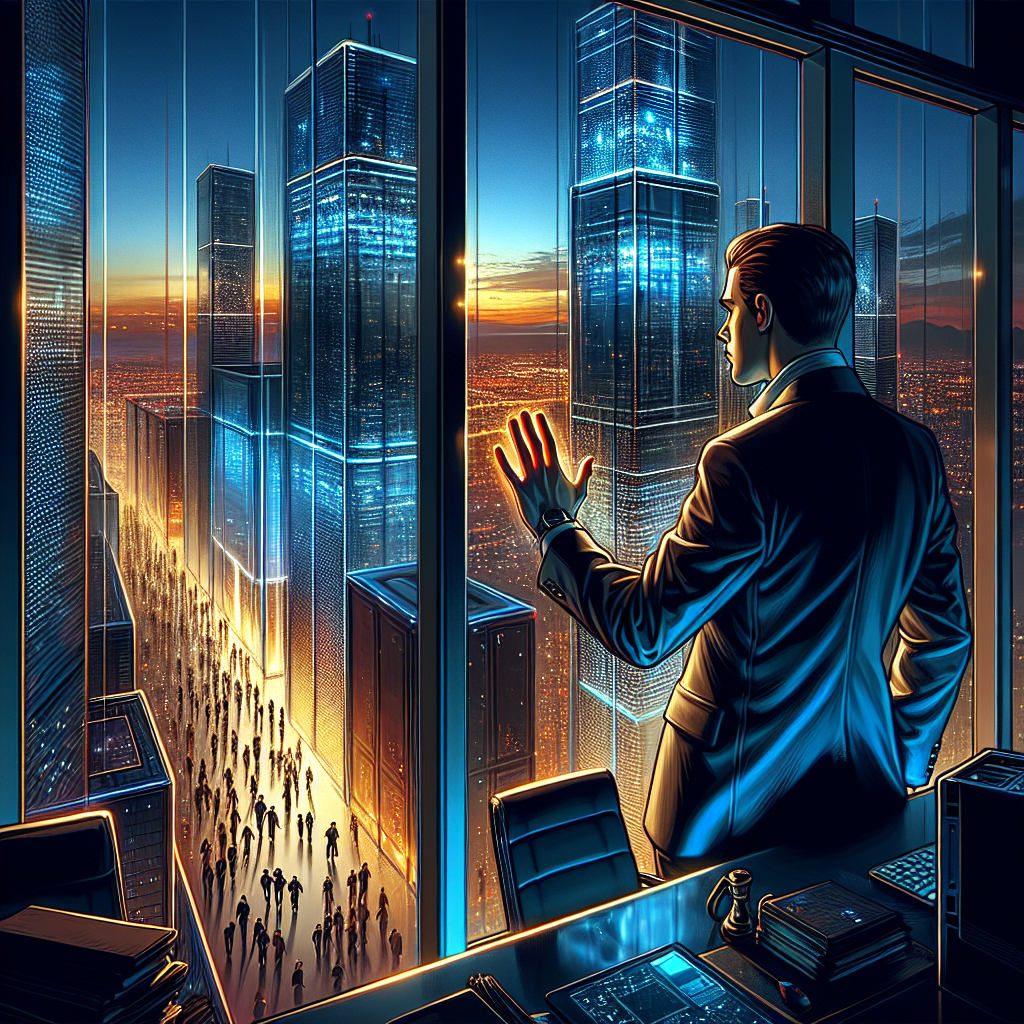
Opening Scene: A Lapse in Humanity, Broadcast to the World
It was a blustery Tuesday when the world tuned into an unusually candid livestream: a prominent venture capitalist, seated in sleek glass offices overlooking the foggy San Francisco Bay, uttered a sentence that seemed to echo through every home and every pocket—“We’re not building for people. We’re building for progress.” The internet caught fire. Screenshots flooded Twitter, TikTok, and Reddit. Suddenly, a question hovered over all of Silicon Valley: if progress isn’t for people, who is it for?
The Disconnect at the Heart of Tech Ambition
At the epicenter of modern technology, the chasm grows. For decades, the mythos of Silicon Valley painted a utopian vision—apps connecting us, AI saving us, business models promising to “make the world a better place.” But beneath the glossy surface lies a friction grinding deeper every year: the titans of technology are racing to automate, optimize, and monetize, sometimes without pausing to ask—at what human cost?
Why This Matters Now
The post went viral on Reddit’s r/technology not just for the outrage, but because it articulated something many have sensed but struggled to name. From gig workers riding midnight bikes to deliver fast food to users confused by opaque algorithm changes, the sense of alienation is real—and growing.
Tech philosopher Dr. Maya Russo puts it simply: “When founders are obsessed with efficiency, but desensitized from human impact, we lose something essential. Technology starts to feel less like a tool, and more like a force to withstand.”
How the System Works: Incentives and Inertia
Why do so many tech capitalists seem disconnected? The answer’s baked into the incentives of modern venture capital. Success is measured not in well-being, but in exponential growth. If an app can launch faster by automating away customer support, or scale by collecting ever more personal data, then those are celebrated as “innovations.”
Investors, analysts, and startup boards often focus on “runway” (how long a company can operate before it runs out of cash) and “scalability” (how fast tech can grow without lots of people). The mantra? Move fast, break things, cash out.
Expert Insight: “It’s Not Malicious, It’s Mechanical”
Industry analyst Samir Desai explains, “These aren’t cartoon villains making evil decisions in boardrooms. The issue is systemic. When the metrics reward detachment from the human experience, the entire industry tilts away from empathy.”
A Day in the Life: The Human Side
Meet Rosa, a single mother in Austin. She drives for a ride-share app after her day job; the latest algorithmic update means fewer ride requests and unpredictable shifts. She tries to call customer support. A chatbot routes her in circles—no human in sight. Rosa isn’t alone. For millions, ‘innovation’ now means cut hours, less voice, and more algorithms standing between them and answers.
The Public Responds: Outrage, Boycotts… and Reflection
After the viral post, users started sharing their own stories—gig workers, content moderators, parents whose children saw explicit content slip through “AI filters.” Hashtags trended. Community forums buzzed with calls for boycotts and calls to reimagine technology itself.
Governments took notice. In hearings, US senators grilled tech CEOs: “Is your ultimate client the user, or your shareholder?” The European Union’s Digital Services Act demanded more transparency. Cities launched task forces to examine how tech impacts workers and families.
The Ripple Effect: Industry at a Crossroads
A few companies listened. New t-shirts appeared in the city: “Built for Humans.” Startups began touting “ethical tech” and new benchmarks that measure not just downloads, but life satisfaction. Others doubled down—launching faster, more impersonal chatbots, pushing the boundaries of automation further.
Dr. Russo warns: “We face a fork in the road. Tech can empower communities or leave them behind.”
What’s Next: Could It Happen Again?
The clash, far from over, is intensifying. As automation and AI sweep deeper into the job market, the human versus machine debate grows louder. Lawmakers weigh regulation. Communities demand a say in the next wave of invention. What’s clear? The future isn’t yet written.
And now, over to you: If technology isn’t built for people, who should it serve? How do you want to shape the next wave? Drop your take below.
FAQ
What does “tech capitalists don’t care about humans” mean?
This phrase reflects growing criticism that Silicon Valley investors and technology executives prioritize profit and rapid growth over the real-life impact on people using or affected by their products.
Why is this issue trending now?
As automation and AI touch more daily life—from jobs to security and privacy—disconnection and negative impacts are harder to ignore. Viral posts have sparked renewed debate.
How does this affect everyday people?
From unpredictable gig work hours to opaque algorithm decisions, many users feel less heard and more controlled by “progress” that rarely asks for their input.
What are governments and companies doing in response?
Some lawmakers push for tougher regulation and transparency; a few tech firms are embracing “ethical tech” to put users back at the center. The outcome is still playing out.
Could the focus shift to human-centered innovation?
Yes—if public demand and policy continue to pressure companies, technology could pivot towards more inclusive, human-first goals.
Keyword
technology impact on society
LSI
- Silicon Valley ethics
- venture capital and human welfare
- AI automation job impact
- tech industry regulation
- algorithm transparency
- ethical tech startups
MetaDescription
Explore how Silicon Valley’s race for innovation created a growing divide from real human needs. Discover the viral debate and what’s next for technology’s role in our lives.