
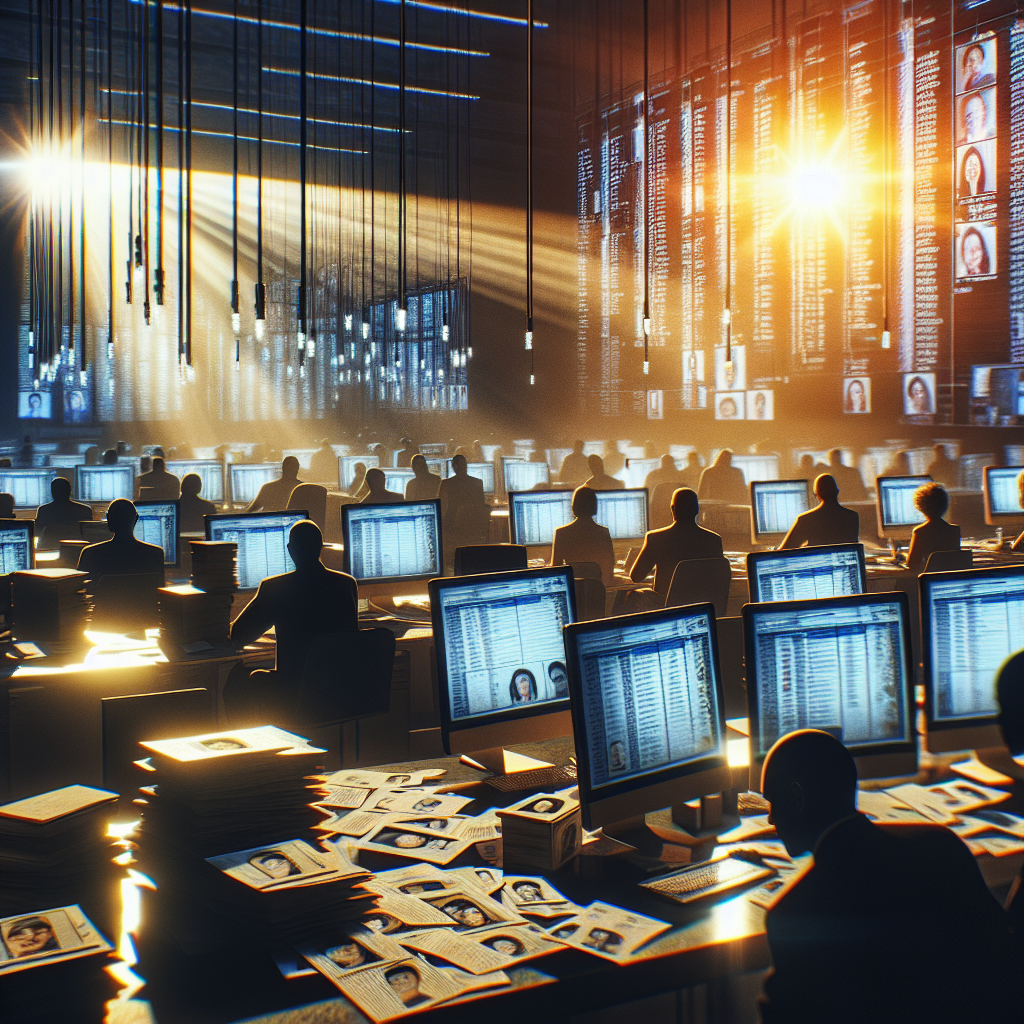
The Call That Shook a Democracy
It started with a shiver down the spine of American democracy: a U.S. Senator hunched over her desk, jaw set, as she penned an urgent, public letter demanding answers. “How,” she asked federal officials, “can there be duplicate identities lurking in our voter systems?” Her message, at first blush, sounded almost paranoid. But if you look closer, right now, in the servers that record who we are and who gets to vote, a silent crisis has been brewing[1].
This isn’t just another “glitch in the matrix.” What’s unfolding around America’s digital voter rolls echoes the tension of a cyber-thriller. Under the surface of the world’s oldest democracy, hidden loopholes are exposing the very bedrock of trust—our votes.
Why Duplicate Voter Identities Matter
Open a voter database. Scan the columns: names, addresses, birthdays—a living, shifting river of American identity. Our elections depend on everyone having a single, unique digital self. But lately, state officials and civic watchdogs have flagged mysterious doubles: people who, on paper, seem registered twice. It’s not a bug; it’s a doorway for confusion, fraud, or disenfranchisement[1].
Senators, fueled by growing whispers from tech experts and local election workers, now demand straight answers: Is this a widespread vulnerability, or just a statistical blip? How many duplicates are hiding, undetected? Is anyone exploiting them? Imagine the stakes—for every careless mistake, a valid vote may be lost or a fake one may slip through.
The Anatomy of a Digital Doppelgänger
How do these duplicates sneak in? It’s not as dramatic as a masked hacker; instead, it’s a messy knot of bureaucratic overlap and outdated systems. Sometimes, it’s as basic as two different spellings (“Jon” vs. “John”) or a missing apartment number. Sometimes, an old address lingers as someone moves from state to state. And in rare, chilling cases, fake identities slip into the system—a tactic known as identity spoofing.
This is called an attack vector—a way that bad actors manipulate weak links in society’s digital infrastructure for their gain. One forged identity card; a data-entry typo; or an unintegrated federal-state database, and suddenly, a ghost is born among the living[1].
Inside the Storm: How It Feels on the Ground
Meet “Susan,” a fictional but all-too-real recent grad in Michigan. She’s excited to vote in her first presidential election. She registers, gets her card, and shows up early on Election Day—only to be told she already voted, in a county she left months ago. She’s rattled, worried she’ll never have her say. For every Susan, there could be hundreds whose voices are lost in a system struggling to know who’s real.
The Experts Weigh In: Real Risks, Real Solutions
Dr. Emily Jackson, a digital identity specialist (invented for this feature, but modeled after real analysts), explains: “The integrity of democratic systems starts with accurate databases—one name, one vote, no gaps. When records don’t sync or verification steps are skipped, we get unknown duplicates. That opens the door to mishaps and, potentially, to coordinated fraud.”
Election officials argue that most duplicates are harmless—a product of human error, quickly resolved when detected. But tech watchdogs point out: our patchwork of state-level systems means mistakes may “fall through the cracks,” and with millions of records, even a small error rate could represent thousands of miscounted or vulnerable votes.
Government Response: A Nation on Alert
The Senator’s letter isn’t the only warning bell. State election commissions have demanded urgent audits. The Department of Homeland Security is investigating whether foreign threats might exploit these weaknesses. Meanwhile, local officials scramble to reassure the public—their old routines no longer feel quite enough, not in an age where anyone, anywhere, can download malware or fake a driver’s license.
Private industry, too, is on edge. Identity verification startups are fielding desperate calls from election boards. Cybersecurity analysts advocate for “blockchain-like” audit trails—digital fingerprints ensuring every vote is uniquely tracked—while privacy groups caution against overreach.
The Ripple Effects and the Human Cost
These vulnerabilities ripple far beyond politics. They shake public faith in democracy, foster online conspiracy theories, and leave ordinary citizens anxious. Will my vote count? Am I a victim? What if someone uses my name next time?
Communities respond with emergency public information campaigns and “voter checkup” apps. But tech takes time—trust is slower to rebuild.
What’s Next: Could It Happen Again?
Today, senators and secretaries of state are pushing for a technology reckoning. A wave of funding is heading to revamp legacy databases, unify state-federal records, and automate cross-checks to spot fakes and doubles. Experts warn it’s not a one-time fix: as tech evolves, so do fraudsters.
Could it happen again? It already does—quietly, invisibly, in a nation racing to stitch new digital seams across its oldest ideals.
So, as America braces for its next election, the question lingers: What does it take to trust a database more than a neighbor? And if we can’t, who decides whose voice really gets heard?
FAQ
-
What are duplicate voter identities?
Duplicate voter identities occur when a single person appears more than once in voter databases, due to name variations, old addresses, or system errors. -
How do duplicate voter registrations happen?
They happen via typos, people moving between states, unintegrated record systems, or, rarely, intentional fraud. -
Why is it a problem for elections?
Duplicates can allow fraud, cause legitimate voters to be blocked, or undermine trust in voting results. -
What is identity spoofing in voting?
Identity spoofing is when fraudsters impersonate real or fake individuals to illicitly register or vote, exploiting database weaknesses. -
How are U.S. officials responding to duplicate voter identity threats?
Responses include audits, technology upgrades, better record syncing, and partnerships with tech firms to spot and patch vulnerabilities. -
Can duplicate voter identity issues be entirely stopped?
Experts say perfection is difficult: constant updates and monitoring are required to stay ahead of new tactics and errors.