
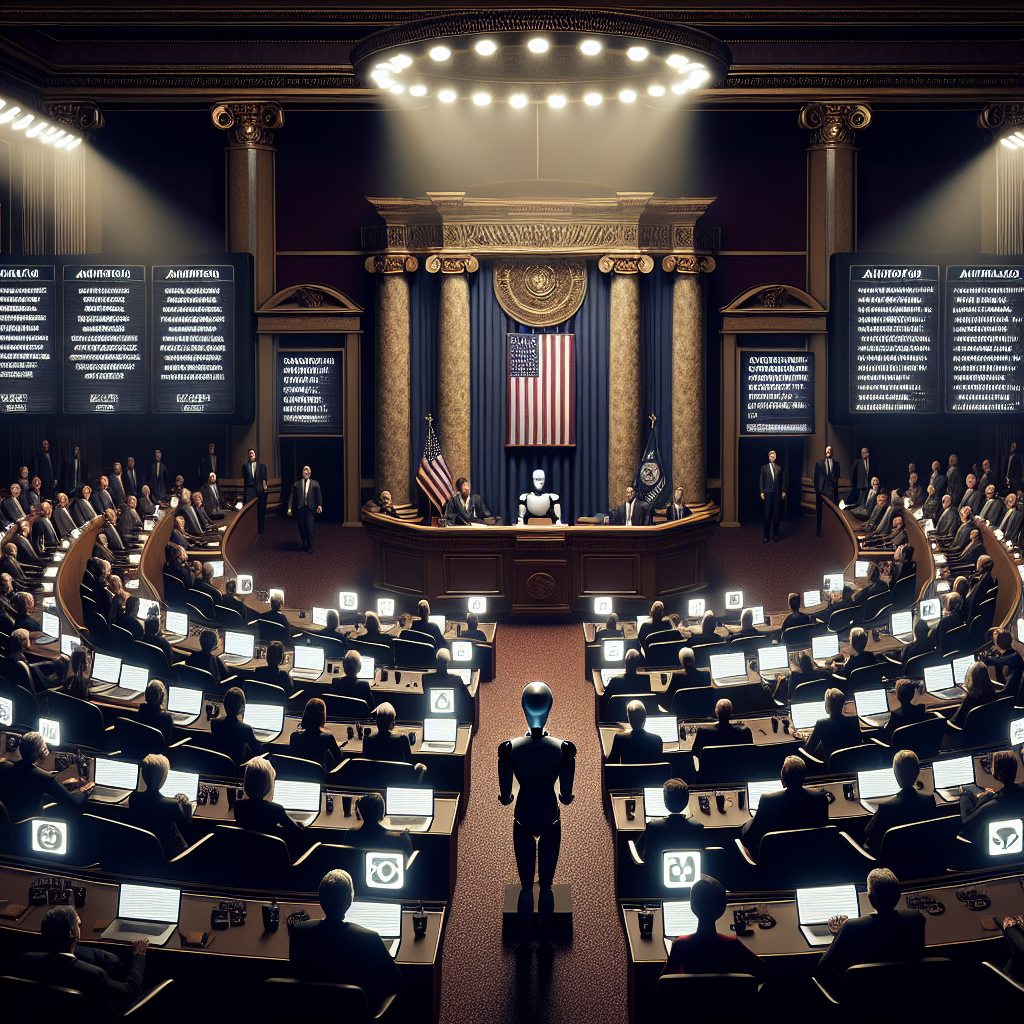
Opening Scene: The Midnight Vote That Changed AI Forever
Picture this: It’s 2 a.m. inside the marble halls of Congress in June 2025. Bleary-eyed lawmakers click their voting buttons, arguing over the future of American artificial intelligence. They’re not just debating software—they’re contesting the soul of the digital era. The decision on the table? Whether to silence fifty states’ voices with a decade-long freeze on all new AI regulations.
The room buzzes with phrases like “algorithmic fairness,” “censorship,” “the end of innovation.” Some scold AI for being “too woke”—a term charged with political firepower since chatbots started refusing racist jokes and embracing gender-neutral pronouns. Others warn: slow down, or risk AI running amok, unbridled and unchecked, capable of infiltrating everything from Wall Street to the average American family dinner. The vote fails. At dawn, dozens of state legislators already have fresh bills on their desks.
What’s Actually Happening—and Why It Matters
Artificial intelligence (AI) isn’t just in your phone—it’s become a new power grid for everything digital, from loan decisions to what shows you binge on. Last year, U.S. states rushed to regulate this invisible force, with more than 1,000 AI-related bills introduced in just four months—a legislative stampede with no precedent, not even during the social media gold rush[1][2].
Why the urgency? The stakes have never been higher. AI’s ability to impact democracy, job markets, housing, and our very choices makes it too big for a piecemeal approach. Yet, as the nation tries to catch up, a fractal, state-by-state tangle emerges—think “fifty different Americas,” each with its own AI rulebook[3][4].
How the Regulations Work (Or Don’t)
Some states want their AIs to be “apolitical”—no touchy topics, no “woke” language. Others demand strict audits to prevent discriminatory bias in hiring tools and housing algorithms. A bill in New York (the Responsible AI Safety and Education Act) aims to legally bind AI developers to transparency and safety, while in Colorado, a law targeting “algorithmic discrimination” passed—but faces legal fire for interfering with businesses nationwide[1][4].
These moves, say critics like Adam Thierer of the R Street Institute, risk creating a compliance nightmare—forcing tech companies to build different bots for each state, raising costs, and threatening America’s edge in the AI arms race[3].
Meanwhile, in the background, Washington’s attempts to impose a federal pause—the “AI moratorium”—implode under partisan bickering. Freed from the threat of top-down rules, states launch a regulatory gold rush, rewriting the playbook for every other country on earth[2].
Expert Voices: A Tech Battlefield
“AI is the new internet, only on steroids,” says Maya Castillo, a fictionalized analyst at the Data Futures Institute. “If every state runs in a different direction, we risk Balkanizing our digital economy. But wait too long, and AI will grow too powerful, too fast, for anyone to steer it.” Her view echoes concerns among tech CEOs and civil liberties watchdogs—unbridled innovation brings both miracles and monsters.
Federal efforts lag. Commerce Chair Ted Cruz drafts a bill that would block states from interfering, promising a “light-touch” national regime—but trust is thin, and Congress remains gridlocked[4].
The Human Toll: Hannah’s Story
Hannah Lee, a single mom in Denver, navigates the choppy waters herself. She applies for a job, but her résumé gets rejected—by an algorithm she’s never met. Colorado law says companies must audit their AI for fairness, but in practice, rules don’t always match reality. When her son’s school proposes an “AI tutoring assistant,” she wonders: Who decides what values this teaching robot learns? Who watches the watchmen?
Ripple Effects: What the World Noticed
America’s patchwork response stuns competitors. Europe plows ahead with strict regulation, championing “AI rights.” In China, regulations are tight, focusing on censorship and surveillance. Multinational companies struggle to code to America’s moving target. Some call it chaos, others “laboratories of democracy”—but everyone’s watching what comes next[5].
What’s Next/Could It Happen Again?
With November’s elections looming, AI remains a political lightning rod. The “regulate or innovate” debate rages in every statehouse and boardroom. Will a fractured America lose its edge to more unified rivals? Or is chaos simply creativity’s price?
Technologists warn: AI is multiplying in ways no single law can predict. The next flashpoint may not be a chatbot’s language, but an AI stock market crash, a politicized robot, or an algorithmic error with real-world fallout.
So, who should set the rules for the most powerful tool of our time—Washington, the states, or no one at all? Who decides what your AI can say, do, or refuse?
FAQ
-
What is the latest state AI regulation trend?
In 2025, more states than ever are introducing AI-specific laws, addressing bias, transparency, and consumer protection while sometimes clashing with federal proposals. -
What is an AI regulatory moratorium?
A legal pause on new regulations. Congress considered a 10-year ban on state AI rules to prevent a patchwork, but this failed to pass. -
How does “algorithmic discrimination” get addressed?
Laws like Colorado’s require audits of automated systems (like hiring bots) to check for bias against protected groups. -
What are the challenges for companies?
Navigating fifty different sets of compliance rules increases costs and legal risk, possibly driving innovation overseas. -
How does AI “wokeness” fuel debate?
Some claim chatbots’ content moderation or inclusive language is political, sparking regulatory battles over the values encoded in algorithms. -
Can this situation be fixed?
Experts argue the best way forward is a balanced federal approach, but political division makes compromise elusive.