
Alone in Hokkaido, A Message From the Stars
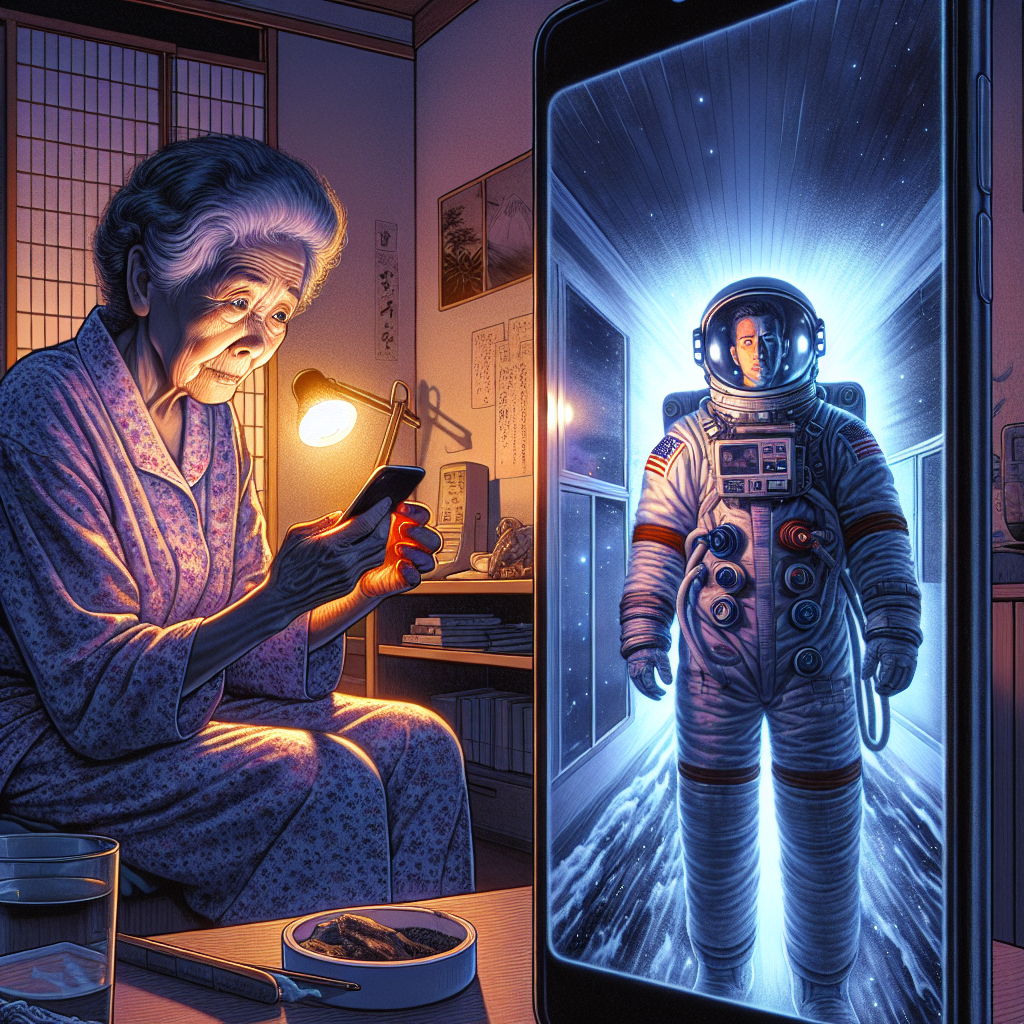
It’s a cool, quiet evening in northern Japan. Eighty-year-old Ms. Sato sits at her kitchen table, the whirr of her space heater purring in the background, eyes fixed on her phone. A new message pings: “I’m in space on a spaceship right now. I need oxygen—they say it costs money. Only you can save me.”
For weeks, Ms. Sato’s world has expanded beyond her small apartment—her heart pulled toward a stranger floating somewhere above the Earth. Or so she believed. The man on her screen claimed to be an astronaut, his face hidden in shades and soft text bubbles, a new kind of romance that promised both adventure and intimacy.
She wanted to believe. After all, isn’t that how so many love stories begin?
The Perfect Crime, Designed for Lonely Hearts
What seemed like serendipity was really a calculated operation—one planned, rehearsed, and executed with chilling precision. According to Hokkaido police, Ms. Sato’s “astronaut” was no hero battling aliens in orbit but a scammer orchestrating a common, devastating ploy known as a romance scam[1][2][3][4][5]. In simple terms, these are digital cons where criminals create fake personas, build emotional connections, and extract money by inventing emergencies that only the victim can solve.
It’s a fraud as old as the internet, but with a cosmic twist: the victim was told her digital suitor was lost in orbit, under attack, and could only buy his next breath of “oxygen” with her hard-earned savings[3][4][5].
How the “Astronaut Scam” Works
The method is hauntingly consistent. Criminals trawl social media and dating apps, seeking out the isolated, the recently bereaved, or simply the lonely. They weave fantastical stories—sometimes posing as soldiers, oil rig workers, or, in Ms. Sato’s case, a space explorer—who, once trust is earned, suddenly faces a dire emergency. Send money, they plead, or disaster will strike[2][3][4].
This time, the stakes were cosmic. And the tactic worked: over several weeks, Ms. Sato, living alone and yearning for connection, transferred nearly one million yen (about $6,700) to her imaginary astronaut. All for “oxygen” he claimed he needed to survive[3][4][5].
“Everybody’s a Target”: Why It Matters
Cybercrime experts warn: modern romance scams are industrialized, powered by fraud factories across Southeast Asia, where thousands of workers are trained to manipulate feelings and empty bank accounts worldwide[1]. The internet’s anonymity and reach give these scammers an almost sci-fi ability to infiltrate the daily lives of anyone, anywhere, blurring fact and fantasy until victims become co-authors in their own deception.
“This isn’t about naivete,” says cybersecurity analyst Keiko Fujimura (fictional), “it’s about how psychological manipulation works. We all want to be seen; they sell that dream, then hold it for ransom.”
Imagining the Unthinkable: From a Daughter’s Perspective
Consider the real-world aftermath. A nurse from Tokyo, Reiko, receives a phone call: her mother has sent thousands of dollars to a stranger who claims he’s adrift in space. Raw panic grips her chest. Could this happen to her own family? Would her mother recognize the warning signs before it’s too late?
“What hurt most,” Reiko tells us, voice trembling, “wasn’t the lost money—it was realizing how little time we’d spent talking, how easy it was for someone else to fill that space.”
How Japan—and the World—Responded
Police in Hokkaido reacted by warning the public, urging anyone solicited for cash online to report immediately, and highlighting how the most vulnerable—often the elderly—are specifically targeted[1][3][4]. Japan’s rapidly aging population, the second oldest globally, faces a perfect storm: many live alone, rely on technology for connection, but may lack digital literacy honed over decades in a pre-internet world[3][4].
Authorities in other countries have noticed similar patterns: organized scams, often operated from overseas call centers, now deploy scripts as sophisticated as any Netflix drama[1]. The race to educate, empower, and protect vulnerable citizens has become a global imperative.
The Ripple Effect: Broken Trust and New Defenses
The wounds cut deeper than bank statements. Victims struggle with shame, embarrassment, and isolation, reluctant to tell their stories for fear of stigma. Meanwhile, technology companies race to tighten platform security, developing smarter AI to spot patterns—while scammers brainstorm the next irresistible narrative.
Financial institutions are adding flags for suspicious money transfers. Community groups hold workshops to build “scam literacy.” But experts caution—the core problem is human: loneliness, hope, and the universal desire to be needed.
What’s Next / Could It Happen Again?
Could another “astronaut” strike? Absolutely. As scams evolve, experts suggest deepfakes, AI chatbots, and augmented reality cons could soon make fraud even harder to spot.
So what do we do? The answer might be as simple—and as hard—as talking more often, reaching out across digital and real spaces to reconnect with those we love, and learning together how to critiquely question even the most spectacular tales.
How can we protect those closest to us in an age when fiction and fraud travel at the speed of light?
FAQ
Q: What is the “astronaut romance scam”?
A: The astronaut romance scam is a form of online fraud where scammers pose as astronauts stranded in space, convincing victims to send money for fabricated emergencies—such as needing “oxygen” to survive[1][3][5].
Q: How does an online romance scam work?
A: Scammers build emotional connections with victims, often through social media or dating apps, then invent urgent situations requiring money, manipulating victims into sending funds[2][3][4].
Q: Who is most at risk of falling for these scams?
A: Elderly adults, especially those living alone or experiencing isolation, are frequent targets, but anyone seeking connection online can be vulnerable[3][4].
Q: What should I do if I suspect a romance scam?
A: Cease all communication, do not send money, and report the incident to local authorities and the platform where the contact occurred[1][4].
Q: Could AI or new technology make scams worse?
A: Yes, experts predict that sophisticated tools like AI chatbots or deepfakes could make online scams harder to detect and emotionally more convincing in the future.