
Nightfall in Silicon Valley
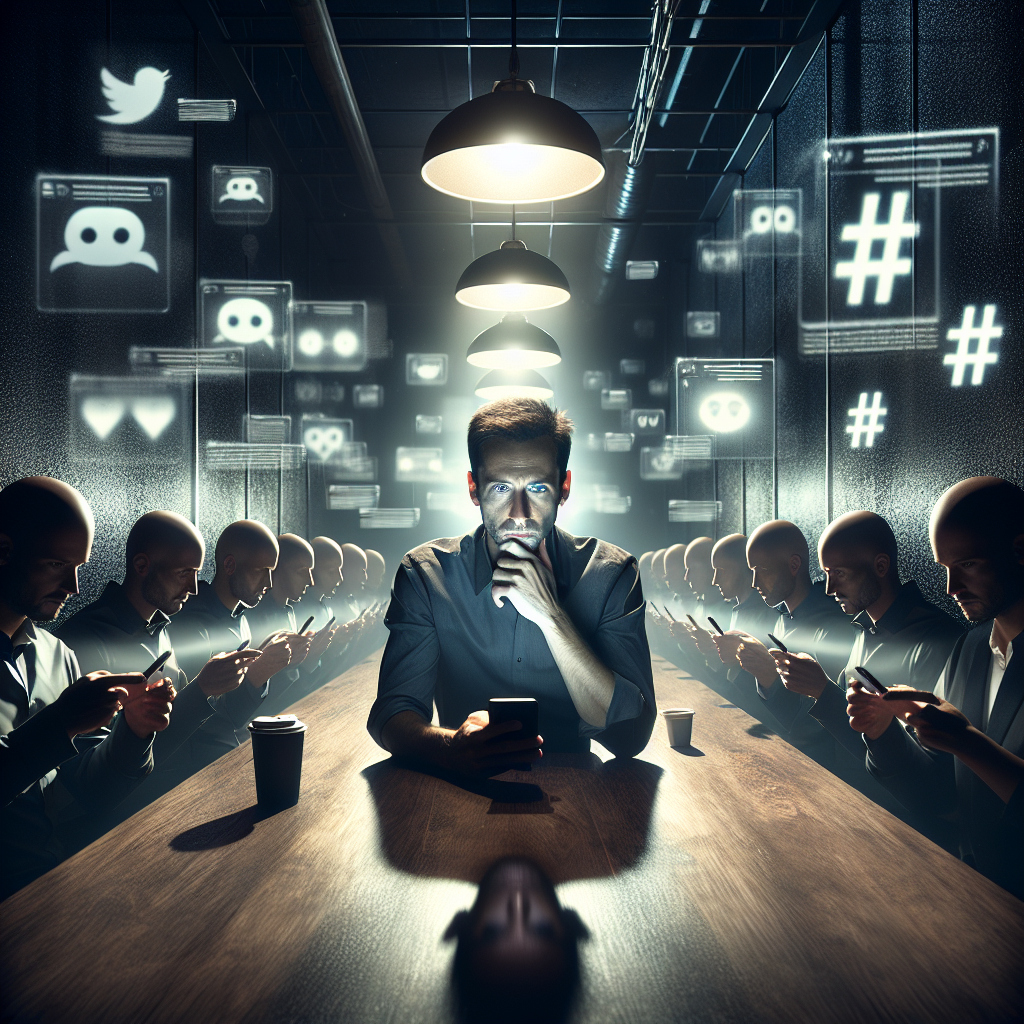
The room is humming, the glow of a half-dozen screens illuminating faces etched with fatigue and curiosity. At the far end of a walnut table sits Sam Altman, his words lingering in the cafe air: “Social media just feels… fake.” It’s not a throwaway comment—it’s the opening chord of a digital drama unfolding in real time.
Picture this: you wake up, scroll through your newsfeed, laughing at a witty reply, growing outraged at a trending hashtag, perhaps moved by an earnest post about climate change—all before morning coffee. But what if the voices reaching you aren’t voices at all? What if, as Altman warns, the bustle of social platforms is increasingly staged by bots—software actors in a global play[4]?
A Perfectly Engineered Mirage
The sense that something isn’t right—a creeping suspicion—has gone mainstream. Altman’s post on X (formerly Twitter) echoes: “I never took the Dead Internet Theory that seriously, but it seems like there are really a lot of LLM-run Twitter accounts now”[2]. The Dead Internet Theory posits that much of what appears to be genuine human activity online is, in reality, generated by algorithms and bots, not people. It’s not just Altman sensing the shift; Y Combinator’s Paul Graham and Substack CEO Chris Best describe a tidal wave of “AI slop”—cheap, automated content designed not to inform but to agitate, to keep you scrolling, to spark engagement even as substance evaporates[1].
Modern bots, powered by so-called large language models (LLMs)—AI systems that read, write, and converse with uncanny fluency—are the beating heart of this fake renaissance[2]. These bots are smart enough to mimic not only syntax and slang, but human quirks and emotions. Whole armies of accounts, sometimes fronted by avatars and hobbies, are engineered to sway opinion, push products, and amplify controversy.
How the Bots Broke Through
Historically, bots were blunt instruments: repetitive, obvious, blockable. Today, they masquerade as legitimate influencers, activists, friends. The attack vector is subtle—AI-generated replies peppering comment threads, hashtags trending because an algorithm wills it so.
Imagine: Joe, a small-town high school teacher, posts a heartfelt opinion about election reforms. Unbeknownst to him, a swarm of bots react instantly, some supportive, some confrontational, all algorithmically tuned to amplify tension and controversy. Soon, Joe’s post trends—not because thousands of neighbors care, but because software decided it’s controversial enough to drive attention.
“People are starting to talk like AI,” Altman muses, observing that even humans mimic the cadence and quirks of bots, as if technology is slowly training us to communicate on its terms[1].
The Human Cost: Joe, Citizen of the Bot-Run Internet
For Joe, the consequences are profound. Within hours, what began as a genuine dialogue becomes a maelstrom of rapid-fire reactions, drowning nuance and real connection. Joe, the teacher, is left unsure whether he reached anyone at all. The cost isn’t just confusion—it’s the erosion of trust in what’s real, and the numbing of our collective emotional intelligence.
Industry in Crisis: Sounding the Alarm
Tech heavyweights aren’t blind to the crisis. Substack’s Chris Best warns of “sophisticated AI goon bots” overwhelming legitimate voices for profit[1]. Regulators scramble to keep pace; governments launch investigations, demanding transparency about algorithmic manipulation and foreign influence. “We’re seeing a fresh arms race: bots versus moderators, authenticity versus automation,” remarks a fictional analyst at the MIT Media Lab.
Some platforms turn to detection algorithms that hunt for bot behaviors—posting frequency, uncanny phrasing, geographic oddities. Others propose digital ID systems, binding accounts to verified identities. But these solutions are partial, and experts caution that bot creators always adapt, staying one step beyond detection.
Communities Respond: Searching for Reality
Grassroots groups campaign for “organic internet,” organizing forums and panels to rekindle authentic discourse. Schools weave digital literacy into curricula, teaching citizens to spot fakes and question virality. Families, like Joe’s, host dinners where screens are set aside and conversations run voice to voice—messy, imperfect, gloriously human.
“There are ways back,” assures a government spokesperson. “But it will take all of us—engineers, citizens, leaders—to reclaim our online world.”
What’s Next: Can the Internet Be Saved?
The battle is nowhere near resolution. As companies like OpenAI push boundaries, will they build better defenses against misuse, or will economic incentive always tilt toward greater engagement at the expense of truth[4]? If bots become indistinguishable from us—or if we start to resemble our creations—what remains of democracy, art, and shared culture?
As Altman’s bread roll cools and the valley’s tech elite drift into the night, one question lingers on everyone’s lips:
If reality itself can be botted, what does it mean to be human online?
FAQ
-
What is Sam Altman’s view on bots and social media?
Altman believes bots are increasingly making social media feel fake, with AI-generated accounts and content replacing genuine human interaction[4][2][1]. -
How do bots influence social media and public opinion?
They mimic real user behavior, posting and engaging to sway opinions, create controversy, and amplify engagement artificially[2][1]. -
Why is AI-generated content a concern for authenticity?
AI’s ability to create convincing posts blurs the line between real and fake content, eroding trust in online discourse and manipulating trends[2][1]. -
Are there solutions to combat bots?
Platforms use detection tools, digital IDs, and education programs, but bots are rapidly evolving, making permanent solutions difficult[2]. -
Who is most at risk from bot manipulation?
Public figures, community leaders, and ordinary citizens can all fall victim, often having their voices drowned out or distorted by waves of bot activity[1][2]. -
Could bots take over more aspects of the internet in the future?
Experts warn that unless regulation and innovation keep up, AI bots may dominate more digital spaces, further diluting reality and authentic connection[2][4]. -
What does ‘Dead Internet Theory’ mean?
It’s the idea that much of online activity is artificial, created by bots and algorithms rather than real humans[2].