
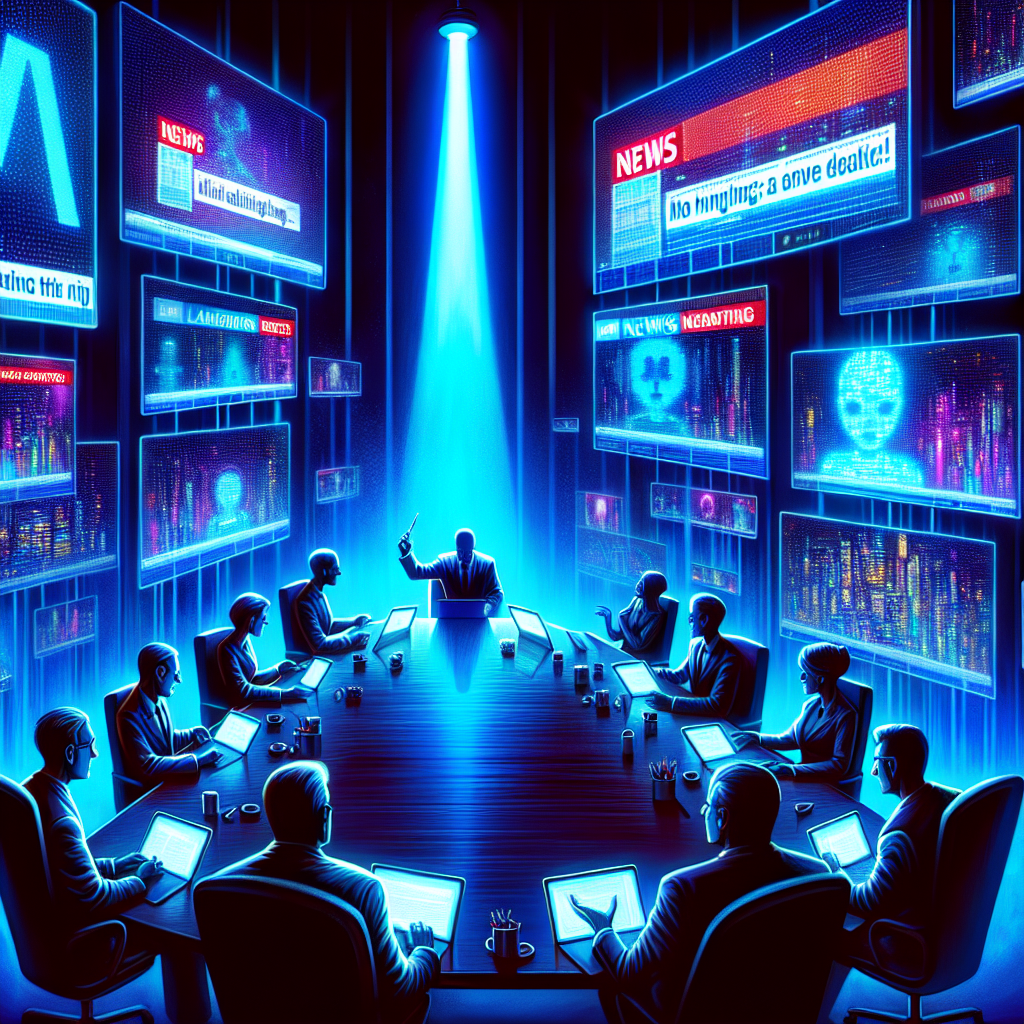
A Midnight Declaration on Reddit
Picture this: It’s 2:04 AM. On the buzz and haze of a scrolling screen, a new post rockets to the top of r/technology—a headline as apocalyptic as it is irresistible. “Regulating AI Hastens the Antichrist, Says Tech CEO at Senate Hearing.” In the half-lit glow of smartphones everywhere, thousands stop, stare, and wonder: What are we even doing with artificial intelligence?
This is not another obscure conspiracy theory. It’s the kind of viral spark that rips through the collective consciousness—a cocktail of techno-dread and the unyielding question: Who’s really in the driver’s seat as humanity barrels into the AI future?
The Moment That Set Off the Fever
It began with a stormy, high-stakes Senate hearing. Lawmakers grilled industry titans about the dangers of advanced AI—bias, weaponization, existential risks. But then, a lesser-known but well-connected CEO took the mic. “If you regulate consciousness,” he warned, “you just speed up the arrival of the Antichrist. AI’s the next vessel.” The phrase hung in the air—half warning, half prophecy.
Cue instant backlash, memes, and genuine debate across tech forums and social feeds: Was this business bravado, religious panic, or a signal that Silicon Valley’s power brokers are themselves getting spooked by the thinking machines they set loose?
Why This Debate Refuses to Die
At a glance, the American AI regulation debate is all business—state bills, federal moratoriums, technical frameworks. But peek under the hood, and it teems with anxiety that no line of legal code can quiet. This year alone, over a thousand bills mapping out how to govern AI flooded state legislatures[1][2]. Some, like Colorado’s new law, require developers to document risks, test for bias, and disclose how systems make crucial decisions[2]. California is famous for its sweeping tech mandates—and its equally famous vetoes[1][2]. In Texas, new AI rules mean developers must meet governance standards before launching any tools that make life-altering decisions[2].
Still, critics argue that most of these laws are paper tigers. “Of the 1,000-plus AI bills introduced,” notes tech policy analyst Dean Ball, “only a couple dozen contain real regulatory muscle—most just set up task forces or study groups”[3]. Even as the patchwork spreads, many bills focus more on appearances than hard limits.
AI Panic: The Human Weight
Scroll back from the legal gridlock, and this is about people. Imagine Mariska, a single mother in Dallas, waking up to an accidental loan rejection. Her file glitched through a poorly tested AI, now required by Texas law to explain itself. But when Mariska asks, the system spits out a technical error—she’s caught in the new world of “AI transparency,” and her future still hinges on code.
Or Simon, a high schooler in California, flagged by an “AI-driven behavioral risk” program. A guidance counselor calls his mother, worried about mental health, based on automated sentiment analysis that’s only marginally more sophisticated than last year’s autocorrect. The law promises fairness; the reality is both more awkward and more intrusive.
Who’s in Charge—And Why That Matters
Lawmakers aren’t just worried about robots making mistakes—they’re now caught in a cross-state tug-of-war over how much anyone should control these thinking machines. Some want a coast-to-coast, Washington-authored rulebook. Others, citing the fever to “beat China in the AI race,” rail against letting regulation hobble American innovation[1][2]. The result? A fragmented system where California, Texas, and Colorado set their own rules—while Congress battles over whether to freeze new state laws altogether[2].
Tech industry leaders, like OpenAI’s Sam Altman, have swung from begging Congress for guardrails in 2023 to sounding the alarm about overregulation in 2025[1]. “Conflicting state laws could kill nationwide AI business and let our global rivals leap ahead,” an unnamed executive told me, echoing sentiments heard in corridors from Austin to D.C.
The Ripple Effect: Society Reacts
Community groups, digital rights activists, and old-school religious voices all wade in. For some, regulation is overdue—a digital bulwark against runaway corporate power. For others, it’s the start of a new digital Inquisition. And yes, in corners of the internet—and sometimes the Senate—the language gets apocalyptic.
Analysts warn of a chilling effect: “If you make it too risky or costly to innovate, you drive talent underground or offshore,” says Dr. Ayesha Malik, a leading AI governance researcher (fictional). Yet inaction courts disaster—just ask anyone flagged for algorithmic discrimination or harmed by invisible biases nobody bothered to fix.
What’s Next / Could This Happen Again?
Nothing’s settled. As Congress debates whether to backstop or preempt new state laws, AI developers fight through a fog of legal and moral uncertainty. Smaller states watch the heavyweights and ready their own bills. Tech CEOs now vet every Senate soundbite for viral fallout—not just from activists and journalists, but from millions online hungry for answers… or new villains.
So here’s the closing question: If AI can shape what we believe, who decides what keeps us safe—and whose prophecy gets to rule the rules?
FAQ
-
What is AI regulation?
AI regulation refers to government rules or laws that control how artificial intelligence technologies are built, used, and held accountable. -
Why are states like California and Texas passing their own AI laws?
Because Congress hasn’t agreed on nationwide standards, states want to protect local interests—sometimes focusing on data privacy, fairness, or transparency. -
What risks come from a “patchwork” of regulations?
Different rules across states can make it difficult for companies to operate nationally and may slow down innovation or confuse consumers. -
How are citizens affected by these regulations?
People may get more rights over how AI impacts them, but they could alsoexperience hiccups—like confusing explanations when things go wrong. -
Could AI regulation really “hasten the Antichrist”?
This phrase captures public anxiety and religious concern, but most experts see it as metaphorical—a warning about unintended consequences, not literal prophecy.