
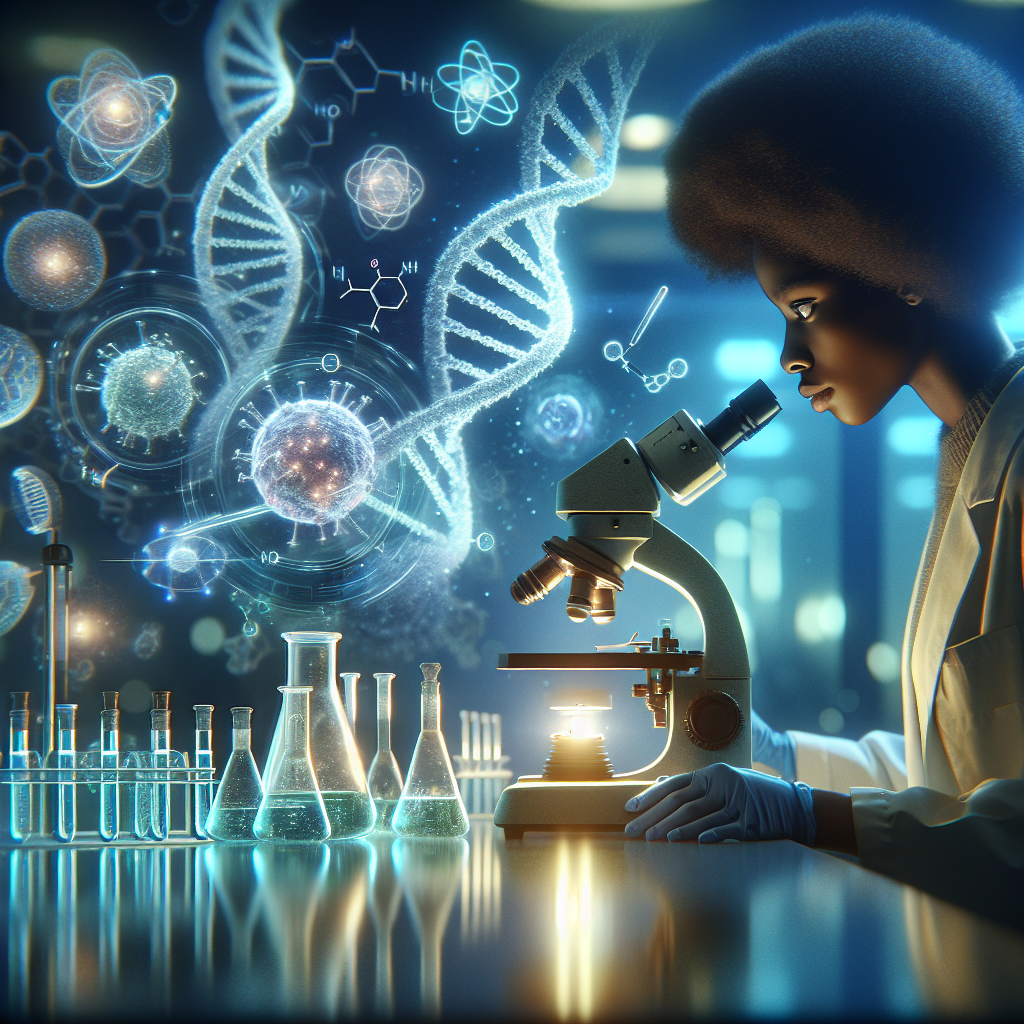
The night the world of biology bent and then snapped open, nothing seemed out of the ordinary. In a quiet lab, a young scientist, barely in his thirties, hunched over an experiment that most would have deemed impossible. A shipment of viral particles—ordinary enough to the untrained eye—waited in a chilled container from the National Institutes of Health. But within hours, the “central dogma” of biology, a rule that said information could only flow one way—from DNA to RNA to proteins—was on the verge of rupture. The hands orchestrating this revolution belonged to David Baltimore. He would soon become the face of a new scientific epoch, and, years later, much more.
The Moment That Flipped Biology
Until that day, scientists clung to the belief that genetic information in the cell moved single-file, like an old train: DNA to RNA to protein, no exceptions[1][4]. Baltimore’s test threw that out. Inside those virus samples, he found an enzyme called reverse transcriptase—a tiny protein capable of copying RNA back into DNA[1][2][3][4][5]. In plain English: some viruses could rewrite the genetic rulebook, slipping their instructions directly into the host’s genetic code, making themselves at home, and in some cases, turning a healthy cell deadly.
Baltimore published his discovery in 1970, the same week as another visionary, Howard Temin, in the same journal. A scientific double eclipse, shattering the dogma that had reigned for two decades[1][3][5]. By 1975, Baltimore—at just 37—stood on the Nobel Prize stage. Yet his journey was just beginning.
Why Did This Matter?
The reverse transcriptase discovery wasn’t just an academic marvel; it lit the fuse for some of the most seismic shifts in medicine and technology. Suddenly, scientists could track—almost in real time—how some of the deadliest viruses operate. Most famously, it armed the world to recognize and fight HIV, a retrovirus whose rampage started in the early 1980s[4][5].
With Baltimore’s work, labs around the globe unraveled how HIV invades, copies itself, and hides in the body—a scientific head start that would later save millions.
But it didn’t stop there. The tools reverse transcriptase brought to labs allowed genetic engineers to clone, study, and manipulate DNA, birthing the modern biotechnology revolution[4][5].
Rewriting the Playbook: The Tech, The Threat, The Promise
How did this tiny enzyme upend the world? Retroviruses—like HIV—carry genetic instructions as RNA instead of DNA. Most organisms can’t copy RNA back into DNA, but reverse transcriptase can. When a retrovirus infects you, it uses this enzyme to blend its code into your own cells, effectively hijacking your body’s natural processes[3][5].
This is the “attack vector” that makes some viruses so persistent—and so challenging. But by understanding the trick, scientists could target the enzyme, block the virus, and turn biology’s flexibility into a weapon for health, not sickness.
Voices from the Revolution
“His experiment is the gold standard for scientific elegance and simplicity,” shared Carlos Lois, a contemporary at Caltech[4]. “It’s hard to overstate: What David did made whole fields—HIV research, gene therapy, cancer biology—possible.”
Government agencies, once skeptical, now scrambled to fund research using reverse transcriptase, seeing its potential for not just cures but moonshot tech: from custom medicines to gene editing.
University students, like Maya Lin—the first in her family to attend college—still recall the day their professor showed Baltimore’s Nobel speech. “He changed what’s possible. He taught that the rules of nature aren’t always as fixed as they seem.”
Ground-Level Impact: The Baltimore Effect in Everyday Life
Consider Anna, a nurse in Boston, 1984. One patient, then another and another—young, vibrant, dying from a mystery illness. “We felt helpless,” Anna remembers (a fictional composite, but true for thousands). “Then, suddenly, the scientists had a target, a way to block the virus’s trick. Suddenly, hope wasn’t such a far-off thing.”
The ability to “see” how retroviruses worked, thanks to Baltimore’s insight, transformed what was once fear into innovation—giving doctors, patients, and families new weapons.
The World Responds
As Baltimore’s findings rippled out, governments funded new biotech startups, pharmaceutical companies raced to create antiretrovirals, and labs doubled down on retrovirus research[4]. The biotech boom of the 1980s and ‘90s is inseparable from this one discovery. Gene therapy, custom drugs, precision cancer treatments, and DNA-based forensics all trace back to reverse transcriptase.
Industry insiders dubbed Baltimore the “godfather of biotech,” while critics raised ethical questions about just how far gene manipulation might go. Yet, as the world faced pandemics and new diseases, the necessity to probe deeper—and act faster—became the new normal.
What’s Next: Could It Happen Again?
Baltimore’s passing at 87 is not an end, but a signal torch. As viruses get slyer and gene-editing tools grow sharper, the rules of biology may rewrite themselves again[3][4][5]. Could the next David Baltimore be in a high school lab right now, a viral packet thawing on the counter, ready to flip the script?
If nature’s only constant is change, what rules do you hope the next scientific rebel will break?
FAQ
What did David Baltimore win the Nobel Prize for?
David Baltimore won the Nobel Prize for discovering reverse transcriptase, the enzyme that allows RNA viruses to integrate their genetic material into a host’s DNA—changing fundamental thinking in biology.
How did Baltimore’s work impact technology and medicine?
His discovery enabled scientists to understand and combat retroviruses like HIV and sparked the biotech revolution, leading to advances in gene therapy and pharmaceuticals.
What is reverse transcriptase?
An enzyme used by certain viruses (like HIV) to convert their RNA into DNA, allowing them to integrate into the host cell’s genome.
Why is Baltimore’s discovery important today?
It paved the way for antiviral drugs, treatments for genetic diseases, cancer research, and the entire field of modern biotechnology.
How did society and governments react?
There was a surge in research funding, the rise of new biotech companies, and a renewed focus on ethical issues in genetic engineering.
What else did David Baltimore contribute to science?
He helped uncover how antibody diversity arises in the immune system and was a vocal advocate for national science policy, especially concerning AIDS and emerging biotechnology.