
A Flicker in the Dark
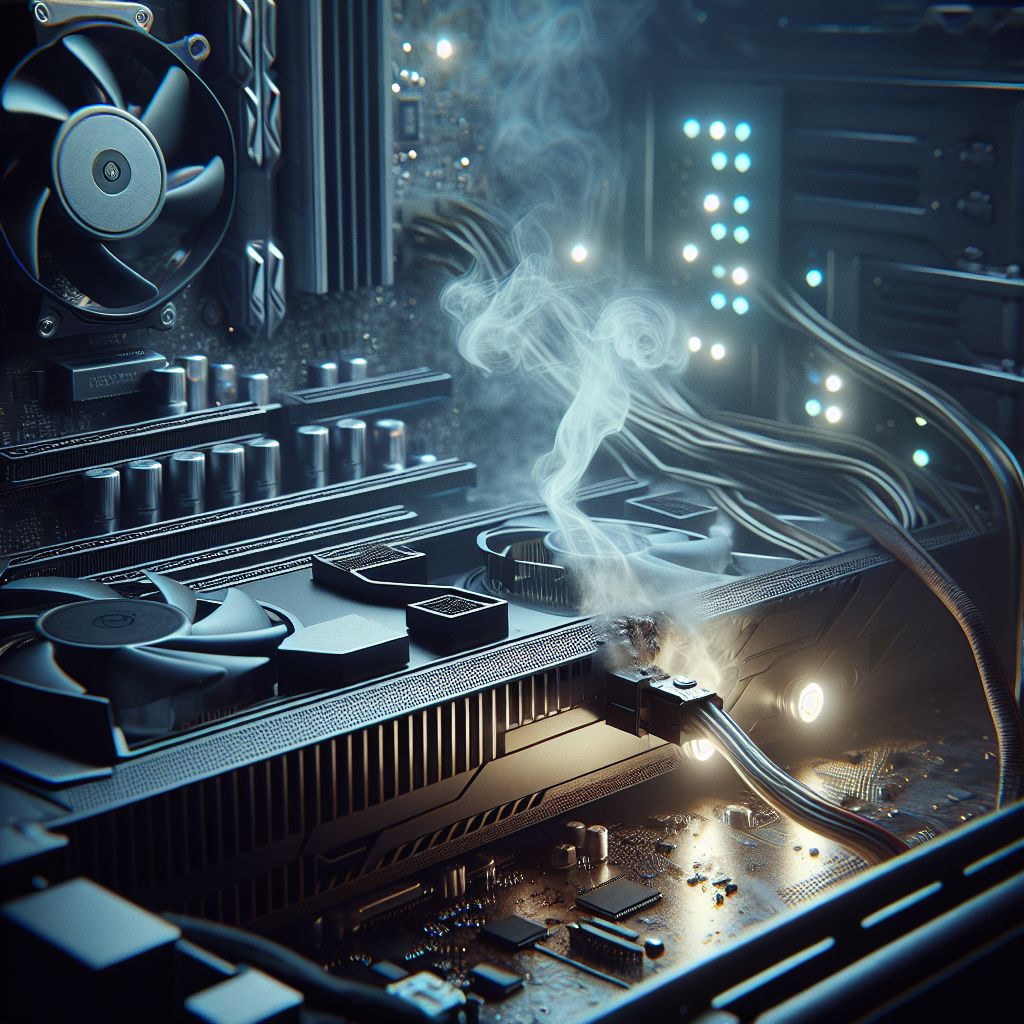
Late one Saturday, Marcus—an avid gamer who’d waited months to assemble his dream machine—heard a subtle pop within his PC’s case. Then, acrid smoke curled from the side panel. On his desk sat a glowing, mesmerizing beast: Nvidia’s brand-new RTX 5090 Founders Edition graphics card. Now, under the soft blue light of his monitor, the “beast” was lifeless, its power cable singed, a plastic socket warped beyond repair.
In forums and Discords across the globe, whispers soon became roars. Images of melted RTX 5090 connectors surfaced on Reddit, sending shockwaves through an industry that once assumed such catastrophic hardware failures were the stuff of bad memes—or old history[1].
The Anatomy of a Meltdown
To understand what happened, you need to picture the heart of a high-end graphics card: the power connector, small enough to go unnoticed, yet tasked with safely delivering hundreds of watts. Nvidia’s RTX 5090 boasts monstrous performance, consuming up to 575 watts, all theoretically handled with their latest 12V-2×6 power socket—a connector certified for up to 660W[1].
Here’s where the story turns: enter der8auer, a respected hardware analyst on YouTube, who received a failed 5090 from an owner who knew the hardware inside out. Upon dissecting the damage, der8auer was stunned by his findings. In thermal images and precise amperage readings, he discovered something alarming: some of the 12 wires inside the supposedly robust connector were running much hotter than others. One was off-the-charts, handling more than 250 watts alone—over half the card’s burden seemingly funneled through a single thread of copper[1].
This was no user error. The entire setup—from the power supply to the cabling—belonged to an “expert enthusiast.” The flaw, as it appeared, was systemic, baked directly into Nvidia’s prestigious Founders Edition design[1].
Behind the Science — Power, Redesigned
How could the industry’s flagship card suffer such a failure? The answer lies in power balancing. The 12V-2×6 connects 12 wires between the card and power supply, distributing the intense electric load to avoid any cable overheating—like a busy road split into many safe lanes. Some third-party (AIB) cards used smart “per-pin sensing” to make sure every lane got an even share. But Nvidia’s reference design? All six “lanes” merged quickly on the card, leaving imbalance unchecked.
Once stress tested, one cable handled more amps than five others combined. Within minutes, temperatures at the connector soared past 140°C—enough heat to deform plastic and threaten fire[1].
Analysts concluded: “For this kind of power draw, one connector is simply not enough,” der8auer said. “Nvidia should have used two power sockets.”[1]
When the World Took Notice
News spread fast. PC gamers, streamers, and hardware enthusiasts flooded Reddit, demanding answers. Nvidia fans felt betrayed. Pros debated whether to cancel preorders. Journalists pressed Nvidia for comment, but at the time of writing, there was only silence—the world’s most powerful graphics card was now the world’s most notorious[1].
On X (formerly Twitter), Falcon Northwest—makers of elite gaming PCs—tested multiple 5090 units in their own labs, finding no immediate issues. Still, uncertainty brewed. Some speculated repeated plugging and unplugging the power cable might contribute, but nobody could say for certain[1].
Governments and consumer protection agencies murmured about possible investigations. Industry watchdogs warned of the risks—overheated electronics can cause fires, property damage, and loss of trust in brands once revered as untouchable.
One Gamer’s Nightmare, Millions’ Reality
For Marcus and others like him, the incident wasn’t just about money lost on a luxury upgrade. His online tournaments vanished. His side hustle as a content creator ground to a halt. “I saved for a year for this. I triple-checked everything,” he told a fictional journalist. “One bad cable and it all melted. What’ll happen to the next person?”
Imagine: You’re a parent, your child’s birthday gift is a high-end gaming PC. Days later, you smell burning plastic from their room. Between outrage and helplessness, you search for answers that still feel too technical to decipher.
Industry on Edge
As rumors swirled, companies scrambled to reassure customers. Major electronics retailers issued notices to check installations and avoid repeated plugging; repair shops saw a spike in “fried” high-end cards.
Industry insiders confided their fears: “When hardware runs this hot, even a tiny flaw can cause disaster,” said one anonymous analyst. “We need more robust designs sooner rather than later.”
What’s Next — Could It Happen Again?
Nobody has all the answers—yet. Nvidia is under pressure to clarify, to recall or redesign, to prove that their hardware ambitions aren’t sprinting faster than their engineering can safely support. Gamers, meanwhile, watch and wait, checking their cables with a newfound anxiety.
The truth is, as GPUs grow ever more powerful, the quiet, unseen drama inside our computers may only heat up. It begs the question: In our race for ever-higher performance, are the safety checks keeping pace?
FAQ
Why are RTX 5090 Founders Edition cards melting their power connectors?
Early technical analysis shows that Nvidia’s Founders Edition design may unevenly distribute electrical power between wires in the GPU’s power connector. This can push extreme heat through some wires, melting connectors and damaging both graphics cards and power supplies[1].
Is the RTX 5090 unsafe for home PCs?
While only select cases have reported melting connectors, the findings raise concerns for any user pushing their card to its limits. The issue seems linked to high loads and possibly repeated connecting and disconnecting of cables[1].
How can I prevent my RTX 5090 from overheating?
Ensure cables are securely connected, minimize repeated unplugging, and monitor card and connector temperature during heavy use. However, experts warn the root problem lies in the connector’s design, so caution alone may not fully mitigate the risk.
Are all RTX 5090 cards affected or just Nvidia’s Founders Edition?
Reports focus so far on Nvidia’s Founders Edition. Some third-party brands seem to use improved designs with per-wire sensing to better balance load, potentially reducing risk, but no design is guaranteed infallible[1].
Will Nvidia recall or offer a fix for the RTX 5090?
As of now, Nvidia has not issued an official recall or solution. Industry watchers expect further investigation and, potentially, replacement programs if the issue proves widespread[1].