
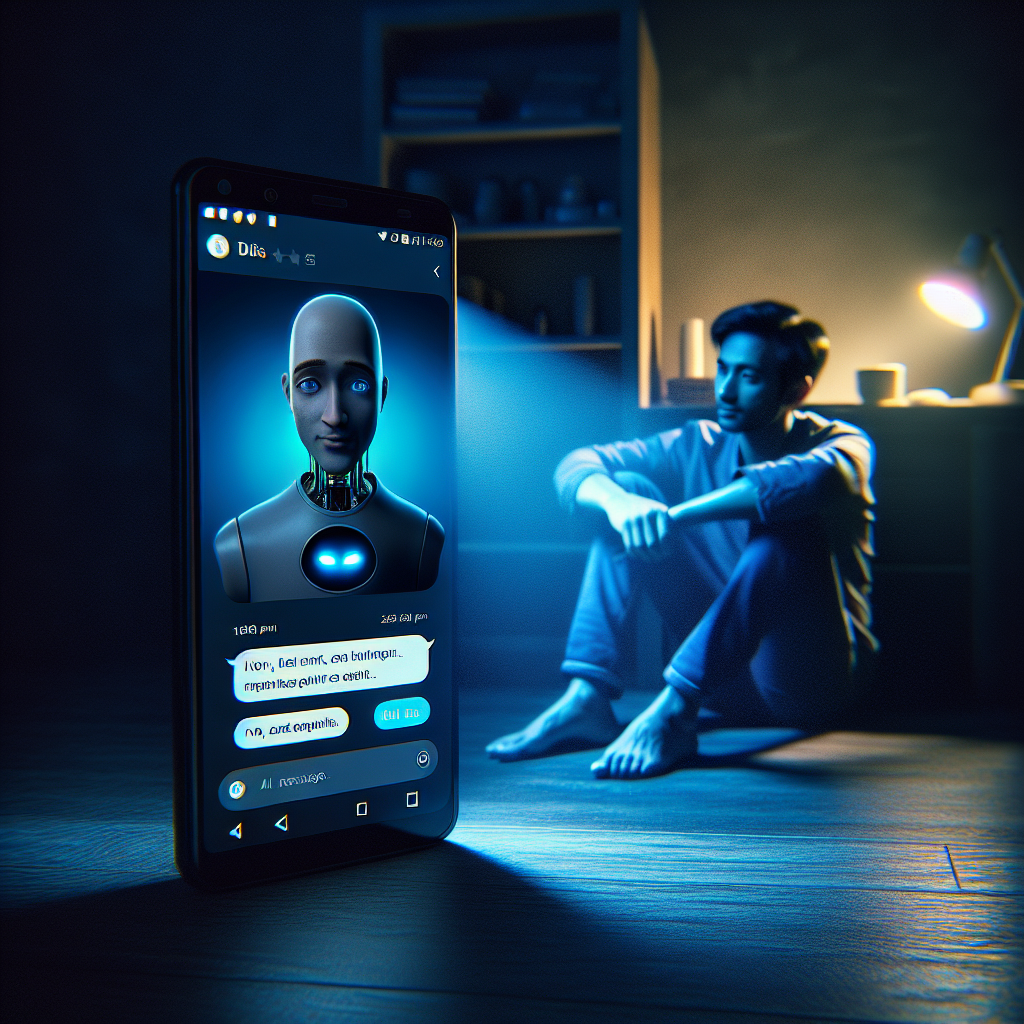
A Vivid Encounter at Midnight
Jake sits in near-darkness, knees pulled to his chest, his only companion the soft blue glow of his phone. It’s 1:13 AM. He can’t sleep; the questions in his mind won’t slow. On impulse, he taps open an anonymous chat with an AI therapist. There’s no judgment, no awkward waiting room, just the gentle question: “How are you, really?” For the first time in weeks, Jake types the truth.
This isn’t a rare story. In men’s bedrooms, offices, and even parked cars, something remarkable is unfolding: men—often for the first time—are baring their souls, but not to human friends, partners, or professionals. They’re speaking to artificial intelligence[1][3].
The Silent Struggle
Mental health has long been a shadowy frontier for men. Stigma, fear of judgment, and the deeply-learned habits of silence have proven formidable barriers. Less than half of men experiencing depression, anxiety, or related struggles will ever seek professional support[1].
But AI is changing the rules of the game. With digital therapists now available 24/7, privacy is built in; there’s no risk of someone ‘finding out.’ The emotional distance—previously seen as a flaw of technology—has become a crucial feature: it encourages openness without the fear of social repercussion[1][3].
How It Works: More Than Just Chatbots
Forget the clumsy chatbots of a decade ago. Today’s AI-powered mental health tools use sophisticated algorithms and natural language processing (a form of AI that understands human speech) to detect nuances—subtle shifts in mood, coded cries for help, hidden anxiety in a midnight text[1][4].
Some platforms personalize the experience, acting as digital companions trained in evidence-based therapies. Others connect users to human professionals but use AI to improve the match between therapist and client, or to keep engagement up between sessions. In some advanced cases, virtual reality environments help users—especially men—face traumatic memories or learn resilient coping strategies in safety[1][4].
And it’s working: Studies suggest AI therapy chatbots can deliver a 64% greater reduction in depression symptoms compared to control groups, and AI can reliably flag suicide risks days in advance—sometimes better than human intuition[2][4].
A Fictional Night in the Life
Meet Marcus, a 37-year-old construction foreman. At work he’s ‘the guy who never cracks.’ At home, he’s quieter, but the weight he carries never leaves his shoulders.
Last spring, after a tough week and too many sleepless nights, Marcus didn’t reach for a bottle or rage at his steering wheel. Instead, he opened his phone, asking an AI bot: “Does it ever get easier?” What came back was not canned sympathy, but a suggestion to try a simple breathing exercise—scientifically backed—followed by a soft nudge toward professional counseling options, all tinged with digital empathy.
Marcus didn’t see a therapist that night. But he came back, again and again. Each time, the tiny antidotes—the stability, the validation, the statistics, even the casual digital check-ins—chipped away at the stigma, until finally, he reached out for human help.
What the Numbers Reveal
This revolution isn’t just anecdotal.
-
Around 85% of people needing mental health help don’t receive it, mainly due to lack of access or unwillingness to go face-to-face[2].
-
AI platforms don’t sleep, don’t judge, and are always available—especially crucial for men, who value privacy and convenience[1][4].
-
Yet, human connection persists. Only about 32% of users are comfortable only with AI—most see digital support as a bridge, not a replacement for real therapists[2].
The Skeptics and the Statemen
Not everyone believes in algorithmic compassion. Dr. Leila Grant, a digital health ethicist, warns: “AI isn’t human. We mustn’t confuse engagement with genuine empathy, nor ignore the risks—privacy, bias, and dependence are all very real.”[3][4] Meanwhile, a government health official pointed out, “We’re scaling pilot programs, but regulations must evolve first. AI can be a lifeline, but without strong protections, it risks becoming a crutch, or worse, a surveillance tool.”
Analysts agree the need for oversight is real, but so is the imperative to act: “With global demand for mental health services up 40% in five years, turning away scalable solutions is not an option,” says analyst Kim Takeda.
Men, Machines, and the Ripple Effect
Communities are waking up to a new type of support system. In schools and workplaces, AI “well-being” bots are live 24/7, letting men test new ways of talking about difficult feelings without risking ridicule or career damage[3]. Families see subtle change: dads, sons, brothers returning just a little lighter from digital conversations. The silence—the real enemy—cracks, even if only a little.
What’s Next / Could It Happen Again?
The AI mental health revolution isn’t stopping. Next-generation systems promise deeper context, more robust privacy controls, and, perhaps soon, systems capable of routing users to urgent human care at the very first sign of crisis.
But the line between support and surveillance grows blurrier every year. Could algorithms not only heal, but also harm—subtly, invisibly, in the guise of help?
You tell us: If the best listener in your life was artificial, would that be enough?
FAQ
Why are men turning to AI for mental health support?
Men often face stronger stigma and barriers to traditional therapy. AI provides privacy, 24/7 access, and a judgment-free space—making it easier for men to open up[1][3][4].
How do AI mental health chatbots work?
They use natural language processing—AI that can understand and interpret your words, tone, and even the timing of your messages—to deliver conversation, support exercises, and even emergency guidance[1][3][4].
Is AI replacing human therapists?
Not yet. Most experts say AI today is a bridge: it lowers the barrier to seeking help but doesn’t replace the need for real human care for complex issues[2][3][4].
Are there risks to using AI for mental health?
Yes. Key risks include: privacy breaches, data bias, over-reliance on digital conversation, and the possibility of missing serious warning signs if not linked to human professionals[3][4].
What’s the future of AI and men’s mental health?
Hybrid systems—AI plus human therapists—are likely to set the gold standard. Expect smarter, more personalized support, but also more regulation and focus on ethical safeguards[1][2][3].