
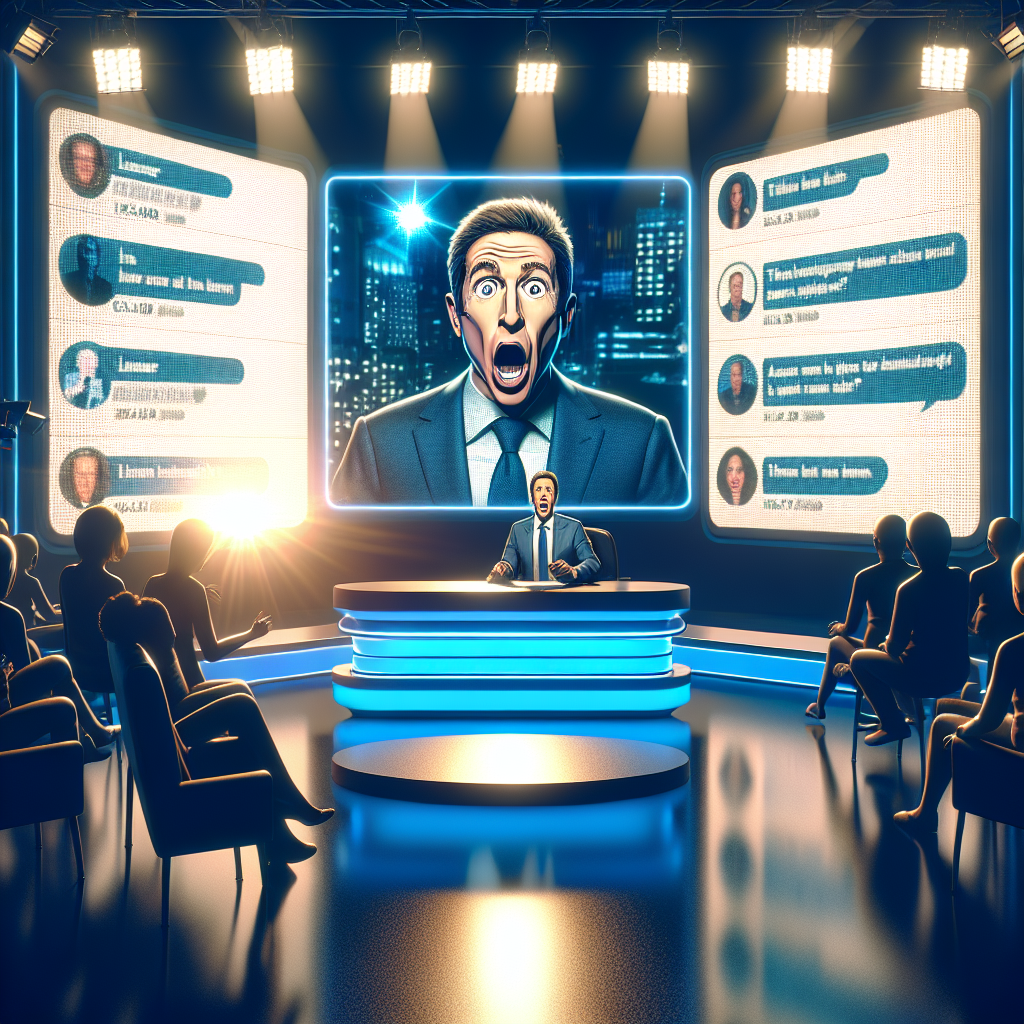
Lights up. Hollywood, sunset. Jimmy Kimmel sits under studio glow, the audience silent, sensing a shift before the punchline. It’s just another late-night monologue—until a remark sets off a tech-and-media firestorm. By sunrise, one angry reply from Elon Musk will ripple far past Twitter, shaking networks, reigniting political fault lines, and exposing the machinery of “cancellation” in the digital age.
The Flashpoint: A Night Like No Other
Jimmy Kimmel, ever the provocateur, leaned into controversy: “The MAGA gang is desperately trying to characterize this kid who murdered Charlie Kirk as anything other than one of them and doing everything they can to score political points from it.” The words landed like a thunderclap, referencing not only a national tragedy but catalyzing an explosive debate[2][3].
Within hours, ABC suspended Jimmy Kimmel Live, citing his “controversial comments”[2][3]. The network acted to stem the media fallout—but the real story was only just beginning.
Viral Volatility: Musk’s Reply that Changed Everything
While the clip circulated on X (formerly Twitter), the digital battle lines sharpened with a single reply: Elon Musk, world’s loudest tech magnate, fired back beneath Alex Christy’s viral post: “Jimmy Kimmel is disgusting”[1][3]. That brief rebuke, delivered amid a swirling maelstrom of quotes and reactions, instantly attached Musk’s name to the controversy and fueled it further.
The comment spread fast as major accounts replayed Kimmel’s segment. The clip leapfrogged the usual late-night crowd—echo chambers bursting open, Kimmel’s lines dissected and Musk’s words quoted in thousands of heated threads[1][3].
A day later, the Hodge Twins, conservative creators, shared the clip with a hard-edge caption accusing Kimmel of lying. Musk jumped in again, answering with one word: “Terrible”[1]. The spiral widened, voices multiplying and hardening as internet culture turned the fight into a referendum on free speech, truth, and tech power.
Behind the Curtain: How Cancel Culture Works Online
What made this different from any TV controversy that fizzles by Monday? Online, attack vectors work faster:
- Clipping and reframing: Anonymous users extract soundbites, sometimes without context.
- Amplification: Influencers like Musk reply, and their critiques push posts to the feeds of millions—algorithmic rocket fuel.
- Echo effect: Each viral reply creates a feedback loop, escalating outrage and shifting consensus in real time.
Unlike old-school network pressure, “cancellation” now happens at internet speed. When a reply from a figure like Musk lands, it isn’t just commentary—it’s an accelerant, turbocharging visibility for both sides[1].
Expert Insights: The Magnifier of Tech Personalities
Dr. Linda Hawke, media analyst, tells us: “A Musk reply can transform minor controversies into trending global news. This is more than fandom; it’s the celebrity-leader amplification factor.” Tech experts note that today’s social media platforms reward brevity but punish ambiguity. The more definitive the rebuke, the more impact on public opinion—and market decisions.
ABC’s own statement, shared by a company spokesperson, stresses industry tension: “We must balance creative expression and community standards. The fast-paced nature of digital networks means responses are instantaneous and hard to retract.”
California Governor Gavin Newsom blamed “coordinated censorship” by political rivals[2], while critics emphasized the role of corporate motivation, pointing out ABC’s possible regulatory interests with the Trump administration[2]. President Trump celebrated the cancellation, calling Kimmel “ratings challenged” in his Truth Social posts[2].
The Human Cost: A Family Watches the News
Picture a family—two parents, one teenage daughter—gathered for dinner. Their living room echoes with news: Kimmel’s show is off air, Musk tweets are dissected by pundits. The daughter, a comedy fan, asks, “Did he really say something that bad? Why does Musk care?” The parents frown, unsure how to explain the collision of humor, activism, and the invisible algorithms that shape their screens.
Mom sighs: “When your reply can reach millions, I guess everything is more dangerous.”
Wave Effects: Industry, Government—and You
Media companies scrambled. Executives reviewed scripts, fearing similar backlash. Late-night hosts debated tighter controls, worried improvisation could trigger mass outrage. Tech firms considered updating content moderation rules—should replies by high-profile figures carry warnings, or be deprioritized in feeds?
In civil society, conversations sparked across living rooms, offices, and schoolyards. Was this the death of daring comedy, or the rise of algorithm-driven censorship? Both sides claimed victory, but the rules remained murky.
What’s Next / Could It Happen Again?
As of today, Jimmy Kimmel’s show is still suspended, Musk stands by his words, and networks remain on edge[2][3]. Could it happen again? Absolutely—every media moment lives under the gaze of instantly viral personalities and a public ever-ready to retweet, reply, and react.
Next time, it may not be a late-night host. It could be a journalist, a CEO, a high-school poet—anyone thrust instantly into the world’s digital spotlight.
So: When one reply can spark a tech culture war, who really controls the future of free speech?
FAQ
What happened to Jimmy Kimmel after the viral controversy?
Jimmy Kimmel Live was suspended indefinitely by ABC after his comments about MAGA and Charlie Kirk’s killer caused widespread backlash[2][3].
How did Elon Musk’s reply accelerate the cancellation?
Musk’s direct, viral responses attached his massive following to the controversy, increasing visibility and amplifying the backlash against Kimmel[1][3].
Is this an example of “cancel culture”?
Yes, but accelerated by the power of social media replies, especially from leading tech personalities. The event highlights how cancel culture operates at network speed[1][3].
What is MAGA and why is it controversial?
MAGA (“Make America Great Again”) is a slogan popularized by Donald Trump, and controversies surround its political implications and associations, as reflected in Kimmel’s comments[2][3].
How did celebrities and politicians react?
Ben Stiller defended Kimmel, calling the suspension “not right.” California’s Governor accused Republicans of censorship, while President Trump celebrated the decision[2].
Could it happen again to other media figures?
Yes. The intersection of social media visibility, algorithmic amplification, and celebrity reply makes any public figure vulnerable to instant cancellation.