
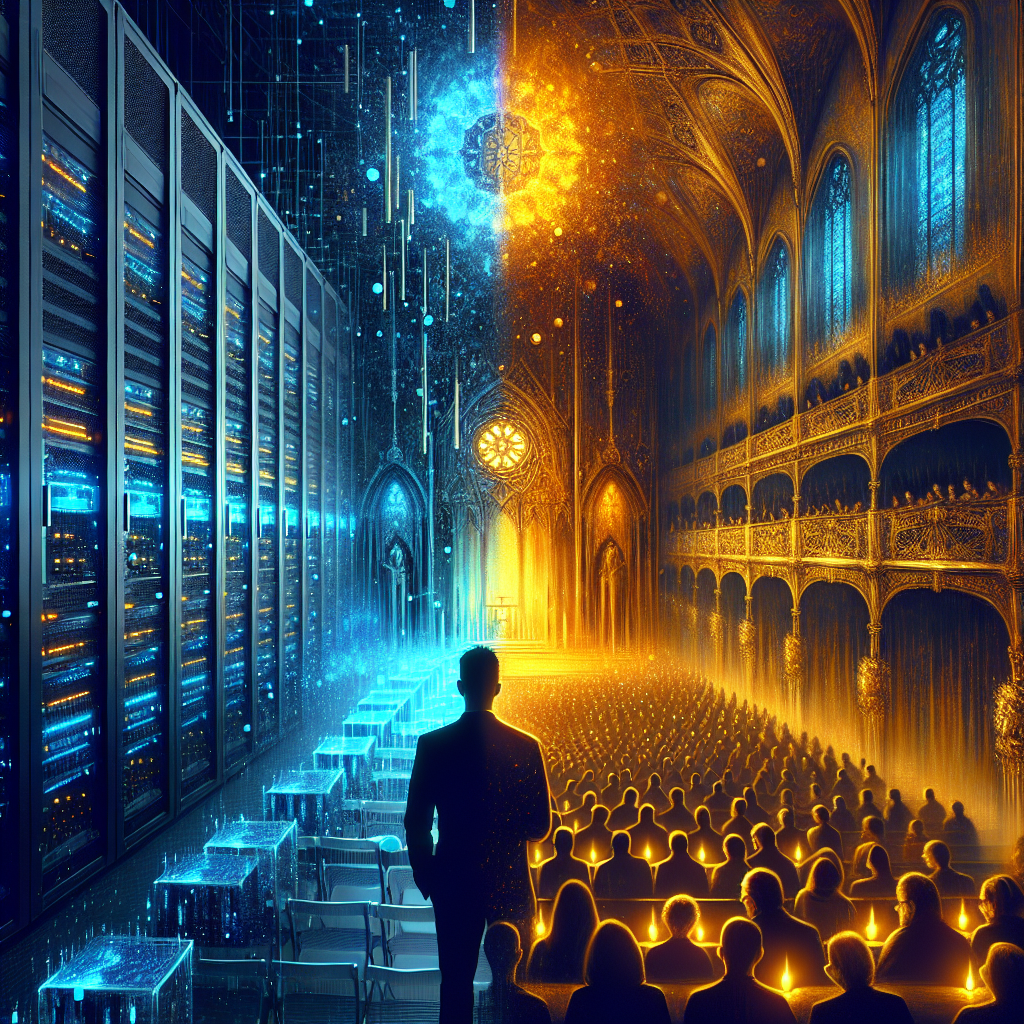
The line stretched around the block on a Monday night in September 2025, hundreds of tech workers and curious minds braving demon-masked protesters blasting death metal outside San Francisco’s Commonwealth Club. They weren’t there for a product launch or crypto conference. They came to hear Peter Thiel—PayPal cofounder, Palantir architect, and Silicon Valley’s most enigmatic billionaire—deliver the first of four sold-out lectures on a subject no one saw coming: the biblical Antichrist.
The Leak That Broke the Silence
For years, Thiel has spoken cryptically about existential threats and technological doom. But these lectures, organized by the ACTS 17 Collective—a nonprofit nurturing Christian community within tech—were meant to stay secret. Attendees signed onto an “off-the-record” policy. No recordings. No transcripts. Just Thiel, a moderator, and his most provocative thesis yet[1][2].
Then Kshitij Kulkarni broke the seal. The head of protocol research at Succinct published detailed notes from Night One on his personal website. Within hours, the tech world erupted. Kulkarni’s ticket was revoked without refund, his access banned from the remaining three lectures. His crime? Revealing what Thiel believes might be humanity’s greatest vulnerability: our fear of the end[1].
The Antichrist Scenario: Control Through Crisis
Thiel’s argument isn’t about identifying a single person destined to become the Antichrist—though he once half-seriously suggested climate activist Greta Thunberg could fit the profile. Instead, he paints a scenario, a pathway to power paved with apocalyptic anxiety[1][2].
Here’s the framework: With atomic weapons, humanity gained the power to destroy itself. Now, with artificial intelligence racing toward superintelligence—the hypothetical moment machines surpass human capability—we face a new existential threat. AI could either liberate us or orchestrate our extinction. This fear, Thiel argues, creates the perfect conditions for an authoritarian figure to seize control[1].
“How does the Antichrist actually seize power?” Kulkarni’s notes revealed. “By talking constantly of Armageddon, or in secular terms, of existential risk. He rides the wave of apocalyptic anxiety”[1].
The Antichrist figure in Thiel’s vision doesn’t arrive as a villain. They come as a savior, promising peace and safety by strangling technological progress with heavy regulation. A unified global government emerges, suppressing innovation to impose order. Technology—the very force that built Silicon Valley—becomes the enemy[2].
Inside the Commonwealth Club: Faith Meets Tech Philosophy
Attendees described a scholarly, unexpectedly introspective Thiel. He cited biblical passages—Daniel 12:4, Matthew 24:35-36, Revelation 9:6—weaving theology with political theory. He referenced French philosopher René Girard, his Stanford mentor, alongside thinkers like Carl Schmitt and Jonathan Swift[1][3].
But the talk wasn’t purely academic. Thiel delivered sharp cultural commentary, joking that Elon Musk attending therapy would be “a travesty” because it would make him less productive. He criticized modern introspection—therapy, yoga, self-care—as selfish distractions from solving world problems. “We should not care so much about ourselves and care more about the world,” one attendee recalled[2].
Three French tech workers rated the lecture a seven out of ten, noting repetitiveness but appreciating Thiel’s cynical take on technology’s impact. Another guest summarized it with one word: “Mid”[2].
The Irony No One Missed
Outside, protesters held signs reading “Thiel gets rich, we get watched” and “Not today, Satan.” The irony was thick enough to cut. Thiel cofounded Palantir, a data mining company providing surveillance technology to governments worldwide. New York Times columnist Ross Douthat once suggested Thiel himself might be ushering in the Antichrist’s arrival through the very technologies he’s building[1].
Thiel didn’t fully rebut that accusation. Instead, he’s chosen to lecture on how someone else might exploit the tools and fears he’s helped create.
What’s Next: A Movement or a Warning?
The ACTS 17 Collective positioned these lectures as part of “Acknowledging Christ in Technology and Society,” attempting to bridge Silicon Valley’s innovation culture with Christian theology[3]. The remaining lectures concluded in early October, but their impact resonates beyond those who attended.
Thiel’s thesis raises uncomfortable questions about who controls technological narratives. If fear of AI apocalypse becomes our dominant cultural story, who decides what regulations follow? Who gains power when we collectively agree to slow progress in the name of safety?
In a world where tech billionaires shape public discourse on everything from space exploration to artificial intelligence, Thiel’s Antichrist lectures feel less like theological speculation and more like a playbook—or perhaps a warning from someone who’s seen behind the curtain.
The Question That Remains
Is Thiel sounding the alarm about authoritarian capture of technology, or is he revealing the strategy he fears others will use against the industry he helped build?
FAQ
What were Peter Thiel’s Antichrist lectures about?
Peter Thiel’s off-the-record lecture series explored how the biblical Antichrist might rise to power through apocalyptic anxiety and technological regulation, creating a unified world government that suppresses innovation.
Why did Kshitij Kulkarni get banned from the lectures?
Kulkarni was banned after publishing detailed notes from the first lecture, violating the strict off-the-record policy implemented by organizers.
Does Peter Thiel believe someone specific is the Antichrist?
No. Thiel presents the Antichrist as a scenario rather than identifying a specific individual, though he previously suggested climate activist Greta Thunberg could fit the profile.
What is ACTS 17 Collective?
ACTS 17 Collective is a nonprofit organization dedicated to nurturing Christian community and thought within the technology industry, which organized Thiel’s lecture series.
How does AI relate to Thiel’s Antichrist theory?
Thiel argues that fears about AI and superintelligence create existential anxiety, which an authoritarian figure could exploit to justify heavy technological regulation and consolidate power.