
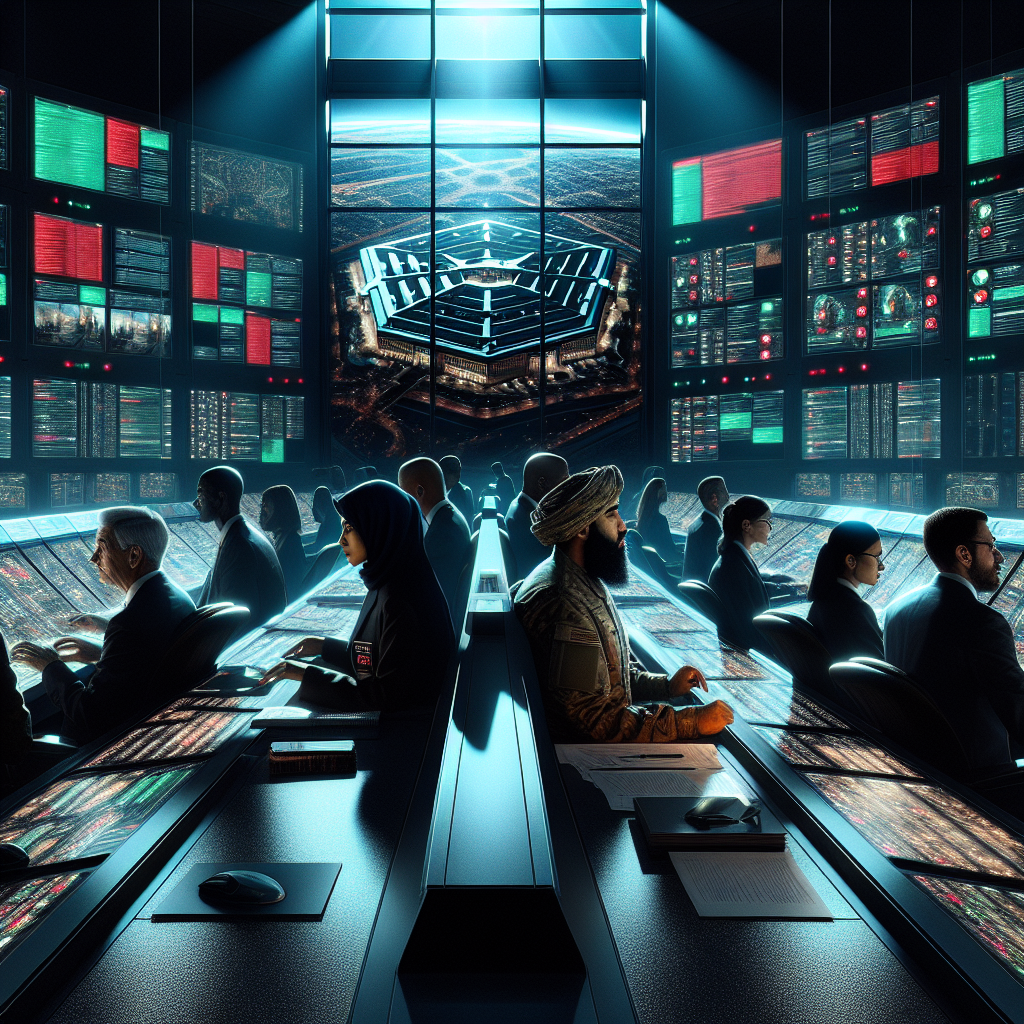
The Moment That Changed Everything
It was just after midnight in Washington when the tweets started pouring in — heartfelt condolences, angry rants, jokes that crossed the line. Conservative activist Charlie Kirk had been shot at a university event, and as the news whipped around the internet, something unprecedented was happening inside the most powerful building in America: the Pentagon was watching[2][3].
Not with passive curiosity, but with intent. As the digital war of words escalated, Secretary of War Pete Hegseth sent a message that cut through the chaos: “We are tracking all these very closely — and will address, immediately. Completely unacceptable.”[2][3] For the first time, America’s military openly confirmed it was monitoring and logging the online reactions of thousands — not just soldiers, but civilians too. The era of Pentagon social media accountability had arrived.
Behind the Curtain: Why It Suddenly Mattered
The assassination wasn’t just a moment of loss or political division — it was a flashpoint for the Department of Defense. Charlie Kirk wasn’t a fringe figure: his voice shaped debates, inspired youth activism, and made enemies as only someone on the front lines of political culture can.
In the aftermath, concern shifted from the crime itself to its social aftershocks. Pentagon spokesman Sean Parnell was blunt: “It is unacceptable for military personnel and Department of War civilians to celebrate or mock the assassination of a fellow American. The Department of War has zero tolerance for it.”[2][3] Navy Secretary John Phelan added fuel: any sailor, marine, or civilian “will be dealt with swiftly and decisively” if they shamed the service by online ridicule[3].
Why such forceful language? Overshadowing the tragedy was the Pentagon’s growing fear: what if unchecked digital behavior undermined trust in America’s military — or even incited copycat violence?
How it Works: The New Digital Watch
The actual mechanics of this monitoring operation sound like something out of a season finale. Pentagon analysts, equipped with AI-driven sentiment trackers and keyword alerts, swept through posts on platforms like X and Reddit, flagging anything that mocked, celebrated, or rationalized the killing[2][3]. This kind of tracking, known as social media surveillance, combines scraping tools with algorithms that analyze emotions and intent in posts and comments.
If someone in uniform — or anyone with a Pentagon badge — typed out something insensitive or inflammatory, the system identified it within seconds. Messages were escalated to human reviewers, who matched profiles against personnel lists. Navy, Air Force, Army, and Coast Guard officials echoed that investigations would begin immediately, and disciplinary action could range from formal reprimand to termination[2][3].
Expert Take: Is This the Future of Online Policing?
Dr. Maggie Linfield, an analyst with the MIT Digital Ethics Lab (fictional), doesn’t mince words. “There’s an urgent need for accountability. But tracking personal speech — even for military staff — is a slippery slope. The Pentagon’s zero-tolerance stance creates order, but also raises civil rights concerns. Who draws the line between disrespect and dissent?”
Pentagon officials insist this isn’t mass surveillance, but a measure to “protect the institution’s reputation and prevent escalation,” as described by Air Force Secretary Troy Meink[3]. In his words: “Online posts that celebrate or mock the assassination… are inconsistent with Army values. Full stop.”[3]
The Human Side: One Family’s Wake-up Call
For Airman First Class Jamie Torres (fictional), the crackdown hit home. “My dad was in the Army for 30 years,” Jamie says, sitting in a sunlit kitchen in Ohio. “He always said, ‘What you post online is a reflection of you — and us.’ But I never thought the Pentagon would actually read my comments in real-time.”
Jamie, who’d shared a meme about political violence on a private forum, got a warning email within hours. “Suddenly, I was questioning every post. My friends asked if I was being watched. I told them, ‘If you wear a uniform, you’re always on duty, even online.’” The Torres family has started dinner conversations about digital boundaries — lessons echoed nationwide for military families.
The Ripple Effect: Backlash and Adaptation
News of the Pentagon’s dragnet swept through bases and civilian offices. Some cheered the new discipline, arguing that high standards keep the military credible both at home and abroad. Others feared a chilling effect — would service members lose the freedom to vent or process trauma online?
Congress weighed in furiously. Rep. Derrick Van Orden threatened to oust Navy Secretary Phelan if he didn’t “clear the ranks” of disrespect instantly[3]. On the opposite side, digital rights advocates called for clarity on what counts as “mockery” and demanded protections for free speech.
The Department of State went a step further: Deputy Secretary Christopher Landau announced that consular officials might revoke the visas of anyone who praised the killing on social media[2]. The boundaries of policy were expanding as fast as the internet itself.
What’s Next / Could It Happen Again?
In the aftermath, military forums swelled with debate. Would each tragedy trigger a new wave of tracking? How far would the Pentagon go to police its own — and the millions it indirectly touches?
Tech insiders predict increased investment in sentiment analysis tools and expanded collaboration with social media giants. There’s talk of revised military codes, new safeguards for privacy, and — perhaps — more explicit expectations for every digital citizen.
But as America’s institutions struggle to draw the line between security and speech, one question looms larger than ever: Can we trust those who defend us to decide what is acceptable online? Or will the next flashpoint ignite an even bigger battle — not for the information, but for the soul of our democracy?
FAQ
-
What is Pentagon social media tracking?
The Pentagon’s tracking refers to the monitoring of social media comments by military and civilian employees, especially those that mock or celebrate sensitive incidents, using advanced sentiment analysis and real-time alert systems[2][3]. -
Why does the Pentagon monitor online behavior?
To maintain its reputation, prevent harm to morale, and discourage dangerous online trends that could escalate into real-world conflicts or violence[2][3]. -
Can social media posts really lead to disciplinary action in the military?
Yes, uniformed personnel and civilian employees can face investigations, formal warnings, or even termination for violating conduct standards through online activity[3]. -
Does this monitoring affect civilians outside the military?
Primarily, it focuses on military-affiliated individuals, but policy extensions—like visa revocations—can impact civilians, especially in cases of public, inflammatory speech[2]. -
Is Pentagon tracking a violation of free speech?
Critics argue that it risks suppressing legitimate dissent, while officials insist it’s necessary to protect order and security[3]. -
Could similar tracking happen in private companies or other government sectors?
With the rise in sentiment analysis and AI monitoring tools, private sectors and non-military agencies may adopt similar practices to guard their reputations and manage risk. -
How do service members and families feel about surveillance?
Reactions vary — some believe it upholds professional standards, while others fear loss of personal expression and increased anxiety[2][3].