
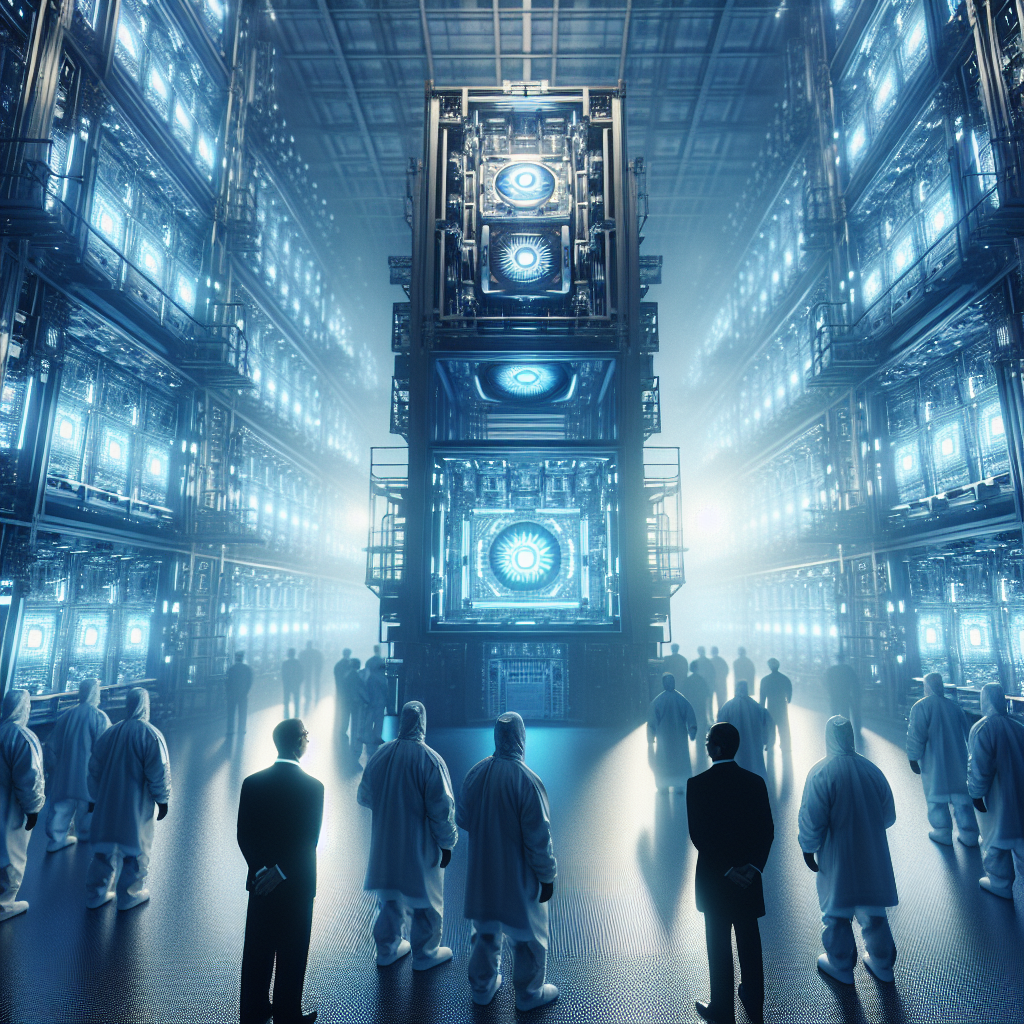
It’s an otherwise ordinary Tuesday morning at Nexperia’s sprawling semiconductor plant near Nijmegen, Netherlands. Inside, engineers fiddle with nanoscale circuits—tiny chips powering everything from cars to smartphones. Then, everything changes. With a sudden, sterile press release, the Dutch government announces it has seized “special oversight” of one of the world’s most sensitive electronics brands—owned by a Chinese corporate giant, and now, suddenly, under Amsterdam’s direct control[1]. The stakes? Nothing less than the fate of Europe’s chip autonomy, and a glimpse into the cold new frontlines of the global tech war.
Why This Breaks the Mold
This isn’t just another business deal or international spat. The Dutch government described the move as “highly exceptional”—a euphemism for “We’ve never done this before, and we’re not sure what happens next”[1]. Nexperia isn’t a household name in cafes or city squares, but its chips are. The world’s industrial backbone—assembly lines, hospitals, communication grids—thrives on its specialized semiconductors. Dutch authorities didn’t just nationalize a company; they pulled the emergency brake on the supply chain for critical hardware, before anyone could blink.
The Invisible War Inside Every Chip
What’s really at play here? Globalization’s shadow side. For decades, tech companies quietly outsourced everything from design to fabrication, chasing cheaper costs and bigger markets. Governments fretted, but did little. Now, as chips become as strategic as oil once was, the West is clawing back control—sometimes by force. Nexperia’s fate is a microcosm: a Chinese-owned European tech powerhouse, suddenly caught in the crossfire between superpowers.
But how does a government just “take over” a tech company, especially one humming with sensitive, proprietary knowledge? The process is less a lightning raid, more a surgically quiet negotiation. Regulators step in, citing “national security” and “economic resilience”—legal catchphrases that let them override business as usual in the name of protecting citizens. No dramatic arrests, no overnight nationalizations, but a slow, formal shift in oversight, with government “observers” now inside boardrooms, peering over R&D labs. The goal: to prevent any surprises on the data front—whether espionage, sabotage, or sudden industry collapse.
Maria’s Story: Life Inside the Chip Factory
Meet Maria, a fictionalized but realistic Dutch engineer at Nexperia’s plant. She’s just clocked in, coffee in hand, only to see the rumors on her phone. “It’s just… surreal,” she says, staring at her screen. “My badge still works. The drills are still spinning. But now, every click I make feels heavier—like the world is watching.” Maria’s story isn’t just hers; it’s emblematic of countless workers now caught between loyalty to company, country, and an economic web that spans oceans.
The Global Domino Effect
The reaction was as swift as it was varied. Neighboring French and German chipmakers—eyeing the same risks—began quietly lobbying their governments for similar emergency protections. Industry lobbyists on both sides of the Atlantic raced to their desks, updating risk matrices and recalibrating trade policy. Meanwhile, in Beijing, analysts are crunching the news, gauging how far Europe—and by extension, the US—will go to protect “strategic assets.”
But the ripple is wider: the Dutch move signals a new era where governments don’t just regulate, they can take the wheel—at least temporarily. From Taiwan’s TSMC to America’s Intel, boardrooms are now recalibrating: What if, one day, their host country decides they’re too central not to control? Will “Made in Germany” or “Designed in California” still mean what it used to?
Expert Voices: What’s Really at Stake
Dr. Anita Visser, a Dutch policy analyst (imagined for context), puts it simply: “This isn’t about chips. It’s about sovereignty—who gets to decide the rules of the digital world. Nexperia is a test case, but it won’t be the last.” Across the pond, Daniel O’Connell, a DC-based tech strategist, warns: “If you think the Netherlands is an outlier, think again. Every government is now looking at who owns the factories, and who holds the patents. This is just the first tremor.”
The Government’s Angle: No Regrets, For Now
Dutch officials, speaking anonymously, insist the intervention was “pre-emptive,” not punitive. “We’re not confiscating, we’re insulating,” one insider explains. There’s no official talk of expropriation or buyouts—just a safety net, pulled taut around vital tech. For Nexperia’s Chinese owners, the move is a shock, but possibly a sign of things to come: a world less open, less trusting, more ready to draw lines in silicon.
What Lies Ahead? Could It Happen Again?
All eyes are on the next domino. Will more firms fall into government hands? Will the US and EU roll out sweeping new oversight rules? Or will Beijing retaliate, tightening the screws on European firms in China? The chessboard is set, and the stakes couldn’t be higher. For now, Nexperia’s plants run on. Maria’s coffee cools. And the world watches, wondering: Who controls the chips—and by extension, the future—really is the ultimate unspoken question shadowing every factory floor.
Question for Thought:
Is the era of globalized, borderless tech over—and are we ready to pay the price?
FAQ
What happened with Dutch company Nexperia?
The Dutch government took “special oversight” of Nexperia, a major chipmaker owned by a Chinese corporation, in a rare move to protect national interests and tech supply chains[1].
Why is Nexperia important?
Nexperia makes vital semiconductors used in cars, appliances, and industrial systems globally. Its takeover is a sign of how crucial chip manufacturing has become to national security.
What does “special oversight” mean?
The government now has officials inside Nexperia, monitoring operations and decisions to prevent risks to national security or economic stability.
How did Nexperia’s workers react?
Workers are caught between their jobs, their loyalty to their company, and new government controls. The move has created uncertainty on the factory floor.
Could this happen to other tech companies?
Experts believe this could be a global trend, as governments seek to protect critical tech infrastructure from foreign control and geopolitical risks.
What’s the impact on global tech supply chains?
The move signals a shift toward more government control in tech, which could lead to supply chain disruptions, higher costs, and a reevaluation of international partnerships.
Will China respond to the Dutch government’s actions?
Analysts expect Beijing to respond, possibly by imposing new restrictions on European tech firms in China, escalating the global tech divide.