
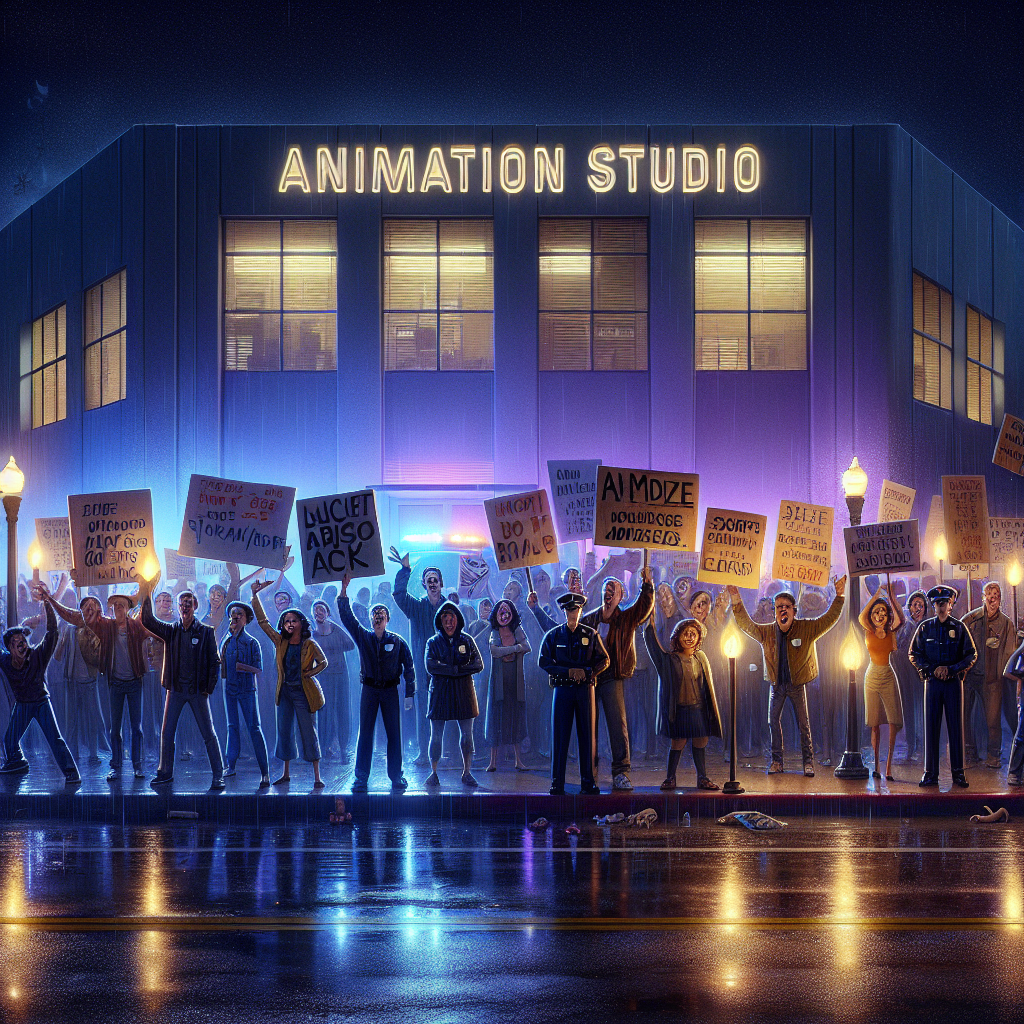
The Night the Mouse Trembled
It was a Thursday night like any other—until it wasn’t. Just after midnight, social media flickered to life: screenshots of canceled Disney+ subscriptions, Hulu users uninstalling apps, families posting “farewell” photos from their last Disney park visit. The cause? Not a new villain in a Marvel sequel, but a living-room moment that would ripple through the world’s most powerful entertainment empire.
At the heart of this uproar: the sudden, electric suspension of late-night host Jimmy Kimmel from ABC, a Disney-owned network, following his incendiary remarks about conservative activist Charlie Kirk’s assassination. The next morning, Culture Base sounded the alarm: Disney’s market value had dropped an astonishing $3.87 billion—overnight[1][2]. And while the Mouse House is no stranger to controversy, the wave that followed had a chilling new edge.
Spotlight on Censorship — and Corporate Panic
As dawn broke, “#BoycottDisney” trended atop X (formerly Twitter), fed by outrage not just over Kimmel’s silencing, but what many saw as a direct assault on free expression[1][2]. Former President Barack Obama and a chorus of late-night hosts—Stephen Colbert, Jon Stewart, Jimmy Fallon—rallied publicly behind Kimmel[1][2]. “The chilling effect is real,” one Hollywood producer lamented to us. “If Disney bows to political pressure in the streaming age, every voice is at risk.”
But it wasn’t only celebrities who were shaken. Customers canceled Disney+, Hulu, even planned trips to the parks[3][4]. A single Instagram post from actress Tatiana Maslany, urging her 2 million fans to “cancel your @disneyplus @hulu,” went viral overnight[3]. Marvel and ABC stars followed suit, with outspoken writers and producers threatening to cut ties unless Kimmel was reinstated[3].
Behind the Curtain: How Boycotts Gather Force
It’s easy to see this as a simple PR snafu, but Disney’s predicament cuts deeper—into the heart of American identity in the age of stream-anywhere media. Here’s how the attack vector unfolded:
- Trigger event: Kimmel’s remarks on-air stoked immediate backlash. FCC Chair Brendan Carr publicly condemned the show, hinting at regulatory action if ABC failed to act[3].
- Corporate reaction: Disney-owned ABC suspended Jimmy Kimmel Live! indefinitely, attempting to contain fallout[1][3].
- Online mobilization: As word spread, thousands posted cancellation receipts and “Goodbye, Mickey” memes. Subscription pages reportedly crashed under the traffic[4].
- Celebrity amplification: Stars, some no longer with Disney, made high-profile calls to boycott and cancel[3].
What makes this different: the speed and intensity of digital organizing, amplified by users’ proof of action—publicly shaming Disney with each lost subscriber.
The Cost—From Burbank to Living Rooms
For all its fantastical castles and galaxy-sized brands, Disney’s business today is undergirded by digital subscriptions. With over 183 million people paying for Hulu and Disney+ worldwide, even a small dip hits hard, especially as parks and box office returns recover from pandemic slumps[3]. And this boycott wasn’t just hashtag activism.
Shae Noble, a 38-year-old superfan, canceled her family’s streaming plans and annual Disney World trip. “I grew up loving Disney, but if my subscription dollars pay for censorship, I have to take a stand,” she told Business Insider[4]. Like thousands of others, Noble cited frustration with “political pressure” and worry that “America’s favorite stories could be silenced next.”
And as the boycott’s reach swelled—thousands organizing protests outside Disney’s Burbank headquarters, even the company’s main studio gates shuttered after picketers gathered in the hundreds—the financial pain became all too real[4].
Industry and Government—Sound and Fury
With stock prices dipping and calls for a federal inquiry mounting, Disney executives scrambled to reassure Wall Street. “We support creative expression, but must uphold our core values,” read the company’s sole statement—a remark that drew more ire than sympathy from the #BoycottDisney crowd[3].
Analysts warned of ripple effects. “Other studios are watching closely,” said media expert Carla Torres. “If outrage can kneecap the biggest brand, nobody’s safe.” Meanwhile, the FCC’s continued saber-rattling over “regulatory action” for contentious broadcasts kept the industry on edge[3].
A Family in the Crossfire
Picture this: The Martins, a family from suburban Dallas, crowd around the kitchen table. “Disney Night” was a Friday tradition—popcorn, pajamas, maybe a rewatch of Frozen or some Star Wars. But last week, the accounts were canceled. For the kids: confusion. For the parents: a rare, raw lesson in ideals over comfort. “We told them it’s about standing up for freedom, even if it means letting go of things we love,” Mrs. Martin explained.
This moment, multiplied by millions, is the real story: ordinary people, fracture lines in American culture drawn across household screens.
What’s Next—Could It Happen Again?
After decades of dominating with dreams and spectacle, Disney faces a crisis not of imagination, but of principle. Can the world’s most beloved brand regain trust? Or will it become a battleground for the next era of digital free speech?
As boycotts ripple outward, questions flare: Will other giants stand up to pressure—or fold? Could suspensions or censorship anywhere prompt an even wider protest, fracturing not just Disney’s audience, but the very way Americans see their screens?
The real cliffhanger: In a world where everyone has a platform, does any company control the story—or do we?
FAQ
Why are people boycotting Disney?
People are boycotting Disney due to ABC’s suspension of Jimmy Kimmel after he made controversial comments, which many saw as a violation of free speech[1][2][3][4].
What happened to Disney’s stock price?
Reports show Disney’s market value dropped by roughly $3.87 billion overnight after calls for boycott intensified[1][2].
What services are people canceling in the Disney boycott?
Boycotters are canceling Disney+, Hulu, and even planning to skip trips to Disney theme parks[3][4].
Who is supporting the boycott?
Celebrities, stars from Disney franchises, and everyday users have spoken out, with some high-profile industry figures urging people to cancel their subscriptions and reconsider working with Disney[3][4].
Could Disney recover from this backlash?
Experts say recovery is possible if Disney rebuilds trust with consumers, but the ongoing debate about free speech and censorship makes it a complex challenge.