
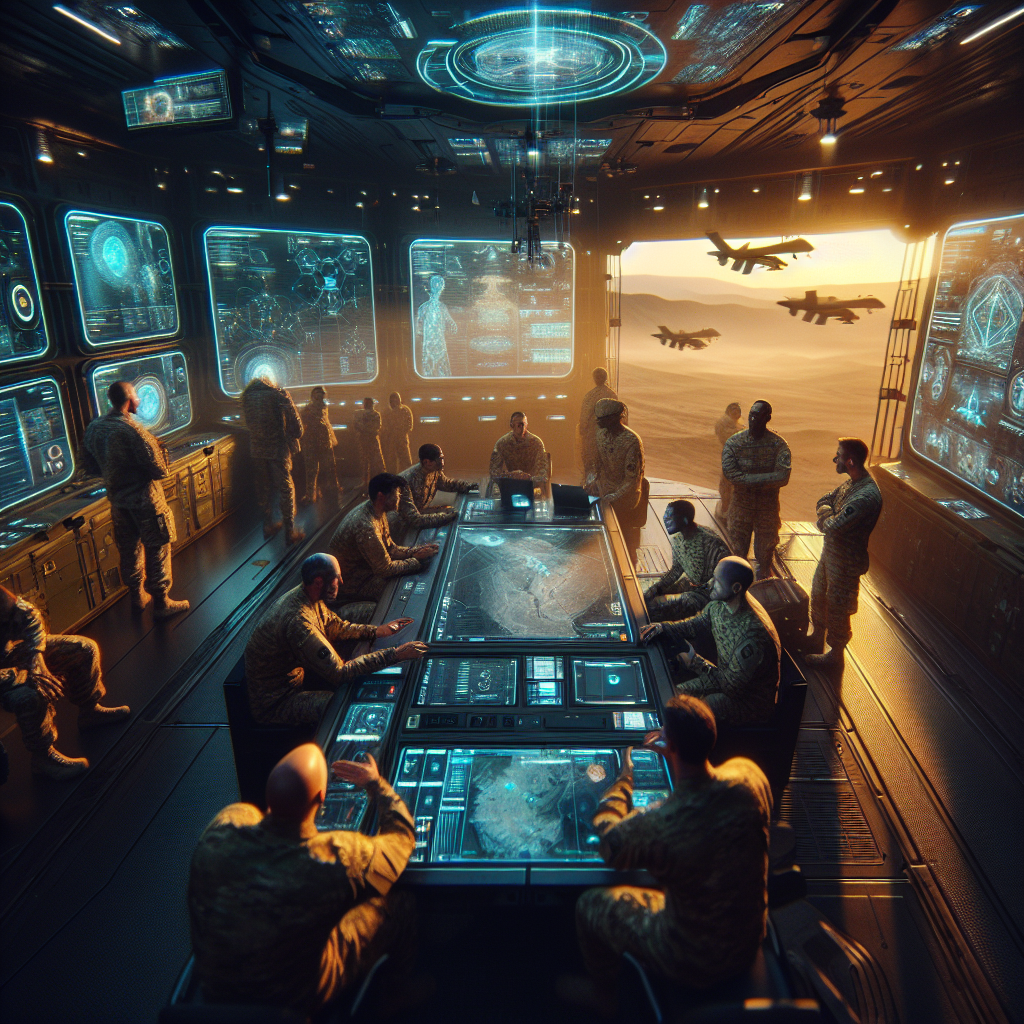
Dawn, somewhere over a desert test range.
Fingers drum on a laptop; sleek drones circle above. Two dozen exhausted engineers and Army commanders huddle inside the hum of a mobile command center. This is supposed to be the proving ground for the future of war—where Silicon Valley’s boldest meet defense’s oldest, and every message, order, and sensor ping rushes across miles of silent, hostile ground.
But something is wrong. Screens that should map clarity dissolve into confusion. The very platform designed to give an edge feels strangely exposed. In that flicker—a system trusted to keep soldiers safe may risk giving their secrets away.
The Dream: Silicon Valley’s Battle for the Battlefield
For years, America’s defense sector has eyed the speed, scale, and allure of tech’s latest advances. Anduril and Palantir—two names echoing with aspirations of algorithmic dominance—pitched the military on a “next-generation battlefield communication system.” Imagine instant, voice-activated situational awareness where commanders, AI, drones, and troops synchronize like a chessboard played by a single mind.
If you picture iMessage meets Mission: Impossible, you’re getting close. The goal? A seamless, real-time platform that turns the fog of war into crystal clarity—while crushing adversaries’ attempts to hack or confuse the U.S. war machine[1].
But behind every sci-fi dream, the hard math of security bites back.
The Flaws That Shook the Sandbox
As revealed in newly reviewed prototype reports, the system many hoped would be a fortress turned out, at this stage, to be something closer to a beach house with the door swinging open[1].
- No effective access controls: Ordinary users, in theory, could read and misuse ultra-sensitive information. No digital security checkpoint.
- A complete lack of logging: Movements and access—authorized or not—vanished into thin air, with no record or accountability.
- No strong defense against adversaries “living in the system”: Security researchers feared that a patient, clever hacker could hide undetected for ages, quietly watching and extracting critical data[1].
This isn’t a minor oversight. “That’s the exact opposite of what a secure military comms system needs,” said one ex-NSA security analyst, who reviewed the findings. “In wartime, this is how you lose not just battles, but trust in the entire command chain.”
How Could This Happen?
Defense insiders, engineers, and policy hands swap theories late into the night.
- Prototype Pressure: “Features like fine-grained controls are rarely built into the first versions… but those are the whole system!” one tech lead sighed. Without them, it’s just another app running on unsecured radios[1].
- Commercial Shortcut: “This feels like they grabbed an off-the-shelf Slack or Discord, put camo netting on top, and thought the Army would be wowed,” quipped a program manager.
- Security Lagging Behind: Military-grade security is not an afterthought. Every missed checkpoint—segmentation, tracking, red-teaming—becomes a potential exploit if not designed from the start[1].
And when things go wrong, those same tools—meant to speed decisions—risk creating “a semi-autonomous target-calling system foundationally tied to surveillance” with little human accountability.
What it Means for Soldiers—and for You
Picture Emma, a young Army communications officer.
She trusts the new platform—until a training mishap exposes top-level plans to every connected user on her base. Suddenly, what was meant to be a lifeline becomes an Achilles’ heel, blurring the line between safety and danger.
Emma’s story is fictional but echoes real fears: As decision-makers centralize military operations onto mega-platforms, the boundaries between distributed, human-in-the-loop coordination and unchecked, opaque automation can vanish.
For civilians, the repercussions are chilling. Experts warn that over-centralized systems aren’t just targets in war—they’re tempting infrastructure for surveillance in peace, tracking not just soldiers, but ordinary people[1].
The Government Responds
Army officials insist this is all part of the process—draft, test, fix, repeat. “The report is a tool to help triage vulnerabilities and mitigate them,” the Army’s Chief Information Officer stated, downplaying alarm[1].
Some defense analysts agree: “Early-stage prototypes are supposed to reveal these warts. The danger comes when lessons aren’t learned—or security gets tacked on too late,” one Pentagon strategist told us.
Yet watchdogs note a pattern all too common: Military projects relying on slick Silicon Valley pitches sometimes ignore the hard lessons of real-world defense. If initial “reckless scoping” isn’t caught, the price isn’t just dollars—it’s lives and national security.
The Ripple Effect
The revelations have sparked urgent meetings across defense, tech, and policy circles:
- Will future designs demand airtight security from day one?
- Should the Pentagon slow adoption and loop in more “red teams”—specialists tasked to break the system before adversaries can?
- Could this controversy finally inject needed skepticism into the push for AI-powered decisions in war?
As industry and government reckon with these questions, a wider audience is watching—and worrying—over how the lines between tech, privacy, power, and defense continue to blur.
What’s Next? Could It Happen Again?
Even as fixes roll out, the episode delivers a lesson that resonates far beyond military sandtables: In the age of digital warfare, speed and innovation are nothing if you lose control over trust and security.
Could it happen again? Almost certainly—unless the entire ecosystem demands more than dazzling demos and revolves around real, built-in, tested security.
So as new code is pushed, platforms evolve, and the line between civilian and military tech keeps shrinking, what’s left to keep us safe? Are we building tools for protection—or creating our own torment nexus?
FAQ
What is the Anduril and Palantir battlefield communication system?
It’s a collaborative next-generation military platform designed for real-time, secure communication, data sharing, and coordination in combat.
What security flaws were found in the prototype?
Exposed issues included missing access controls, no user activity logging, and system weaknesses that could let well-resourced hackers persist undetected[1].
Why do these flaws matter for national security?
Such vulnerabilities could let adversaries access or disrupt military operations, putting missions and personnel at risk, while also opening backdoors to surveillance or misuse.
How are the military and government responding?
Officials say prototypes are meant to reveal issues early and that they are addressing flaws through internal testing and vulnerability reviews[1].
Could similar issues arise in future military or public systems?
Yes. Without robust, proactive security from the start, any complex, centralized system risks similar or worse vulnerabilities, whether for defense or civilian infrastructure.