
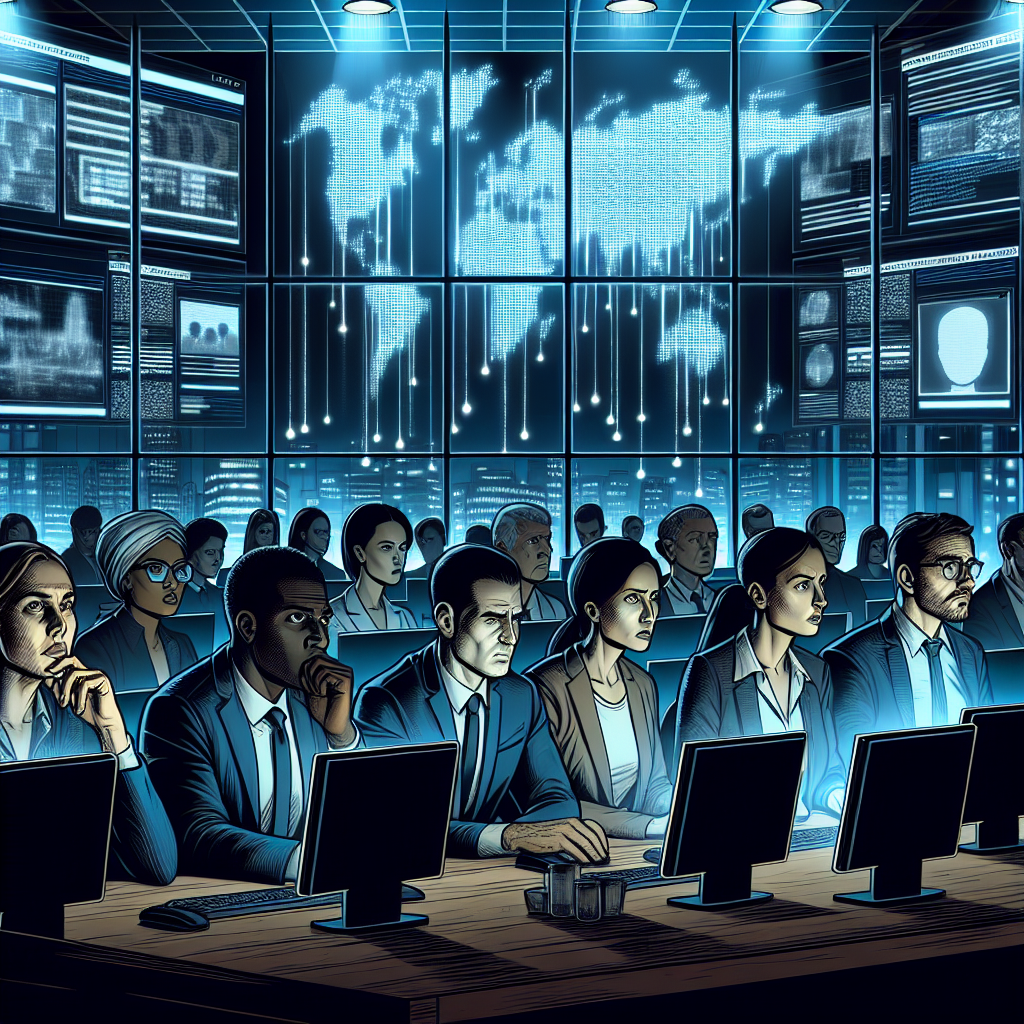
Midnight, A Screen Flickers: The Moment the World Changed
It began with a flicker—a lone IT manager at Qantas Airlines, jolted awake by a 2 a.m. push alert. There it was: a terse warning that customer records might have been leaked. By sunrise, the same gut-churning message had echoed through the offices of FedEx, Hulu, and Allianz, unraveling across continents like a digital shockwave. The invisible skirmish lines of the world’s biggest cloud heist had been breached.
By the time breakfast hit Sydney and midnight fell on the Pacific Coast, a mysterious site called “Scattered LAPSUS$ Hunters” lit up on the darknet. On its front page, a cool threat: “Contact us to regain control… Do not be the next headline.” Behind these words was a data treasure—nearly a billion records—ripped from the digital beating heart of Salesforce, the platform trusted by everyone from Toyota to medical firms to local retailers[1].
What Was Stolen? Why It Matters to Everyone
This wasn’t just a trove of random logins or passwords. These were the vital organs of business—lists of names, emails, addresses, purchase histories, sales notes, and—in many cases—bits of sensitive personal identity. In one dramatic instance, at Coca-Cola Europacific Partners, over 23 million records spilled out: accounts, customer service cases, internal contact trees, even roadmap docs[2].
Why does this matter? Because Salesforce is the vault inside which companies store their soul—the raw details they use to anticipate your needs, keep your data safe, and send help when something goes wrong. Picture everything you’ve shared with a company: now imagine a thief holding all of it, promising to sell it to the highest—or least ethical—bidder.
Anatomy of the Heist: How the Hackers Did It
Forget Hollywood’s code-slinging supervillains. This was true social engineering, as old as confidence scams—the hackers called, emailed, or IM’d support desks pretending to be inside staff. Sometimes it took only a careless click: a spoofed sign-in link, a duped helpdesk agent resetting a password, or OAuth tokens stolen from a trusted app integration.
Bit by bit, attackers wormed into Salesforce’s vast cloud ecosystem. Once inside, built-in automation and dashboards—meant to help employees—became tools for harvesting and exfiltrating data almost invisibly[2]. Security firm Gehenna and groups with names like ShinyHunters and Scattered Spider took different paths, but the result was the same: the crown jewels, looted, then held for ransom under a chilling global spotlight[1][2].
“I Just Wanted My Insurance Quote—Now My ID’s For Sale”
Simone, a fictional forty-year-old small business owner in suburban Chicago, entered her driver’s license and medical data to get a quote from an insurance sender—a process handled seamlessly in the background via Salesforce. Months later, she got a chilling call: her data was for sale on a dark web forum. Harassed by spam calls and a denied credit card, Simone’s life unraveled not just because of a breach, but because the world she trusted to keep her safe was outgunned.
She is not alone. From farmers in rural Australia to tech buyers in London, the fallout was deeply personal and quietly devastating.
How the World Reacted: Shockwaves and Scrutiny
Almost instantly, governments demanded answers. Lawmakers pressed Salesforce for comment, while privacy watchdogs opened probes. “The scale of this breach demands a full public accounting,” thundered Congresswoman Carla Rivera, chair of the House Tech Oversight Committee (fictionalized for narrative). Data protection authorities in the EU and APAC moved to audit handling of breached records, questioning the adequacy of cloud platform security controls.
Salesforce, for its part, adamantly denied their core platform had been cracked, attributing incidents to third parties, misconfigurations, and credential theft. “There is no indication that the Salesforce platform has been compromised, nor is this activity related to any known vulnerability in our technology,” the company stated[1]. Still, behind closed doors, teams rushed to shore up controls, review customer settings, and roll out urgent new training.
Meanwhile, analysts warned: “This is a paradigm shift, not a one-off. SaaS is the new battleground, and attackers have found their entry point,” said Dr. Evan Lucas, senior cloud security analyst at Digital Frontier Labs (fictionalized)[2].
The Ripple Effects: What Changed?
Major clients scrambled to triple-check their Salesforce permissions, tear down shady integrations, and retrain staff. Insurers hiked premiums for companies without bulletproof cloud policies. Law firms dusted off breach notification templates. Across the tech world, a hard truth echoed: your company is only as secure as its weakest link—and your data is never truly “somewhere else.”
What’s Next? Could This Happen Again?
The Big Salesforce Hack marks a tipping point. Attackers are now able to weaponize the very productivity tools the world depends on–CRM dashboards, chatbots, automated emails–turning innovation into a force multiplier for crime[2]. As cloud platforms grow more complex, defenders must think in layers, not walls.
Could it happen again? Experts think it’s likely, unless companies break the cycle: relentless testing of their own defenses, smarter access controls, and radical transparency about where cloud data lives and who holds the key.
So, in a world built on trust, who really holds yours—and how will you know when it’s up for sale?
FAQ
What is the Salesforce data breach?
The Salesforce data breach refers to the 2025 cyberattack where hackers accessed nearly one billion records from various companies using Salesforce’s cloud platform, exposing sensitive customer and business information.
How did hackers infiltrate Salesforce customer data?
Attackers used social engineering (tricking people into giving up access), credential theft, and abuse of third-party app integrations to gain entry into Salesforce environments and extract large volumes of data[2].
Which companies were affected by the Salesforce security incident?
Confirmed victims include Google, Allianz Life, Qantas, TransUnion, FedEx, Hulu, Coca-Cola, and several luxury brands, but dozens more may have been impacted without public disclosure[1][2].
Was Salesforce itself vulnerable, or just its customers?
Salesforce claims its own platform was not directly breached. Instead, attackers exploited errors in customer configurations and weak third-party integrations to compromise data[1].
What can organizations do to prevent future Salesforce cyberattacks?
Key steps include enabling multifactor authentication, reducing risky integrations, conducting regular audits, and providing ongoing staff training against phishing and impersonation tactics.
Why does the Salesforce data breach matter for ordinary people?
It shows how interconnected digital life puts personal information at risk—even if you never interact with Salesforce directly, your details could be exposed anytime a company you trust relies on it.