
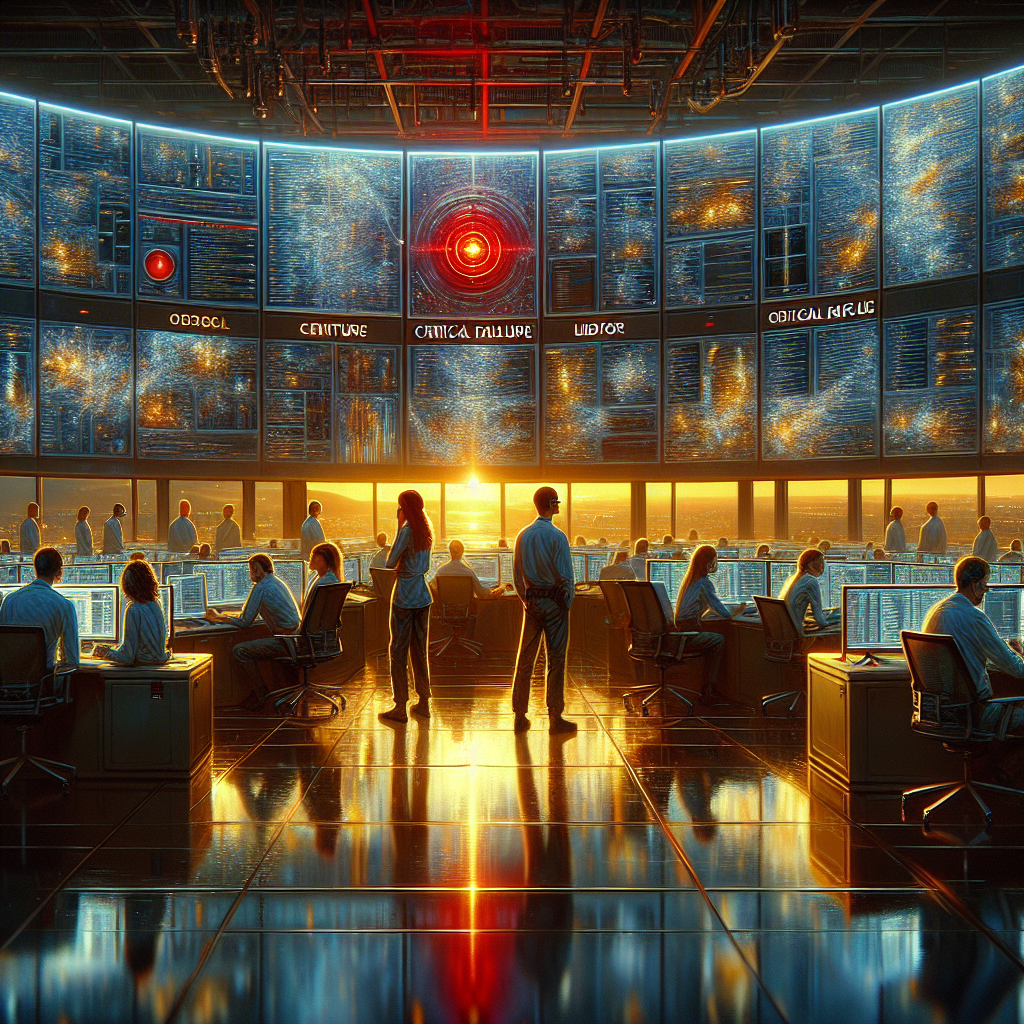
A Chilly Morning, Silicon Valley
It’s a misty morning in Palo Alto. The hum of Teslas blends with birdsong as software architects pour into glass-walled labs, armed with coffee and the conviction that they are building the future. But beneath the shiny veneer, something stirs. In a high-rise conference room, a hushed conversation crackles over encrypted comms: What if the most powerful AI on Earth… failed?
The Big Question: Is OpenAI Now “Too Big To Fail”?
Whispers float through the tech world: OpenAI, backed by astronomical investment and tasked with creating artificial intelligence that could outperform humans, is quietly exploring the need for a government safety net[1]. You’ve heard of “too big to fail” banks, those Wall Street titans whose collapse could tip the global economy. Now, the idea is surfacing in Silicon Valley. What happens if the very technology driving the next revolution—AI—stumbles?
Why does this matter? Because artificial intelligence is everywhere. It’s in your family’s recommendation feed, your city’s traffic lights, your personal health advisor, and, increasingly, the backbone of your nation’s defense. The stakes aren’t just economic—they’re existential.
The Anatomy of a Tech Powerhouse
OpenAI isn’t just a technology company. It’s a global experiment, fueled by billions, where computer code shapes human lives. Its models can write like a novelist, code like a pro, and even negotiate with the charm of a seasoned diplomat. But behind the magic is a complex web of cloud servers, financial backers, and engineers dreaming of digital utopia.
The “attack vector”—that is, the vulnerability—isn’t a hacker breaking the system, but the possibility that OpenAI burns through its cash or faces an existential legal crisis. Governments rely on AI for national security, hospitals use it for diagnoses, business run on AI platforms. If it all went dark overnight, the world could lurch into chaos.
How It Works—And How It Could All Go Wrong
To understand this, picture OpenAI as both an app store and a power grid. Thousands of businesses—and by extension, millions of people—plug in for everything from writing emails to scanning medical images. Now imagine flipping the switch off, not just in San Francisco, but everywhere: docs unreadable, flights unbookable, support bots silent.
The recent whispers, reinforced by leaked comments, hint at OpenAI’s leadership discussing scenarios where federal subsidies or government “backstops” (emergency funding) could catch the company if it falls[1].
“It’s a National Security Question Now”
Louise Chen, analyst at TechSet Insights, sums it up: “OpenAI’s technology isn’t just a product. It’s infrastructure. If it collapses, parts of the digital age could go dark. That’s national security.” A senior official from the Commerce Department, speaking anonymously, said, “We never expected to consider bailouts for tech. But when AI is mission-critical, the rules change.”
A Day in the Life: When the System Shuts Down
Consider Mia, a single mother in Houston. Her son, who has diabetes, wears an AI-driven insulin pump, adjusted daily by algorithms running on cloud servers. One morning—the day after OpenAI stumbles—the pump won’t calibrate. Customer support is gone. Mia scrambles, frantic, and realizes: it wasn’t just a tech story, it was personal.
Halfway across the world, a city traffic grid jams as signal timing stops adapting. Stocks tumble as trading bots freeze. The world, so seamlessly connected, suddenly shudders.
Tech Titans and Regulators React
News of OpenAI’s search for a safety net sends shockwaves. Critics cry foul, accusing tech giants of privatizing profits and socializing risks. “If you want government help, open up your black box,” says Senator Alexia Ruiz, referring to calls for transparency. Proponents, meanwhile, warn that government inaction could put the nation at risk.
Industry groups huddle. Insurance firms game out new risk models. The EU hints at mandatory AI ‘resilience audits.’ Civil liberties advocates beg for stronger guardrails—if government is footing the bill, what strings will be attached?
Ripple Effects and New Rules
As the debate rages, others prepare contingency plans—AI “backup” providers spring up, promising seamless transitions if disaster strikes. Investment surges in open-source software, seen as less risky because it’s community-run. Some countries begin nationalizing critical AI models. Everywhere, the future of technology—and the balance of public and private power—hangs in the balance.
What’s Next: Could It Happen Again?
The saga leaves us with urgent questions: Should technology so deeply embedded in our lives ever be allowed to become “too big to fail”? Is government safety netting a sign of progress, or the seed of dependence? How do we secure the backbone of our new digital empire—before the next pulse of code triggers a blackout?
As the shadows lengthen over Silicon Valley, policymakers, technologists, and ordinary people alike wonder: Will we shape the future of AI, or simply backstop it… at any cost? What do you think—is tech infrastructure a public trust, or just another industry rolling the dice?
FAQ
Why is OpenAI considered “too big to fail”?
OpenAI’s technology underpins countless services—from healthcare and national defense to personal robotics and corporate operations. Its failure could create widespread disruption.
What is a government “backstop” for AI companies?
A “backstop” is emergency funding or support, like the bailouts for banks, to prevent catastrophic collapse of essential services[1].
How could a collapse of AI infrastructure impact everyday life?
Everything from financial services and medical devices to transportation and communications could suddenly stall, affecting millions.
Have other tech firms requested government backing?
So far, OpenAI’s situation is the most public, but there are growing calls for AI and “critical tech” companies to establish safety nets.
What can be done to make AI infrastructure safer?
Possible options include diversified government oversight, open-source backups, stricter audits, and shared international standards.