
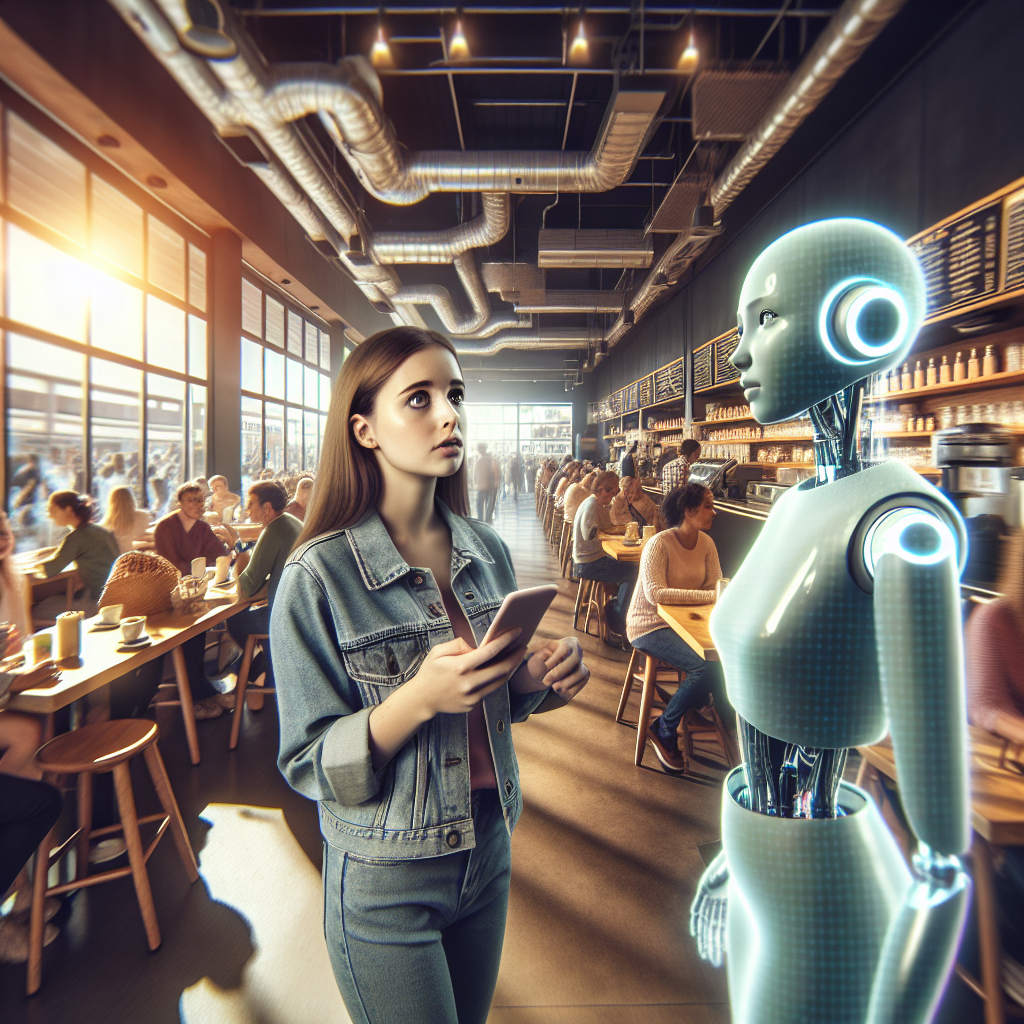
What does it mean to be “intelligent”? Or “human”?
These are questions we’re dancing with every time we hear about artificial intelligence—those digital brains that spark wonder, worry, and more than a touch of “wait, is this thing alive?” drama.
Let’s slow down.
Picture this: You’re sitting in your favorite café, latte in hand, scrolling your phone. A headline pops up—“Artificial intelligence is ‘not human’ and ‘not intelligent’, says expert, amid rise of ‘AI psychosis.’” It’s bold, it’s buzzworthy, and it’s…confusing.
We’re told AI is changing the world. We’re told it’s smarter than us. But there’s a twist—some of the brightest minds say AI isn’t smart at all.
Is the hype hiding something deeper?
Are Robots Really as Smart as People Think?
Let’s break it down together.
When people say “artificial intelligence,” what they really mean is computer programs that do stuff that looks smart: writing poems, answering emails, finding cat pictures.
But if you’ve ever yelled at your phone’s voice assistant for sending you to a gluten-free bakery when you wanted a burger, you know—these machines don’t think.
They don’t dream.
They don’t feel.
An expert recently explained: AI is not human.
And, despite what movies and viral tweets might suggest, it’s not truly intelligent either.
“But hold on,” you wonder, “what about when an AI beats the best chess player in the world?”
Here’s the secret: AI is brilliant at following rules. It predicts, sorts, and generates—kind of like the world’s fastest cookbook.
But ask it to invent a brand-new recipe?
Not so much.
Because intelligence—real, human intelligence—is more than pattern-matching. It’s emotion, imagination, mistakes, and wild dreams after midnight.
The Rise of ‘AI Psychosis’—And What It Means For You
Now, let’s color outside the lines.
A new worry is bubbling up — “AI psychosis.”
This isn’t a sci-fi virus that infects robots. It’s a double-take inside human minds.
Some people, overwhelmed by constant AI content, start believing the digital drama. They lose track of what’s real, or even mistake a chatbot’s words for true human connection.
Imagine this:
You’re exhausted from work, chatting with an online friend. The conversation gets deep. Sensitive. Comforting. But—here’s the catch—you later discover that friend was an AI, not a person with memories or fears, just lines of code spinning words based on algorithms (basically, step-by-step instructions computers use to do things).
Suddenly, everything feels upside down.
Who can you trust?
Where do feelings end and programming begin?
This, experts say, is where AI’s lack of humanness hits hardest.
Because AI can’t be lonely. It can’t laugh at your jokes or cry at your wedding.
It can only pretend—and sometimes, its pretending is so good, it blurs our reality.
From Science Fiction to Your Living Room
Let’s imagine another scenario.
You’re rushing to catch a flight. Your watch buzzes:
“Traffic is heavy. Want directions?”
Seems helpful, right?
But then your device starts suggesting “cheer-up” playlists, sending motivational quotes—and before you know it, it’s checking on your mood.
You pause. Is this kindness… or surveillance?
The truth: AI is programmed to respond, to predict your needs using data.
But it doesn’t care if you miss your plane or fall in love.
And sometimes, its ultra-useful alerts start feeling a little… intrusive.
The Power—and Limits—of Artificial Minds
Here’s the simple truth:
AI is a tool, not a soul.
It’s a flashlight, not the sun.
It can help you find your way, but it can’t light up the inside of your heart.
This isn’t a reason to panic. It’s a call to fascination!
Imagine a world where AI frees you to be more human—letting machines handle the dull stuff while you dive headfirst into creativity, discovery, and connection.
But as the lines between real and digital get fuzzier, we all have to ask:
What should AI do for us, and what should we keep raw, unfiltered, human?
Let’s Talk—What Makes Us Human?
The story of AI isn’t just about code and computers.
It’s about identity, reality, and the kind of world we want to build.
So, next time you chat with a bot, share your secrets online, or wonder if your phone “gets you,” ask yourself—
If AI can fake the parts of being human, what does real humanity mean to you?
And here’s my challenge—What is one thing no AI could ever replace in your life? Why?
Drop your answer below.
Let’s keep the conversation real.