
Countdown to Controversy
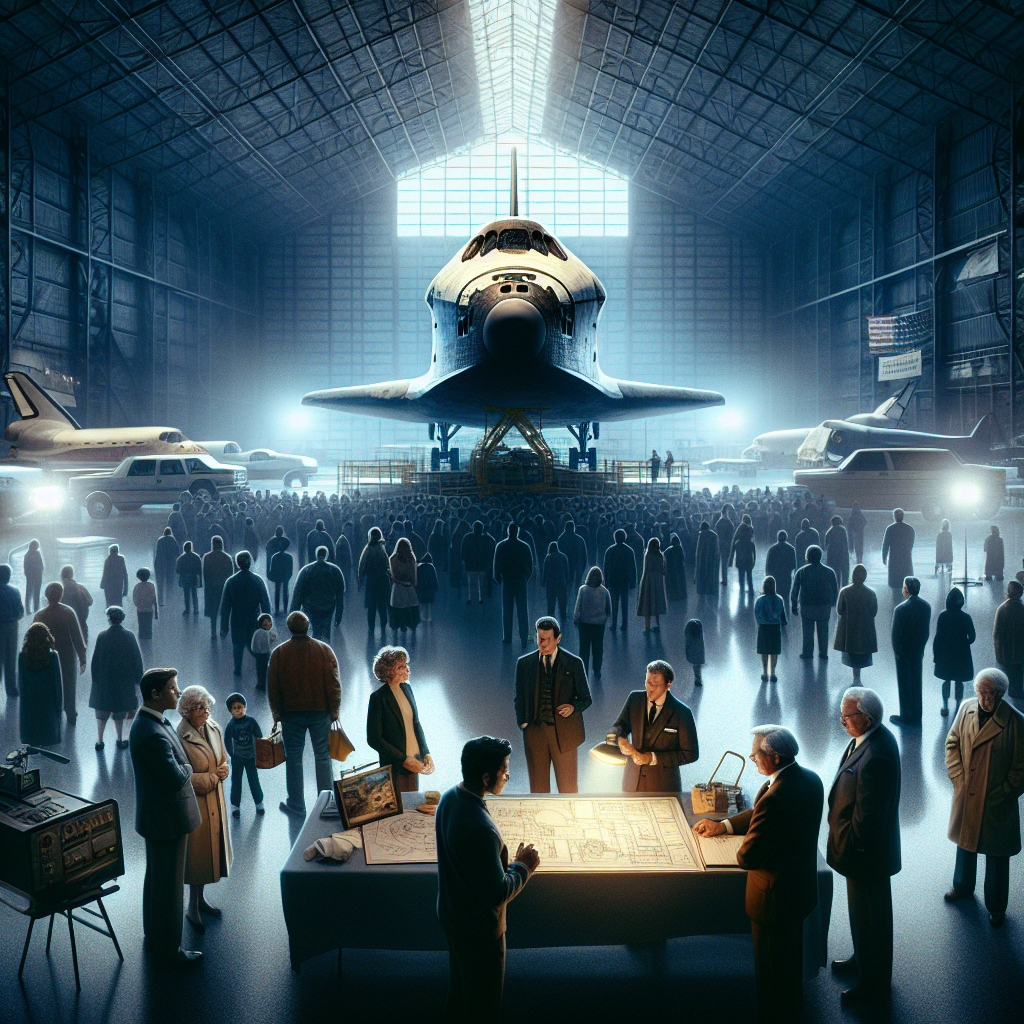
On a humid summer evening at the Smithsonian’s Udvar-Hazy Center, the Space Shuttle Discovery stood draped in spotlights, drawing the stares of a hundred curious school kids, their noses pressed against the glass. Just beyond their reach: the ship that carried John Glenn back to orbit, the survivor of more missions than any other shuttle in NASA’s fleet. The Discovery isn’t just a relic — for engineers and dreamers alike, it’s the living memory of American ambition etched in carbon tile and heat-shield marks.
But as the shutters clicked and eyes widened, word behind the scenes was spreading: The White House had just called with an extraordinary request. The only way to move Discovery to Houston would be to… cut it in pieces[3].
When History Meets a Hacksaw
That phone call dropped like a fuel tank. According to internal documents and sources close to the negotiations, policymakers were feeling mounting pressure from powerful Texas politicians and local groups demanding that Discovery be relocated to NASA’s Johnson Space Center. Yet at every engineering meeting, the verdict was the same: moving Discovery intact would risk catastrophic damage. The only logistically feasible path — slicing the shuttle into segments — would permanently undermine its value to future scientists and engineers[3].
Dennis Jenkins, chief architect of NASA’s shuttle retirement program, described the heartbreak: “We spent years making sure Discovery was as close to flight-ready as a museum piece could be. Once you cut her, that’s lost. She stops being a reference, and starts being a puzzle”[3].
Why Should Anyone Care?
Discovery’s fate isn’t just a bureaucratic squabble or museum drama. It’s about how we remember history — and who gets to decide. In a world where everything from heritage sites to digital archives can vanish overnight (as seen in recent government data removals touching thousands of web pages[1]), the shuttle’s story feels eerily symbolic. If our institutions won’t protect their own crown jewels, what hope is there for the rest of our digital and cultural memory?
The Anatomy of an Impossible Move
The logistics alone read like a sci-fi nightmare. Discovery stretches more than 122 feet from nose to tail, with fragile, aging components designed never to be moved again. Engineers calculated moving her intact would require dismantling huge sections of the museum roof, assembling a one-of-a-kind convoy, and rewiring local roads — at a minimum cost of $120 to $150 million, well above the funding Congress set aside[3].
The “easy” solution? Disassembly. But imagine prying off ribs from Michelangelo’s David or detaching the wings from the Wright Flyer. Though the shuttle could, technically, be cut and reassembled, experts say this would destroy much of its historical integrity and research value[3].
What the Power Players Are Saying
On Capitol Hill, politics is thick as rocket fuel. Senators Ted Cruz and John Cornyn, both Texas heavyweights, lobbied fiercely for the move, citing Houston’s primacy in space history and “fairness” after earlier disputes over other shuttle placements. Opponents, including Senators Mark Warner and John Kelly, called the plan an “irreversible tragedy”[3].
NASA and Smithsonian curators released a rare, unified statement: Discovery’s preservation in Virginia is “essential for national history and next-generation research.” Yet the White House, pressed by powerful interests, asked the agencies to “explore all options” — including permanent alteration.
One Ship, a Thousand Memories
For Jennifer Morales, a public school teacher in suburban Maryland, Discovery is more than a machine; it’s the family field trip her late father organized, the spark that led her son to chase a career in engineering. “I tell my students, you can touch the past here,” she says. “If they cut her up, what are we really teaching our kids about care and respect?”
Multiply Jennifer’s story by thousands. The Smithsonian estimates Discovery brings in over a million visitors a year, many making once-in-a-lifetime journeys.
Ripples Across Museums, Science, and Culture
The proposed move has set off alarms not just in D.C. or Houston, but across the museum world. Curators fear it could set a new, dangerous precedent: that national treasures are chips to be bargained, not global resources for education and research. Engineers warn the loss of an intact shuttle would cripple the world’s ability to study the only “flight-frozen” shuttle in existence — critical for training, restoration, and even next-gen spacecraft design[3].
The debate also echoes a rising wave of government resource removals[1], as agencies under political pressure quietly delete not just websites, but history itself. What’s a shuttle, in this context, but another data set waiting for the axe?
What’s Next / Could It Happen Again?
With Congress gridlocked, neither Houston nor D.C. have secured the money or consensus needed for Discovery’s move — or defense. The White House’s directive to “consider all options” remains a sword hanging over the shuttle, as grassroots activists swarm lawmakers’ inboxes. Meanwhile, museum leaders across the country are calling for new laws to safeguard physical and digital artifacts alike.
Could such a scenario play out again, with other icons? The uncomfortable answer: yes. As budgets tighten and political winds shift, the fate of national treasures increasingly hangs in the balance.
What’s the price of slicing up our past for political gain? And when history calls, who gets to decide which stories are told whole — and which are left in pieces?
FAQ
Q: Why did the White House suggest moving Discovery by cutting it up?
A: Engineering assessments found intact movement was logistically impossible without massive, destructive renovations and a budget far beyond what Congress provided, making disassembly the only viable path[3].
Q: How much would moving Shuttle Discovery really cost?
A: Estimates from NASA and the Smithsonian say $120-$150 million minimum — more than double the funds currently authorized, not counting the expense of a new Houston exhibit[3].
Q: Who supports and who opposes the move?
A: Houston-based lawmakers and local advocates support relocating Discovery, while the Smithsonian, NASA engineers, many national lawmakers, and preservationists strongly oppose any plan that would damage or disassemble the shuttle[3].
Q: Why does keeping Discovery intact matter so much?
A: Discovery is preserved almost as it was in flight, making it a unique research and educational tool. Cutting it up would end its value as a reference for future scientists[3].
Q: Has anything like this happened before?
A: While museums sometimes relocate or restore artifacts, the scale and significance of Discovery make this situation uniquely contentious — it would set a precedent for handling priceless, irreplaceable technology.