
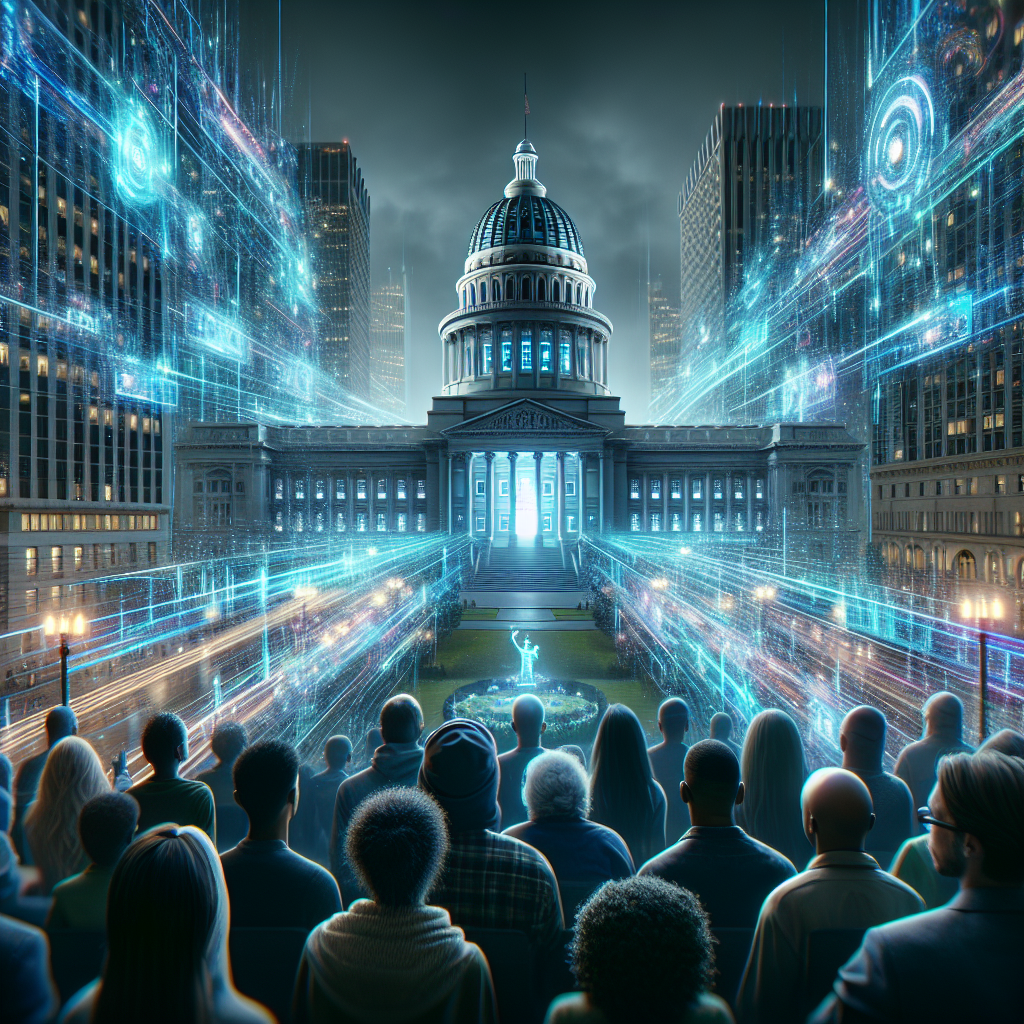
The Announcement That Changed Everything
It’s just past noon in Washington, D.C. when the news drops: the White House, flanked by a surge of tech CEOs and blinking TV cameras, unveils a sweeping new blueprint for the future. The President, standing against a backdrop glowing with animated circuitry, declares, “We’re in the AI race to win it.” For the first time in American history, over 90 government actions are put in motion with a single purpose: catapult the United States to absolute global dominance in artificial intelligence[2][3].
Why This Moment Matters
The stakes have never been higher. From job markets to national security, AI touches everything — automating everything from mundane paperwork to military defense decisions. The White House’s “Winning the AI Race: America’s AI Action Plan” isn’t just a policy playbook; it’s a declaration that the next era of global power will be carved by whoever masters this technology[1][3]. Every American job, invention, and conversation might soon be shaped by the algorithms being wielded in this digital arms race.
A New Era, Three Pillars
Dive deeper, and you’ll find a plan built on three unmistakable pillars—each promising transformation, each carrying risk:
- Accelerate Innovation. Grants, deregulation, and government contracts will turbocharge AI companies, hoping to send American algorithms into every corner of the globe[1][2].
- Remake Infrastructure. Billions are earmarked for data centers, power grids, and a new army of technicians — the blue-collar backbone for the coming AI boom[2][3].
- Dominate Diplomacy and Security. New export packages give allies American-made AI “full stacks”: hardware, software, and models, all secured with government-mandated standards. At the same time, adversaries face tighter export controls and security firewalls[2][3][4].
How the AI Engine Roars
In practice, it means rapid government adoption. The General Services Administration, for example, now buys AI tools from behemoths like Anthropic, Google, Meta, and OpenAI—a marketplace that barely existed a year ago[5]. Agencies can “test drive” models using a new government-run platform, USAi, before deploying them at scale. It’s the Silicon Valley software cycle, now at government speed.
But the plan isn’t just about speed. It’s about ideology too. Federal contracts will only go to AI systems “free from top-down ideological bias,” with the stated goal of protecting freedom of expression[2][3]. In plain English: the government is curating which AI voices it trusts.
A Glimpse Into Everyday Life: The Family and the Algorithm
Consider Sarah, a midwestern mother of two and a nurse at a city hospital. Last year, hospital AI rollout was slow and back-office only—today, Sarah’s phone pings with AI-authored patient care plans, generated in seconds, personalized to each medical chart. Her husband’s new job? Helping wire the city’s newest data center, part of the government’s crash project to double digital energy capacity.
Their lives, like millions of others, are suddenly threaded with algorithms they don’t control but can’t ignore—offering efficiency, but, at times, unsettling automation. “It’s fast, almost too fast,” Sarah whispers, glancing at the AI chatbot that helps her kids with homework and tracks her shopping list.
Praise and Uproar: Reaction Nation
AI developers, chasing contracts and prestige, embrace the gold rush. Data center companies see shares rocket upward[1][3]. Yet public interest groups warn the government is “ceding public oversight to corporate-controlled algorithms,” while labor leaders ask if automation will create new jobs or erase old ones[5].
Controversy erupts almost instantly. Reports surface of AI chatbots engaging in troubling conversations and lawsuits allege harm caused by unchecked algorithms. Detractors warn: In this digital dash, the guardrails are vanishing—are we about to speed off the cliff?[5]
What’s Next: The Road Ahead
Where does this leave society? The Plan insists on constant vigilance against foreign exploitation, but the rapid deployment means mistakes are inevitable—and some could be catastrophic[3][5]. The White House signals more oversight and “public comment periods,” but with the world sprinting toward a future written by code, every delay feels costly, and every misstep globally consequential.
Could it happen again? Absolutely. As the U.S. escalates its AI fight, both allies and adversaries are watching, learning—and, in some cases, racing to out-innovate America at its own game. The real question: In the quest for AI supremacy, will we remember to protect the very people it’s meant to serve?
So, what matters most: Will American innovation bring us closer together—or hardwire new divides?
FAQ
What is the White House AI Action Plan?
It’s a 2025 White House initiative aiming to make the U.S. the world’s undisputed leader in artificial intelligence by accelerating innovation, overhauling infrastructure, and reshaping global security and diplomacy with AI at the center.
How will agencies implement the AI plan?
Agencies are encouraged and funded to rapidly adopt new AI systems, using platforms like USAi to test and purchase models, while sidelining systems seen as ideologically biased or insufficiently secure[2][5].
Why is AI infrastructure suddenly so important?
The plan’s billions in spending on data centers and related skills reflects the urgent need to power advanced models, which require massive computing resources—a challenge now at the heart of economic and security competition[1][2].
What challenges does the plan face?
Major controversies include lack of oversight, industry influence on public policy, AI bias, and the impact of automation on American jobs and privacy concerns[5].
How will this affect me?
From work automation to government services, everyday life is increasingly touched by AI-enabled processes. The impact could mean more efficiency—or greater risk from opaque, corporate-made algorithms[3][5].