
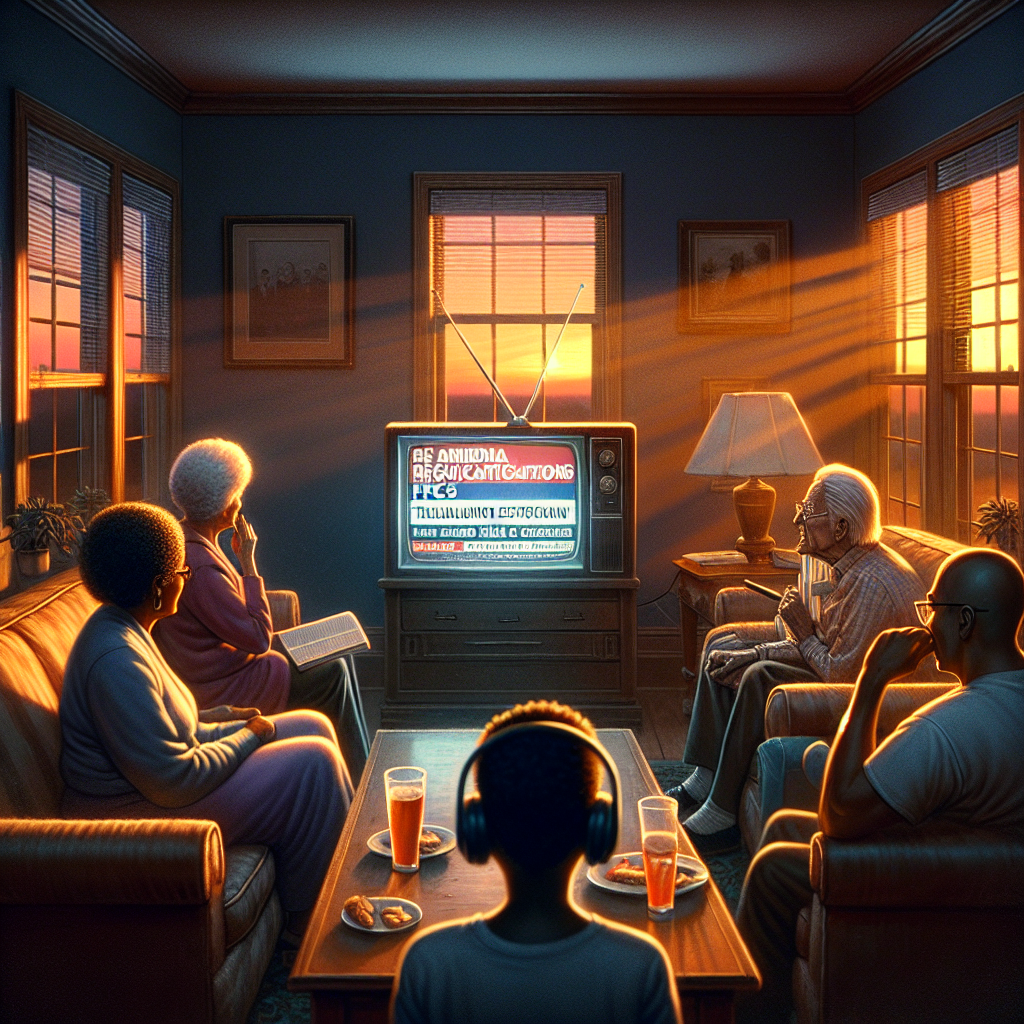
Picture this: You’re sitting on your couch, remote in hand, shuffling through the usual sea of news channels. It’s a typical Wednesday night—until suddenly, breaking news flashes across the screen: “President Trump calls for major networks to lose their TV licenses over ‘fake news.’” You pause, snack mid-air, and wonder, “Wait, can a president really just shut off the news?”
Let’s rewind. In today’s America, our screens are more than just glass and pixels—they’re windows into the wild, swirling storm that is the national conversation. They tell us what’s happening in our towns, faraway cities, and even in the highest corridors of power. But what if—just for a moment—the person in the power seat decided some of those windows should go dark?
A Tweet Heard Round the World
That’s exactly the scene that unfolded when Donald Trump took to social media, blasting major news networks as “fake news” and demanding that their licenses be yanked by the FCC—the organization that, in plain English, is supposed to make sure radio and TV aren’t chaotic free-for-alls. For most Americans, the idea sounds simple: If something is fake, shouldn’t there be consequences? But as the dust settled, a bigger, thornier question loomed: Who gets to decide what’s fake?
What’s the FCC… and Why Does It Matter?
Let’s skip the jargon. The Federal Communications Commission—or FCC—is like the ultimate traffic cop for American airwaves. They decide who gets to broadcast on TV and radio. But here’s the twist: They don’t judge what’s true or false in the news—at least, not officially. Their job is mostly about making sure no one’s signal jams the neighbors, not about policing what reporters say.
Now, come back to that living room scene. Imagine suddenly, as you’re catching up on world events, the channel goes black. Not because your cable bill’s overdue, but because someone somewhere didn’t like what was said. It’s the kind of thing that sounds like another country’s headline, not ours.
A Real-Life Scenario: The Airport News Blackout
Imagine racing through an airport, already stressed about missing your flight. You glance up at the giant TV screens—part refuge, part distraction. But today, every news station displays the same bland government message. No reporting. No debates. No fact-checkers. It’s eerily quiet. You wonder: “What happened to all the noise?”
Suddenly, your phone buzzes with a message: “Certain news channels have had their licenses revoked for ‘fake news.’” People huddle, talking in worried tones about what’s real and what’s just gone silent forever. In that moment, you realize that news—messy, imperfect, even sometimes misleading—is also your window to the truth. When it’s gone, so is the debate, the outrage, the questions, the jokes, and maybe a piece of democracy itself.
Freedom to Flip the Channel
This isn’t just about politicians and broadcasters. It’s about all of us—the daily decision-makers and armchair analysts. Whether you cheer Trump’s call or cringe at it, the real question is what we expect from the people behind the screens. Should news outlets face consequences for getting it wrong? Absolutely, many would argue. But should the government have the power to pull the plug based on what it calls “fake”? That’s a far trickier puzzle.
Democracies are built on the idea that arguments—loud, passionate, even ugly ones—are signs of a system working, not failing. When leaders threaten to silence news they don’t agree with, it’s a storyline straight out of the history books—one that’s played out in countries where freedom didn’t last.
Why Should You Care?
If you value your late-night news routine, your heated group chat debates, or just having the option to scroll through headlines and decide for yourself, this moment matters. When the rules for what you can watch or read suddenly depend on who’s in power, everyone’s point of view is vulnerable.
The Story Isn’t Over
Trump’s call may have sent shockwaves, but it also lit a fire under an age-old debate: Who should control what we see and hear? Where does the line fall between protecting the public from lies and protecting the public’s right to know—even if what we know is sometimes messy, uncomfortable, or flat-out wrong?
So the next time you imagine flipping on the news—airport, living room, or the palm of your hand—ask yourself: If someone could just cut that signal on a whim… what would we lose?
Now, over to you:
If you could pick just one rule for news networks to guarantee trust, what would it be—and who do you think should enforce it? Drop your thoughts below.