
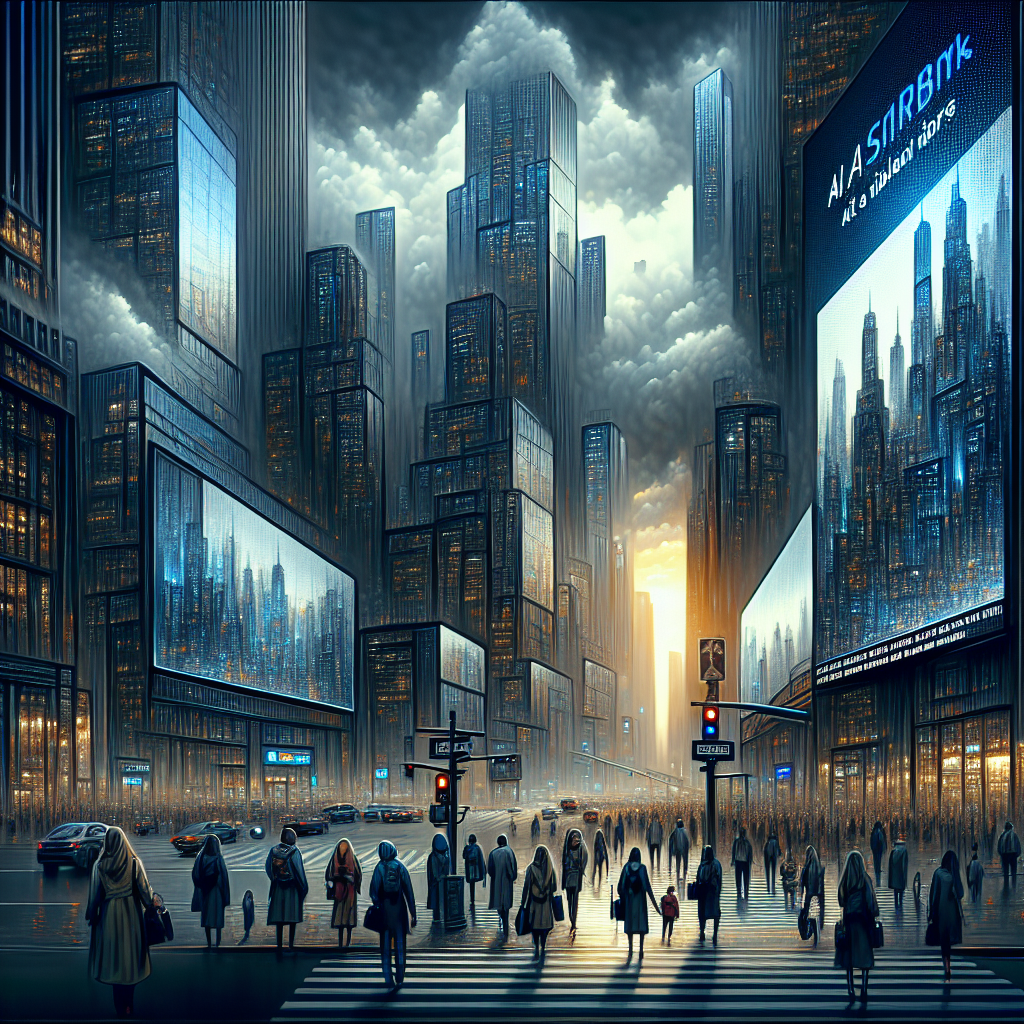
Scene One: Shanghai, 2027. The city’s neon pulse is slower than usual. A bank of screens in a downtown trading firm flickers with ominous headlines: “AI Growth Flattens: Global Markets Wobble.” Silence tightens in the bullpen. Lena, a 28-year-old quant, scrolls her feeds. Wall Street is bracing for the unthinkable: the first major AI stagnation, and its shockwaves are ready to circle the globe.
The Promise That Took Over the World
For years, the promise of artificial intelligence seemed like gravity—constant, inevitable, and always pulling harder. Visionaries pitched AI as the engine that would thrust humanity from mere efficiency into creative superabundance. Trillions in market value, smarter everything, “jobs humans hate” handed off to tireless software. Goldman Sachs drew up forecasts of a $7 trillion bump for global GDP[1]. McKinsey upped the ante, hinting at $25 trillion annual boosts.
Major corporations poured billions into “AI-everything” strategies—fleet learning for logistics, chatbots for customer engagement, robo-advisors managing investments in real-time, and factory floors tuned by predictive algorithms[3]. Venture capitalists funneled cash into startups with “cognitive” in their monikers. Silicon Valley airports were crowded with hopefuls going to AI bootcamps rather than college reunions.
The transformation wasn’t digital; it was societal. In the finance sector, AI bots ran market forecasts and flagged fraud faster than any human analyst[3]. In manufacturing, predictive maintenance made delays nearly obsolete and kept production humming all night[3]. AI-driven vehicles, once science fiction, became a backdrop to daily commutes[3][5].
The Price of Bet-the-House
In the rush to automate, augment, and accelerate, few asked: “What if this rocket sputters?” Economic projections, drawn with lines trending forever up, assumed that AI’s intelligence and practical value would only grow, year after year. The world bet on perpetual exponential progress.
But beneath the hyperbole, cracks started showing. At MIT, Nobel-winning economist Daron Acemoglu quietly warned the surge might be overestimated: “Only about 5% of tasks will be profitably automated by AI in the next decade. The GDP boost? Maybe 1%—not 7%”[1][2]. The IMF, sifting through global labor and trade data, found wide disparities: AI thrived in data-rich sectors but slackened elsewhere[2][4]. Stanford’s annual AI Index mapped surging investments and breakthroughs but noted patchy skill adoption and uneven productivity spikes[5].
All this spelled trouble. If the world economy’s “next growth chapter” counted on relentless AI miracles—but those advances slowed—what would happen to the sprawling financial bets, the labor transitions, the arc of economic optimism?
When Progress Slows
The “AI slowdown” started subtly. Productivity gains once measured in double digits shrank to fractions of a percent[2]. Translation: after the first wave of easy wins—sorting emails, optimizing supply chains, helping diagnose X-rays—progress sputtered on complex, context-sensitive jobs.
In data-rich industries (finance, logistics, high-tech manufacturing), job “creative destruction” hit fast: old roles vanished, and a swathe of “AI oversight” specialists popped up[4]. But in sectors lagging behind on digitization—care work, local government, education—the AI promise grew distant and cuts cut deeper, gutting entire departments[4].
For many, the change was deeply personal.
The Human Angle: One Family’s Unraveling
Imagine a family in the US Midwest. Julia, a mid-career logistics supervisor, helped her company embrace AI-automated scheduling. For a while, things were good—workloads eased, profits rose, and Julia started night classes in data analytics. Then, the firm’s algorithms plateaued, unable to handle exceptions and seasonal quirks. Layoffs accelerated. The new jobs required skills no one near Julia’s small town had, and the nearest “retraining bootcamp” was hundreds of miles away.
Her son, meanwhile, lost his first retail job—store automation replaced frontline staff, but promised “robot maintenance” gigs never materialized locally. Paychecks stopped landing. Bills piled up. The family realized: progress had given them hope, but the slowdown left them stranded.
Governments and Markets: Shockwaves and Scrambles
Central banks, once bullish on “AI-fueled inflation absorption,” suddenly had to confront falling productivity. BRICS economies paused ambitious digital infrastructure spend, nervous that AI deliverables wouldn’t meet the hype.
Tech giants trimmed R&D budgets “pending strategic review.” Wall Street’s quant desks, built for relentless upgrades, reported disappointing quarters. Global stocks dipped. Governments faced protests as citizens demanded answers. Policymakers scrambled to reinforce unemployment insurance, invest in “digital resilience zones,” and mandate transparent reporting on AI gains and gaps.
Amid the turbulence, experts called for realism. Stanford’s AI Policy Group chief stated on a CNBC panel: “AI is transformative, but not miraculous. The slowdown exposes our need for broader economic reforms, not just silver-bullet innovation.”
What’s Next? Could It Happen Again?
The AI slowdown of the late 2020s became a stress test for high-tech optimism—a reminder that technology booms are always entangled with human complexity. But just as dot-com busts made way for stronger digital economies, this stumble could prompt a more grounded, equitable deployment.
Investors are moving from hype to scrutiny. Communities are demanding training, transparency, and realistic timelines. And a new generation of technologists, burned by easy promises, is asking: Can we build AI that delivers stability, not just speed?
Will the next leap in intelligence come from better machines—or a wiser society ready for their limits and potential?
FAQ
Q: What happens if artificial intelligence progress slows down?
A: An AI slowdown could disrupt economic forecasts, slow job growth in some sectors, and spark instability—especially where companies or governments have over-invested based on overly optimistic assumptions.
Q: Could an AI stagnation cause a market crash or economic recession?
A: While it would not single-handedly cause a crash, a sudden stall in AI-driven productivity can trigger economic downturns if markets and policymakers have excessively priced in rapid tech-driven growth.
Q: How are industries and governments preparing for the possibility of an AI plateau?
A: Some are hedging bets with diversified technology investments, focusing on retraining workers, and pushing for more cautious economic modeling when it comes to automation and digital transformation.
Q: Will jobs lost to AI ever come back if progress stalls?
A: Lost jobs rarely return in the same form. A slowdown can mean new jobs emerge more slowly, worsening skill mismatches and economic inequality in affected regions.
Q: Can anything prevent or cushion the impact of an AI slowdown?
A: Yes—policies that invest in workforce training, regional digital infrastructure, and realistic AI performance benchmarks can help reduce economic and social shocks.