
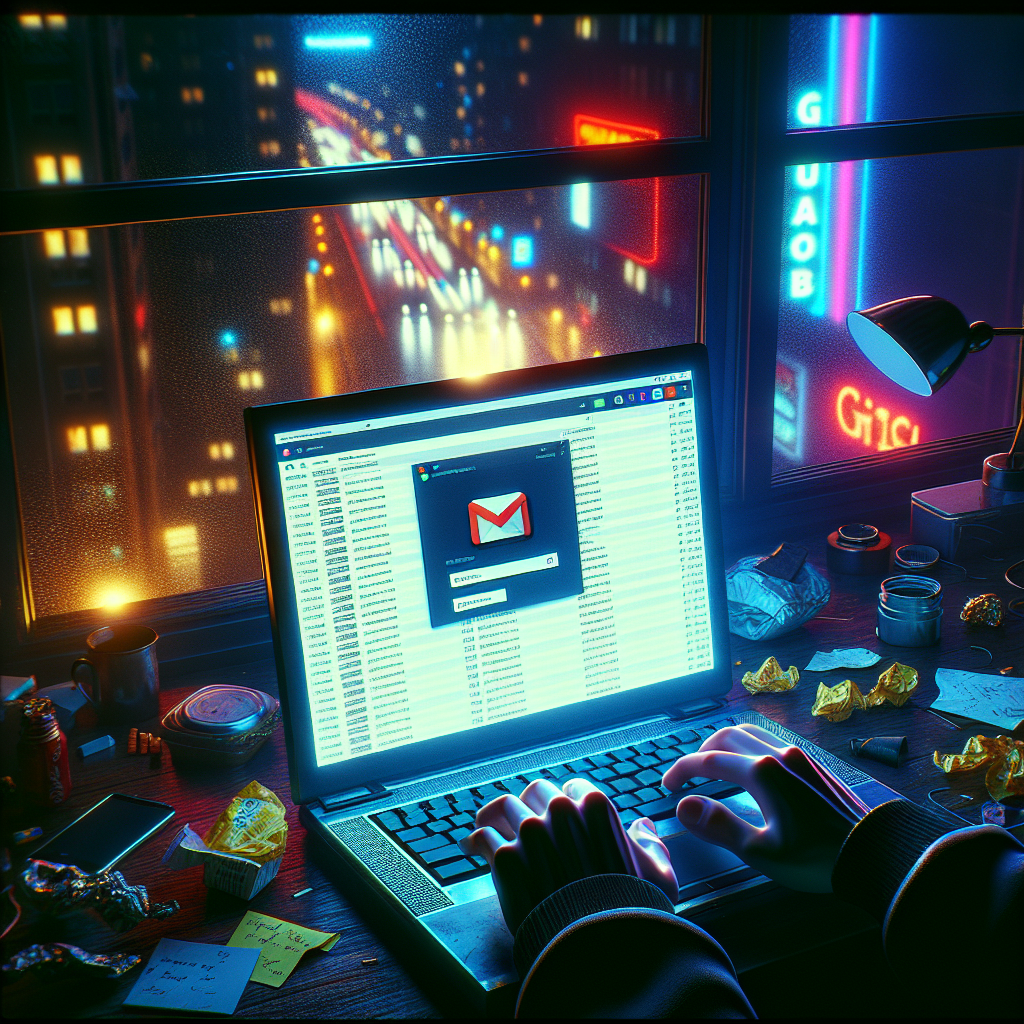
A Moment that Froze the Internet
It was just another Tuesday morning. Somewhere in a cluttered student apartment, a glowing laptop screen flickered to life—revealing a Gmail inbox belonging not to its owner, but to Jeffrey Epstein. Not a screenshot or an archive. Live access. Emails. Contacts. The digital ghost of a disgraced millionaire, rendered vulnerable in real-time for thousands to see. The online world did a double-take. Had Gmail been hacked? Was this a hoax? Tech Twitter and Reddit exploded. For a brief, surreal window, the public stared into one of the world’s most notorious inboxes.
But this wasn’t an act of vengeance hacking, or even advanced cybercrime. No, this was a pointed piece of “internet theater”—a demonstration of just how fragile our digital identity can be.
The Tech Trick Behind the Curtain
How did a group of internet mischief-makers pull off what looked like the hack of the decade? The secret wasn’t a sinister breach, but a clever mirror: they’d cloned Gmail’s website, pixel for pixel, and cleverly rerouted every user directly into a famous inbox. No passwords cracked, no firewalls pierced. Just shock, awe, and an unnervingly simple trick.
Here’s how it worked: their duplicate Gmail wasn’t really Gmail at all. It just looked like it. When you visited their site, the underlying system instantly called up a static copy of a target inbox—for example, Jeffrey Epstein’s, or any celebrity they chose. It was like a haunted amusement park ride: you felt like you were inside, but it was all set dressing. A fake. But a very convincing one.
This clever digital stunt wasn’t just for laughs. It forced everyone—tech companies, security pros, and ordinary web users—to confront a jarring reality: sometimes, the most powerful hacks don’t break in… they just pretend to belong.
Why We Fell for It: The Power of Digital Identity
To most of us, an “account” means safety. A lock on the door of our digital world. But this episode shattered that faith, tapping into an uneasy truth: our online identities are only as secure as the websites that claim to protect them.
Tech analyst Priya Shah summed it up: “This Gmail clone reminded us that user trust is fragile. One convincing fake can trick millions.” The breach was only an illusion, but the threat it exposed was very real. As more services push us toward single sign-on and federated logins—where one password unlocks everything—suddenly, the cost of a simple web forgery looks alarmingly steep.
Internet Paranoia: A Family’s Wake-Up Call
Meanwhile, across town, the Williams family learned about the hoax the hard way. 14-year-old Maya, chasing viral trends, clicked a friend’s link to “Epstein’s live Gmail.” The page looked perfect…until the browser flickered and a warning popped up, urging her to enter her credentials. Maya almost did. Her mother, thankfully, snatched the laptop away—actions that may have saved Maya from sharing her own real secrets, not a dead billionaire’s.
Countless others almost fell for the trick, realizing only at the last moment: this wasn’t just entertainment. This was a digital Rorschach test—how much do we trust what we see?
Industry and Government Scramble to Respond
Within hours, Google scrambled emergency teams, updating security advisories and sending takedown requests to the cloned site’s host. The U.S. Cybersecurity and Infrastructure Security Agency (CISA) released a rare statement: “This incident underscores how impersonation and phishing remain the most prevalent, dangerous threats to American internet users.”
Tech giants redoubled efforts to educate users. “We see this as a wake-up call,” said security researcher Alex Kim, who studies phishing trends. “If the internet’s biggest brands can be mimicked so easily, we have to focus on deep education and smarter browser safeguards.”
The Ripple Effects: Shift in Digital Trust
The media blitz forced a broader reckoning. Cybersecurity forums debated “trusted browser indicators”—visual cues or digital watermarks signaling you’re really on the site you think you’re on. Schools and companies issued urgent reminders: verify URLs, check certificates, trust but verify.
Meanwhile, some hackers and tinkerers admired the trick as “gray hat genius”—using artful mimicry not to steal, but to teach. For one turbulent week, digital identity and user vigilance wasn’t a footnote—it was the main story.
What’s Next: Could this Happen Again?
As the headlines faded, a new awareness remained: our online trust is more brittle than we care to admit. Clone sites, visual deception, ever-more-convincing phishing—these are now tools of everyday digital life.
Could it happen again? Almost certainly. Next time, the prank might not be harmless theater. It could be the prelude to real damage: stolen data, blackmail, or worse.
So—how do we safeguard our digital doors? Two-factor authentication, hardware security keys, and unbreakable habits of skepticism.
But as technology evolves, one question remains:
If our online world can be cloned at the click of a button… how will we ever know who’s really on the other side?
FAQ
What was the Gmail clone hack?
The Gmail clone event involved a fake Gmail site that let anyone view seemingly real, famous inboxes. It was a web prank but exposed real risks about phishing and digital impersonation.
How can Gmail phishing threats be prevented?
Always double-check URLs, enable two-factor authentication, and look for browser security indicators before trusting any login page.
What should I do if I fall for a phishing site?
Change your passwords immediately, enable two-factor authentication, and review your account access history for suspicious logins.
Are there ways for companies to defend against website cloning?
Yes, companies use encryption, certificates, and advanced monitoring—plus user education. Some browsers now highlight trusted “safe sites” using visual cues.
Can clone attacks impact other services?
Absolutely. Any popular site, from banks to social media, is at risk of cloning and impersonation, making user education more vital than ever.