
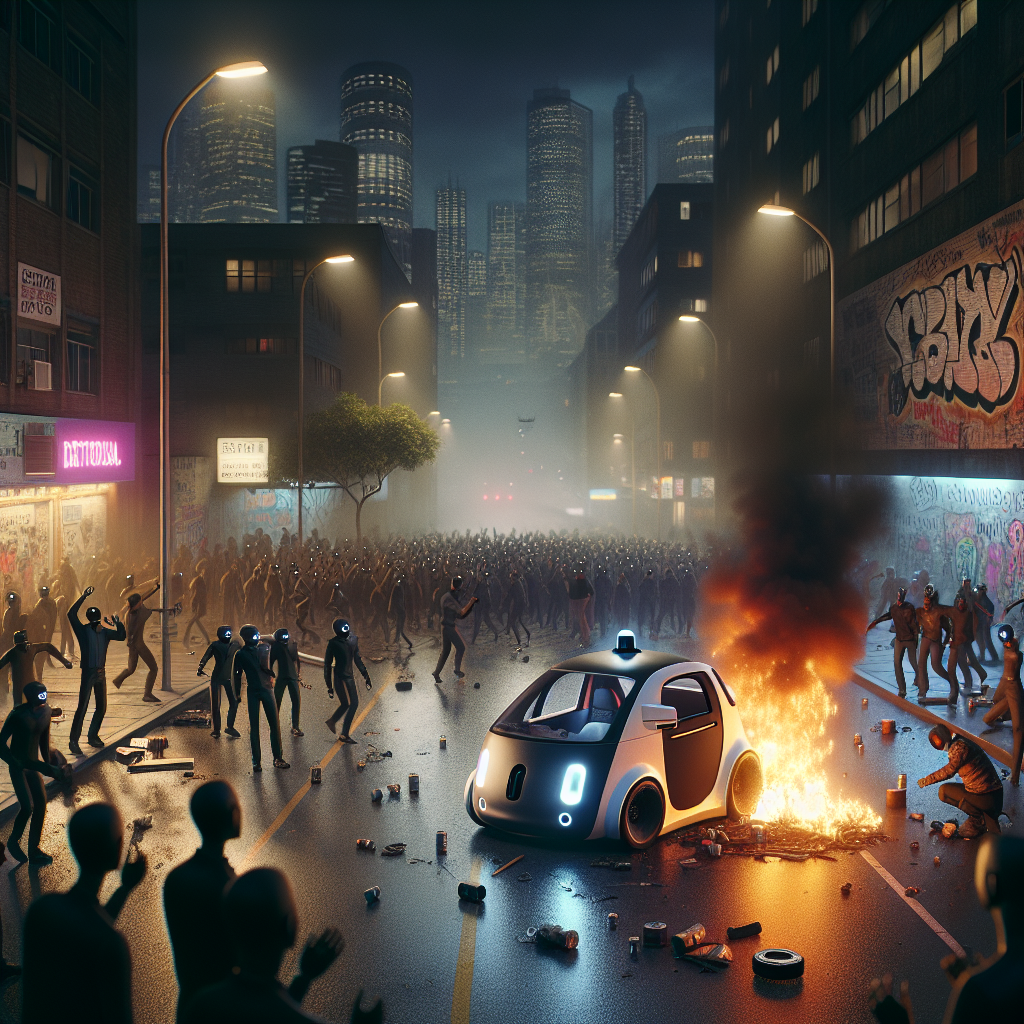
Scene One: Midnight, San Francisco
Fire eats metal, lighting up the midnight fog. Sirens wail in vain as Waymo’s driverless test car morphs, in seconds, from Silicon Valley marvel to smoldering political message. Onlookers chant, protestors film, and somewhere in the throng, a hand scribbles “spy car” across the hood before the flames erase it. Not long after, city streets are lined with the charred husks of robotaxis—symbols of an urban drama no one expected to star in[1][2].
Why Did the Robotaxis Burn?
Driverless cars were supposed to be the future: safe, neutral, and quietly revolutionary. But reality, like a Netflix docuseries, is rarely so neat. In Los Angeles and San Francisco, Waymo’s autonomous cars—those smooth, unblinking electric pods—became the unlikely targets of unrest. Witnesses say protestors summoned Waymos just to destroy them, chanting that they were part of a “police surveillance state”—rolling informants disguised as rides[1][2].
Underneath these accusations is more than technophobia. Independent journalists and 404 Media uncovered that Waymo’s cars, peppered with 360-degree cameras, have quietly handed footage to police, following warrants or subpoenas pressuring the company to “collaborate” with law enforcement[1][2]. The result: what’s designed as mobility innovation is suddenly condemned as an omnipresent witness.
Chris Gilliard, a privacy researcher interviewed by Bloomberg, didn’t mince words: “Self-driving vehicles are essentially surveillance cameras on wheels,” he said. “We’re supposed to go about our lives without being surveilled unless suspected of a crime. Each bit of this strips away that ability.”[2]
“Surveillance on Wheels”: How It Works
Here’s the mechanism people fear.
Each Waymo car is wrapped in a mesh of high-resolution cameras and sensors, capturing the world with forensic fidelity. While the intent is to keep passengers safe, the same feeds can become evidence in court—or tools in the hands of government agencies reaching for all-seeing eyes[1][2]. When asked, Waymo insists they only share such data with law enforcement after reviewing every request, and only through valid legal process[2]. Still, the growing frequency of these requests alarms privacy activists and residents alike.
Let’s be clear: driving a Waymo doesn’t mean every action is uploaded to a central police server. But the mere possibility that your city’s robotaxi might quietly film you at your most vulnerable—or during a protest—has cracked open old anxieties about who’s watching, and why.
Experts React: Mistrust in the Machine Age
Selika Josiah Talbott, policy expert and longtime advisor on autonomous regulation, called recent crowd attacks “shocking and horrifying,” highlighting a growing social rift: “People are lashing out, not just at the cars, but at what they represent—loss of control amid relentless surveillance.”[3]
Yet, not all see the violence as inexcusable. Some organizers, such as racial justice advocate Samuel Sinyangwe and climate activist Elise Joshi, argue online that mourning robotaxis diverts attention from real human suffering. “A robot car? Are you going to demand justice for robot dogs next?” Sinyangwe quipped, provoking a digital firestorm. Joshi doubled down, “Bought-out politicians use Waymo as an excuse to defund public transit. I pray on Waymo’s downfall.”[2]
The Human Angle: One Family’s Night Out
It’s Friday night in Los Angeles. The Patel family, parents and two teenagers, order a Waymo as a novelty ride to dinner. The car glides up: bright, calm, cutting through L.A. traffic. But halfway there, police lights flash—there’s a protest. Their car detours, filming the angry crowd, capturing every face. Later, they see headlines of that same scene: “Police Suppress Protest, Seek Footage.” Knowing their brief ride put innocent friends or neighbors on surveillance tape makes the Patels uneasy for reasons they can’t quite articulate.
The City Responds: Ripples Across America
As vandalism spread, cities and activists found themselves staring down a new technological and ethical conflict. In West L.A., residents organized against robotaxis, annoyed by their beeping and worried about creeping surveillance[4]. In San Francisco, police now think twice about using these mobile witnesses, wary of backlash. Tech leaders scramble to patch public trust—offering more transparency and, sometimes, shuttering service in protest-heavy zones[1][2].
Waymo’s parent, Google, insists their feet remain planted in “legal due process,” but critics want more: open audits, opt-out options, and universal transparency about when—and why—footage goes public[1][2].
What’s Next / Could It Happen Again?
Even as the ashes cool, one thing is clear: robotaxis can be more than transportation—they can become lightning rods, proxy battlegrounds for privacy and power. Communities now debate new rules for digital evidence, and the robotics industry faces a choice: privacy-first reform, or retreat.
Will the next city to burn with unrest be ready for what lurks beneath the hood—a camera, a silent witness, a symbol? Or are we racing, without brakes, into a future where every street, every sidewalk, could be under watch—by design?
Provocative Question:
If every ride you take becomes a potential piece of police evidence, are we really passengers— or just the bit players in someone else’s endless surveillance archive?
FAQ
-
What is Waymo’s footage policy?
Waymo shares car footage with police only after a proper legal process (like a warrant or subpoena). However, the frequency of these requests is rising, raising concerns among privacy advocates[1][2]. -
Are Waymo cars always recording?
Yes, Waymo cars use 360-degree cameras and sensors at all times for navigation and safety. This also means they’re constantly gathering video of the environment, people, and other vehicles[1][2]. -
Why are Waymo cars called “surveillance on wheels”?
Because their footage can be requested by law enforcement and used as court evidence, privacy experts and activists liken Waymo vehicles to roaming surveillance cameras[1][2]. -
How have people reacted to Waymo’s role in surveillance?
Public backlash has grown, with protesters vandalizing vehicles and communities demanding more transparency while some experts urge for legal reforms to control access to such footage[1][2][4]. -
Could something similar happen to other autonomous vehicles?
Yes, as more driverless cars hit the streets, questions about privacy, surveillance, and civil rights will likely intensify—meaning no city, and no tech, is immune.