
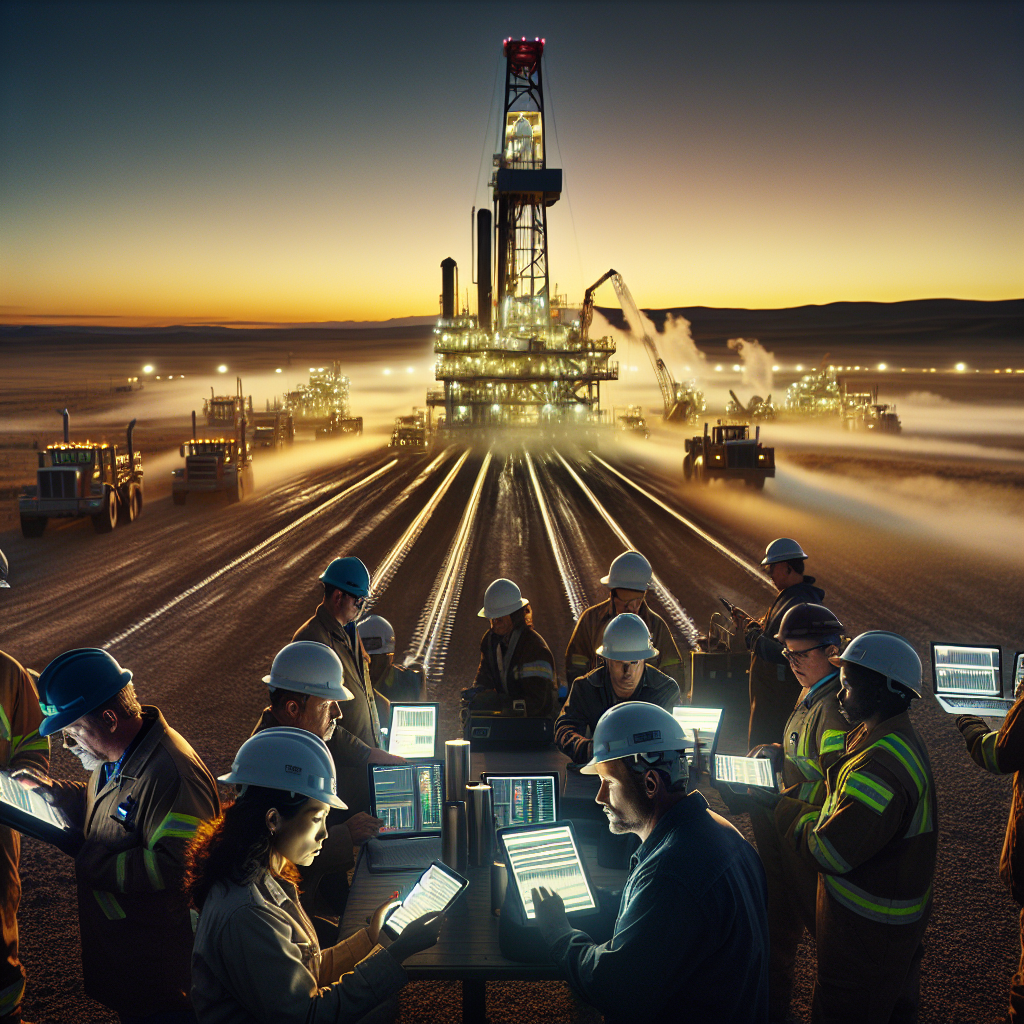
The desert is still before dawn—only a hum from machinery disturbs the silence, and tiny red lights blink under an unending canopy of stars. Out here near Beaver County, Utah, a drill presses down through 15,000 feet of ancient earth. It’s not oil these innovators are chasing in the pre-dawn chill; it’s the energy that burns at the planet’s core, a power source as old as Earth itself and now, potentially, its future.
A Gamble That’s Changing the Power Game
Utah’s arid backcountry is ground zero for a new energy revolution: enhanced geothermal power. The largest project of its kind in the world, it promises 400 megawatts of 24/7, carbon-free electricity—enough for hundreds of thousands of homes—by tapping heat so deep it’s been unreachable until now[2][3]. Until recently, geothermal meant volcano-sides in Iceland or rare hot springs. But here, in the heart of America, something is changing.
The Cape Station project, spearheaded by Fervo Energy and backed by major federal and private investment, is not just an engineering feat. It’s a signal that clean, always-on electricity might be closer than we think[1][3]. Bill Gates, after a visit, describes the moment as “coming full circle”—geothermal moving from fringe curiosity to serious contender on the global energy stage[1][4].
How It All Works—And Why It’s So Radical
Traditional geothermal works only in areas where the earth’s heat bubbles close to the surface. But in Utah, Enhanced Geothermal Systems (EGS) are rewriting the rules[2][3][5]. Imagine this:
- Engineers drill deep vertical wells, then bore out sideways—like branches reaching out below the crust.
- Water is injected at high pressure. The hot rock cracks, making new pathways.
- That water absorbs heat and is pumped back to the surface as steam, spinning turbines for electricity.
These techniques—horizontal drilling and “fracking” the earth’s deep rock—were perfected by the oil and gas industry. Now they’re being used to unlock zero-carbon energy nearly anywhere, not just at rare hot spots[2][4]. The Department of Energy’s Utah FORGE project is essentially a giant open laboratory for testing and perfecting these methods[5]. If they work, geothermal could power cities, AI data centers—even entire regions—around the clock, without reliance on sun or wind.
Why Now? Climate, Tech, and Big Money
What’s driving this rush to the center of the Earth? Three forces, converging at just the right time:
- Climate urgency: Carbon emissions need to drop, and renewables like wind and solar, while growing fast, can’t provide power 24/7. Geothermal’s “always on” promise is a game-changer[1][2].
- Technology leap: Decades of deep drilling expertise, new diamond-tipped bits, and AI-powered resource mapping have made what was science fiction into hard engineering[2][5].
- Big investors betting big: Google, Shell Energy, and venture capitalists are pumping in hundreds of millions, hoping to corner a limitless energy market[3]. In April, Shell locked in a 15-year deal for a chunk of Utah’s geothermal power to supply America’s grid[3].
Geothermal, Meet Main Street
For families like the fictional DeLeons in Cedar City, this means more than clean grid power—it’s livelihood redefined. Maria, a mother of three, used to worry about layoffs at the coal plant where her husband, Tomás, worked. Now, as the geothermal site expands, Tomás is retrained as a drilling tech, earning better pay and new respect.
Their kids hear stories not just of fires and pollution but of clean steam and energy from the rocks below. School field trips, once to relic coal mines, now rotate to the Cape Station visitor center. Friday night football runs on locally generated, clean geothermal power. People whisper about how energy used to mean smog; now it means innovation, jobs, and hometown pride.
Voices from the Frontlines
Dr. Kristine Pankow, a geologist at Utah FORGE, stresses: “This isn’t just an energy experiment—it’s a model for the world. If we can crack the code in Utah’s tough geology, we can deploy this almost anywhere.”[5] National analysts agree; even traditionally conservative lawmakers are getting behind new funding as Utah’s success becomes impossible to ignore[3]. “Geothermal hasn’t gotten the same love as wind or solar,” says energy analyst Matt Mailloux. “But now it’s stepping into the spotlight, with lasting economic and political impact.”[3]
Ripple Effects—and Early Backlash
Other communities are watching closely. Some fear micro-earthquakes or water use; skeptics question costs. But for every doubter, another small town signs up to pilot test geothermal, thinking of both economic rebirth and national energy independence. Google, Amazon, and Facebook are already eyeing “geothermal-secure” data centers.
What’s Next / Could It Happen Again?
Buoyed by success here, policymakers are eyeing federal incentives for more EGS hubs in Texas, Nevada, and beyond. New research aims to reduce drilling costs by 90% by 2035, making geothermal as cheap as onshore wind[3]. If proven at scale, deep geothermal could power a fifth of the world’s grid within decades[1].
But engineering the planet’s own fire remains a high-wire act. Could this become the default everywhere? Or will it stay an outlier as costs, politics, or unforeseen risks emerge?
What’s the one innovation—depth, tech, or trust—that will finally unlock energy from the Earth’s heart for everyone?
FAQ
What is Utah’s hottest new power source?
Utah’s hottest new power source is enhanced geothermal energy, produced by drilling 15,000 feet deep and injecting water to harness the earth’s heat[1][2].
How does enhanced geothermal (EGS) work?
Engineers drill horizontally into deep hot rock, inject water to open up cracks, and bring heated water up to the surface to spin turbines for electricity[2][3][4].
Why is Utah’s enhanced geothermal project important?
It’s the largest of its kind, can provide 24/7 carbon-free power, and proves this tech can work almost anywhere, not just volcanic regions[2][3].
Who’s backing this project?
Major investors include Google, Shell, and the US Department of Energy, with private and public funds exceeding hundreds of millions[3][5].
Will this create jobs?
Yes. Drilling techs, engineers, and support staff all stand to benefit as new geothermal plants bring fresh employment and retraining opportunities[2][4].
What are the risks?
Potential risks include small induced earthquakes and managing local water usage. Researchers are addressing these as part of the project design[5].
How soon could other regions see geothermal plants?
Pilot sites in Nevada, Texas, and around the world are already being scoped, with breakthroughs in Utah paving the way for more rapid expansion[3][5].