
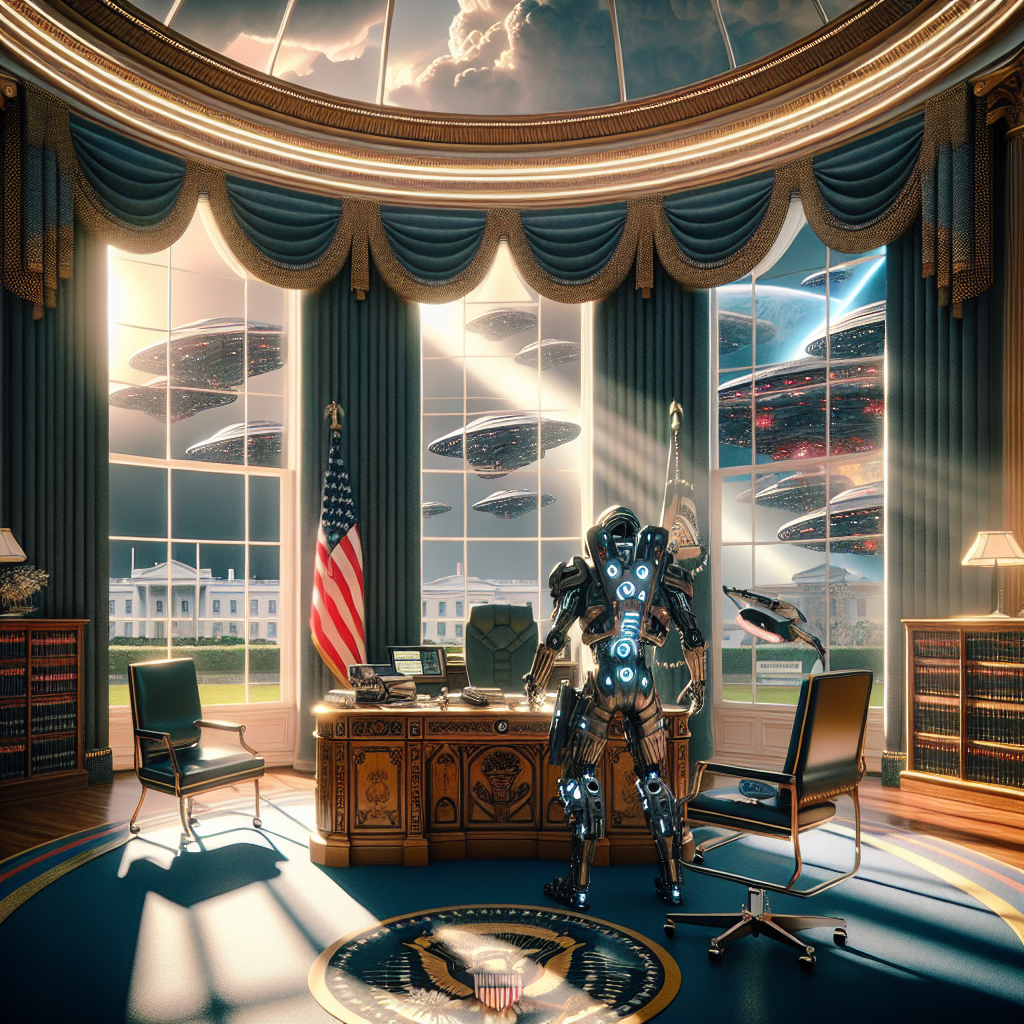
Prologue: The Viral Image That Shook the Internet
It was a Saturday unlike any other—one of those moments where reality’s boundary with digital surrealism blurs beyond recognition. Millions of social media feeds lit up as a new image dropped: President Donald Trump, rendered as Master Chief from the iconic Halo franchise, armor gleaming, visor aglow, standing against a backdrop familiar to gamers worldwide. The White House, the very seat of American power, shared the image with a cryptic claim: “Power to the Players.”[1][2] For a split second, it felt absurdly playful. Then, the next image appeared—this time from Homeland Security. The message: “Destroy the Flood.” The context: immigration raids. Links led to ICE recruitment. The mood online turned instantly—alarmed, indignant, electrified.
When a Meme Isn’t Just a Meme
Halo, a game defined by its struggle between humanity and infection, had suddenly been weaponized by government social media. The Department of Homeland Security appeared to liken immigrants—the millions living, working, and hoping for better in the U.S.—to parasitic alien invaders.[1][2] In storytelling terms, it was the narrative gut punch no one saw coming. What was once playful cosplay snapped into cold propaganda, echoing historical tactics: dehumanize the “other,” justify the crackdown.[1][2]
Microsoft, the company behind Halo, went silent. A spokesperson, pressed for comment, offered only, “Microsoft does not have anything to share on this matter.”[1][2] The gaming giant joined a growing list of corporations succumbing to governmental inertia, not willing to risk brand entanglement with incendiary federal messaging.
How Games Become Symbols—and Weapons
Why did this happen? To answer, let’s walk through how government agencies turned an entertainment icon into social messaging. This isn’t the first time pop culture’s been recruited for “war”—but it’s a stark example in the age of AI image generation and meme warfare.
Here’s the mechanism:
-
AI-generated images allow quick, viral production of “official” images, removing layers of copyright checks or artistic restraint.
-
Symbol hijacking: By assuming the armor of Master Chief, an instantly recognizable heroic figure, the president stepped into pop culture’s bloodstream, sending a coded message to Americans raised on FPS epics: “I am the hero. The enemy is ‘the Flood.’”[1][2]
-
Memetic leap: Once the image launched, it spread on social networks. Gamestop retweeted its message, further sanctioning the imagery. Discord’s official Halo channels declared a moratorium on the discussion, moderating political “AI slop.” The subreddit, in contrast, threw open the gates—a digital town hall alight with concern.[1]
Expert Voices: The Psychology of Propaganda
Dr. Alicia Green, a digital culture analyst at NYU (fictitious), weighs in: “What we’re seeing is the deliberate use of gamer symbology in government branding. It’s not just lazy meme-making—it’s a new propaganda vector. The danger comes when innocent play becomes coded language for policy, especially mass deportation efforts. When leaders borrow the language of games, they risk confusing fantasy heroics with the complexities of real human lives.”
A Homeland Security spokesperson (fictitious) maintained, “We use strong imagery to recruit and motivate. The use of Halo is meant to connect with young Americans who know the brand. We don’t intend to equate real people with sci-fi monsters, but we want urgency recognized.” Critics argue that intent pales before impact.[1][2][4]
A Family’s Perspective: Personal Fallout
For Maria Hernandez, a Texas nurse and mother of two, the images cut deeper than memes. “My kids know Master Chief. He’s a good guy in those games. Now, they see him linked to their own government, saying immigrants are the enemy. They’re confused. They ask me, ‘Are we the Flood?’ That hurts. It feels like something precious was twisted.”
Community Reaction: A Wake-Up Call
Gamers, journalists, and civil society leaders reacted with a cocktail of outrage and existential dread. The Halo subreddit’s moderators allowed open discussion, breaking their usual “no politics” rule. Top comments skewered the government’s media illiteracy, comparing it to “police using The Punisher logo”—a symbol taken out of context that becomes a rallying cry for aggression.[1]
Microsoft fans voiced disappointment at the company’s silence. Advocacy groups flagged the post as “dehumanizing,” echoing abuses throughout history where imagery justified violence.[1][2]
The ripple effects reached far beyond authorities and tech giants. School teachers debated ethics with students. Discord communities debated the limits of memes as “slop” vs. activism. Even retail giant Gamestop took flak for retweeting and amplifying the imagery.
What’s Next: Could It Happen Again?
This incident marks a turning point—a warning flare about the power of digital imagery, especially as AI and generative art make copyright and context tenuous. Experts expect more symbolic hijacking as campaigns seek “instant relevance.” Lawmakers are calling for new standards around cultural icons in public messaging. Microsoft could eventually weigh in, especially as fans demand accountability.
Could it happen again? Almost certainly. As pop culture continues to penetrate political discourse, the next Halo, Pokémon, or Marvel meme could be weaponized by those seeking attention—or control.
Are We Ready for the Next Meme War?
When the government dons Master Chief’s armor, what does it say about America’s own playbook? Is there a line between digital fun and political harm—or have we crossed it forever?
FAQ
-
Why did the US government use Halo images for immigration messaging?
The government used Halo images, specifically Master Chief and references to “Destroy the Flood,” to appeal to gamers and recruit for immigration enforcement. This controversial move sparked debate about ethical messaging and propaganda tactics.[1][2][4] -
Has Microsoft responded to the use of Halo imagery?
Microsoft declined to comment and did not take action against the unauthorized use of Halo visuals in government posts.[1][2] -
What is the impact of using game imagery in politics?
Using iconic game imagery can blur boundaries between entertainment and governmental messaging, risking misinterpretation and dehumanization, especially when linked to real policies affecting vulnerable groups.[1][2] -
Did the gaming community react to this incident?
The Halo subreddit allowed open debate, with most users criticizing the move as inappropriate. Official game channels, including Discord, banned political discussion about the incident.[1][2] -
Could this happen with other games or media?
Yes. As generative AI and memes become central to online communication, expect more pop culture icons to be employed in government or political messaging—raising fresh legal and ethical questions.[1][2][4]