
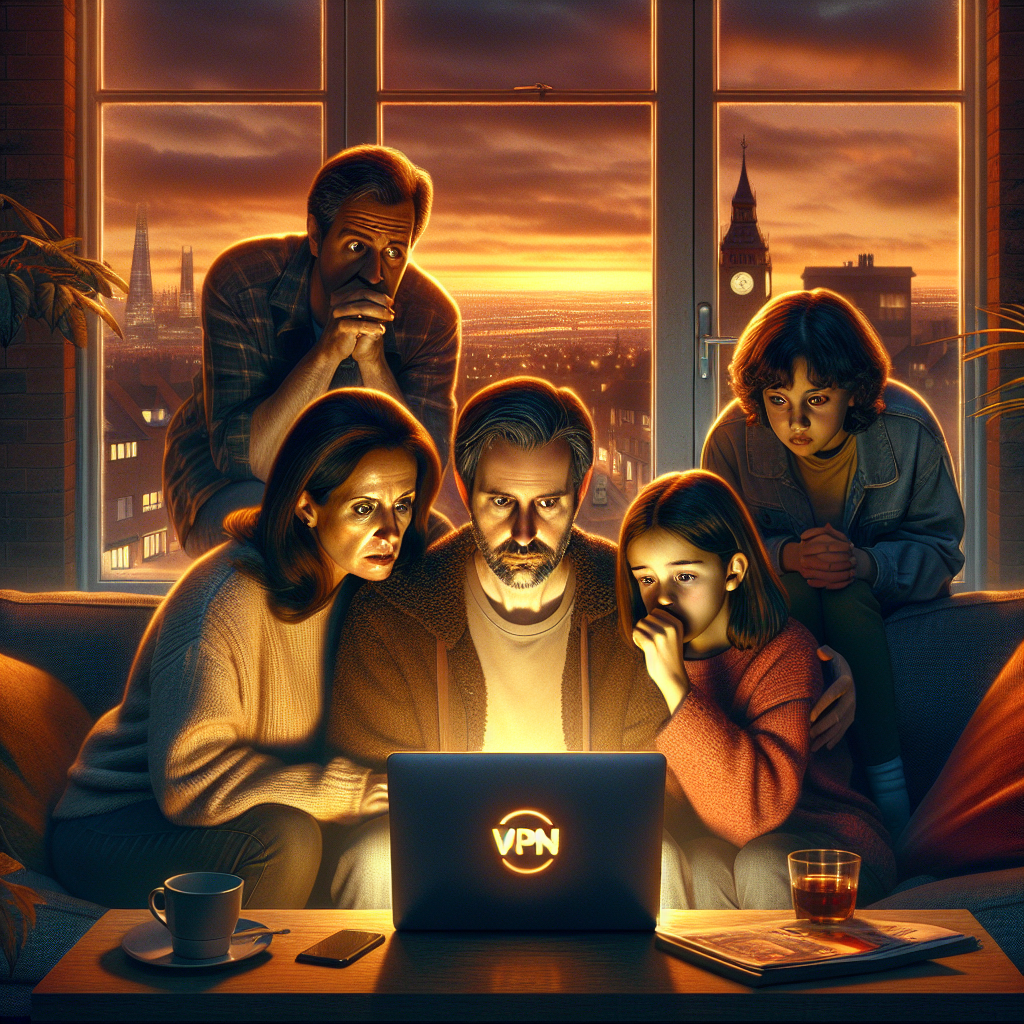
It started with a text—bland, formal, the kind you might ignore if the world wasn’t already buzzing with rumors. “Security Alert: Uninstall any VPN apps from your devices to protect your bank accounts.” For 37-year-old father and freelance designer James, it was the first sign that something was… off. His teenage daughter’s Zoom homework sessions, the late-night movies he streamed after work, even his attempts to check the football scores while traveling—they all ran through a tiny app his mate had recommended: a VPN, or Virtual Private Network. “I figured, you know, privacy first,” he tells me, voice half-choked with the quiet terror of digital uncertainty. “Then the bank texts. Now the whole street’s talking about ‘Trojan horses’ and ‘wireless thieves.’ I just wanted to watch the match in peace. Now everyone’s acting like I’ve smuggled Russian spies into my router.”
The Moment the UK Almost Broke the Internet
A week earlier, something seismic had shifted beneath Britain’s digital streets. The government’s new Online Safety Act, years in the making, had finally taken full effect, demanding that every website—from social networks to gaming hubs, even search engines—now had to verify the age of visitors before showing them anything vaguely “adult” (and yes, that term is as slippery as ever)[1][2]. Overnight, ticking a box to say you were over 18 vanished. In its place: facial scans, ID uploads, bank records, even selfie analysis[1]. The goal? To stop kids from bumping into danger. The effect? Millions of adults suddenly found themselves uploading selfies to faceless tech firms just to log into Instagram or Google.
People hated it.
Almost immediately, VPN—the digital disguise that lets you hide your actual location and surf the web without being tracked—became the hottest commodity in British households since pandemic-era loo roll. Downloads spiked over 1,000%, with some services reporting nearly 2,000% more UK users in just days[2][3]. Proton, Windscribe, AdGuard—the major players—watched their servers light up as Brits scrambled to, as one reddit user put it, “opt out of the dystopian opt-in”[1]. The mood was part protest, part paranoia. For some, it was about privacy. For others, it was about not feeling like a suspect.
Banks, Blame, and a Black Box Nobody Understands
But then, chaos moved up the food chain. Several British banks, reacting to a surge in suspicious logins and fraud attempts, traced a pattern: compromised accounts, hijacked by automated bots, often accessed from overseas servers—many routed through popular VPNs. The banks, already reeling from a spike in “authorized push payment” scams, made a controversial call: if you use a VPN, you might be at risk. Delete them. Now.
Parents panicked. Online communities spiraled. Reddit threads flared with theories: “Are they tracking us?” “Is my kid’s homework app collecting my face?” “Are VPNs next on the chopping block?”
The government, meanwhile, had to walk a tightrope. “There are no plans to ban VPNs,” the science secretary Peter Kyle promised, but the government was “looking very closely” at how millions were suddenly using them[1][2][3]. Ofcom, the UK’s communications regulator, admitted that nearly 20% of UK boys aged 8–14 still accessed adult content online monthly—despite all the age checks[2]. The “Whac-a-Mole” analogy became a favorite among experts: for every gate you build in cyberspace, someone builds a tunnel under it[4].
How the Great British VPN Panic Actually Worked
Let’s break it down—without the jargon. A VPN simply reroutes your internet connection through a secure, encrypted server somewhere else in the world. If you’re in Birmingham, you could surf as if you’re in Barcelona, Buenos Aires, or Bangkok. This hides your real location and encrypts your data—useful for everything from privacy to watching sportswashing-free Premier League highlights.
But when the UK forced all adult sites to verify your age—with selfies, IDs, even your bank details—people balked. Why upload sensitive information when you could flick a switch and vanish into the wider web? VPNs became a workaround, an opt-out, a digital middle finger to what many saw as overreach.
The problem? Fraudsters love VPNs too—masking locations, bypassing geoblocks, operating in anonymity. Banks, spooked by rising fraud, decided that if an app can help bad guys, it might not be safe for you either. The result: a massive, sweeping alert to delete anything with “VPN” in the name. No nuance. No distinctions between privacy tools and malware. Just fear, and a backlash.
A Day in the Life: The Parkin Family’s Digital Lockdown
Imagine the Parkins: James, a designer; Sarah, a teacher; Lily, a 14-year-old obsessed with K-pop and Discord. When the bank’s warning landed, the family’s digital life imploded. “We use VPNs for everything,” Sarah says, her voice weary. “Lily’s school apps, my research, James’s work calls—the bank’s message made us feel like criminals.” Their router became a battleground. Lily’s homework apps broke. James’s work calls dropped. The family lost access to shows, news, even the local council’s support page. “It’s like they threw out everything—including the baby, the bathwater, and the tub,” Sarah laughs, but her eyes betray the exhaustion of a parent whose digital safety net was just cut away.
The Reaction: Protests, Proposals, and Policy Pendulums
Within days, the debate spiraled. Petitions to scrap the Online Safety Act soared past 340,000 signatures. Reform UK’s Nigel Farage called the law “borderline dystopian”[1]. Privacy advocates staged online sit-ins. Major tech analysts warned that banning VPNs would be both unwise and unenforceable—akin to trying to regulate clouds[4]. “We may need a more analogue solution—better parenting,” one expert joked, though the quip echoed with a tragicomic truth[4].
Meanwhile, the government insisted it had no intention to ban VPNs—but admitted it was watching. Ofcom, the regulator, hinted at new guidelines, possibly extending age verification to VPN downloads themselves[4]. The question hung in the digital air: Could you really stop people from tunneling out?
What Happens Next? Could It Happen Again?
Now, Britain finds itself at a crossroads: wanting to protect children, but struggling with a digital landscape that refuses to be fenced. The VPN panic exposed a gap between what regulators want, what banks fear, and what people actually do online. The backlash was immediate, visceral, and deeply human—a signal that privacy, convenience, and safety are not easily balanced.
Could it happen again? Absolutely. As other countries—the EU, Australia, even the US—watch the UK experiment with digital borders, the pressure grows for global solutions. The next chapter is already being written in boardrooms, parliaments, and, yes, Reddit threads. The real question is: When the banks and the government knock on your digital door, will you answer—or will you vanish into the tunnels of the web, clutching your privacy and your paranoia, knowing it’s both your shield and your possible undoing?
So we end with this provocation:
Is privacy the new luxury, or is it the right of every citizen in a world where even your selfie is now a digital checkpoint?
FAQ
Are VPNs legal in the UK?
Yes, VPNs are currently legal in the UK, but their use is now under much closer scrutiny by both the government and financial institutions[1][2][3].
Why are UK banks telling people to delete VPNs?
After a rise in fraud attacks routed through VPNs, some UK banks warned customers that using a VPN could increase risk to their accounts—prompting calls to uninstall the apps.
Can the UK government really ban VPNs?
While government officials say there are no plans to ban VPNs, they are “looking very closely” at their use, and security experts believe any attempt to block them would be extremely difficult to enforce[1][4].
What is a VPN?
A VPN (Virtual Private Network) is a service that encrypts your internet connection and hides your real location, letting you browse the web more privately or access content restricted in your country.
How did the UK Online Safety Act change things?
The Act now requires any website showing adult or potentially harmful content to perform strict age verification—no more simply ticking a box. This has led to a huge surge in VPN use as people look for ways to bypass these checks[1][2][3].
Could this situation happen in other countries?
Yes, as more governments introduce strict online age verification, the debate over VPNs and user privacy is likely to grow worldwide.