
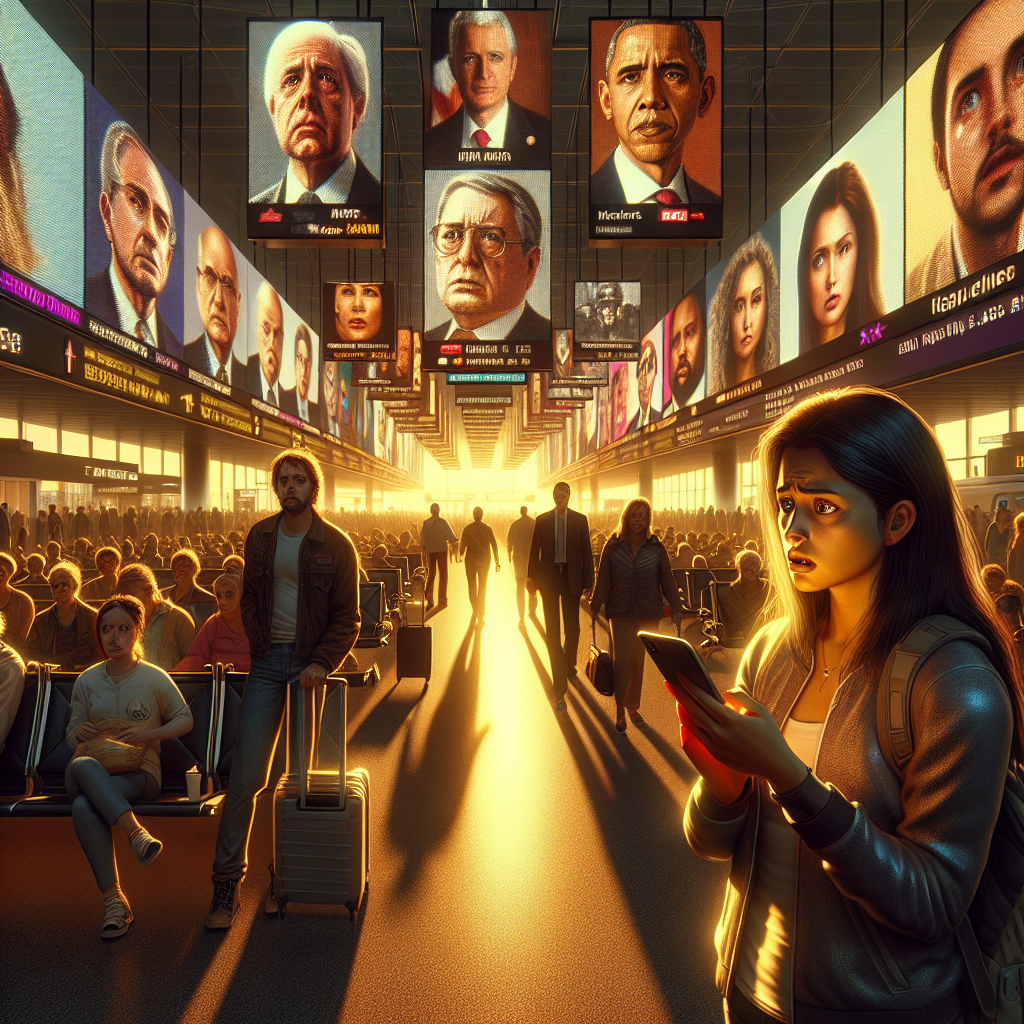
Imagine the familiar whir of a crowded airport. You’re squeezing through security, clutching your phone, maybe a laptop in your bag. Now, picture this: As you board your flight, you overhear people talking, not about travel delays or missing luggage, but about a brewing storm—one that could shake the way the world uses technology. This isn’t some distant, slow-policy saga. This could change what’s available at your fingertips by next year.
Welcome to the high-stakes drama playing out across continents, where leaders are sparring not over ordinary trade goods, but over the digital rules that shape our everyday lives.
The Announcement That Sparked Global Ripples
Just days ago, former President Donald Trump took to his pulpit with a headline-grabbing threat: countries targeting U.S. tech firms with what he called “discriminatory” digital rules could soon face tariffs—a sort of tax at the border that hits imported goods. Easy to brush aside as political posturing, right? Not so fast. Because these tariffs aren’t about corn or cars—they’re about the very tech platforms and devices we use daily.
Think about it. What’s in your pocket right now? Most likely, a piece of American technology—maybe your iPhone or a social media app. Tariffs could mean higher prices, fewer options, and new (sometimes frustrating) rules about what digital tools are allowed in each country.
Why Is This Happening?
Across the globe, countries are rewriting the playbook on technology. Picture lawmakers in Europe debating tough new regulations that could make it harder for U.S. companies like Apple, Google, and Facebook to do business. Some call these rules “discriminatory”—meaning they target American tech giants and give local competitors a boost.
To everyday folks, this sounds like a high-level chess match. But underneath, it’s more like arguing over the remote at a family movie night—the person who controls global tech rules decides what everyone watches, plays, and shares.
The Power Struggle Behind Your Apps
Let’s dive deeper. Governments want control over how data moves, who owns it, and how companies pay their fair share of taxes. U.S. tech companies, meanwhile, see global markets as their playground. When a country introduces rules that seem to “single out” American firms, it can feel like being benched halfway through the game.
Trump’s proposed tariffs? They’re the penalty flag—a warning that if you play rough with American tech, you’ll pay more to sell your products in the U.S.
A Real-Life Scenario: Anna’s Dilemma
Picture Anna, a tech-savvy freelancer living in Paris. She’s building her business using American platforms. She wakes up one morning to find her favorite tools suddenly more expensive—or even unavailable—because her government and the U.S. are caught in a digital standoff.
Her clients in New York text her: “Can you still get files to us?”
Anna scrambles, searching for alternatives. Overnight, her comfortable digital workflow feels brittle. She’s not alone. Small businesses, students, families—all start to feel the friction of global tech tensions.
What Could Happen Next?
If tariffs go through, countries might push harder to create their own tech platforms—the “local edition” of your favorite app. Prices for electronics could spike. Suddenly, everyone’s talking about how hard it is to get the latest phone, how businesses can’t connect across borders, or why the simple act of streaming music feels complicated.
And here’s the twist: These digital battles aren’t just about money or pride. They touch every moment you spend online. From booking a vacation to FaceTiming grandma, the rules hammered out by leaders echo through each swipe and tap.
From Political Headlines to Your Couch
All this policy talk might seem miles away. But like a Netflix plot twist, it’s closer than it appears. The groceries you order through your phone, the shows you stream late at night, the way you pay for coffee—all could be reshaped by battles over “digital rules” and tariffs.
This is more than politics. It’s a question about the kind of connected world we want to live in—and who gets to decide the rules of the game.
The Conversation Starts Here
So next time you refresh your Instagram or chat with friends across borders, remember: global leaders aren’t just negotiating trade deals. They’re arguing over how we all experience technology. The next chapter of this story? It’s being written now.
But the real question—the one that matters most—isn’t just what leaders will do next.
It’s this:
If digital rules and tariffs reshape tech, how would your daily life change—and what choices would you want to see?
Drop your thoughts below. Your story could be the next headline.