
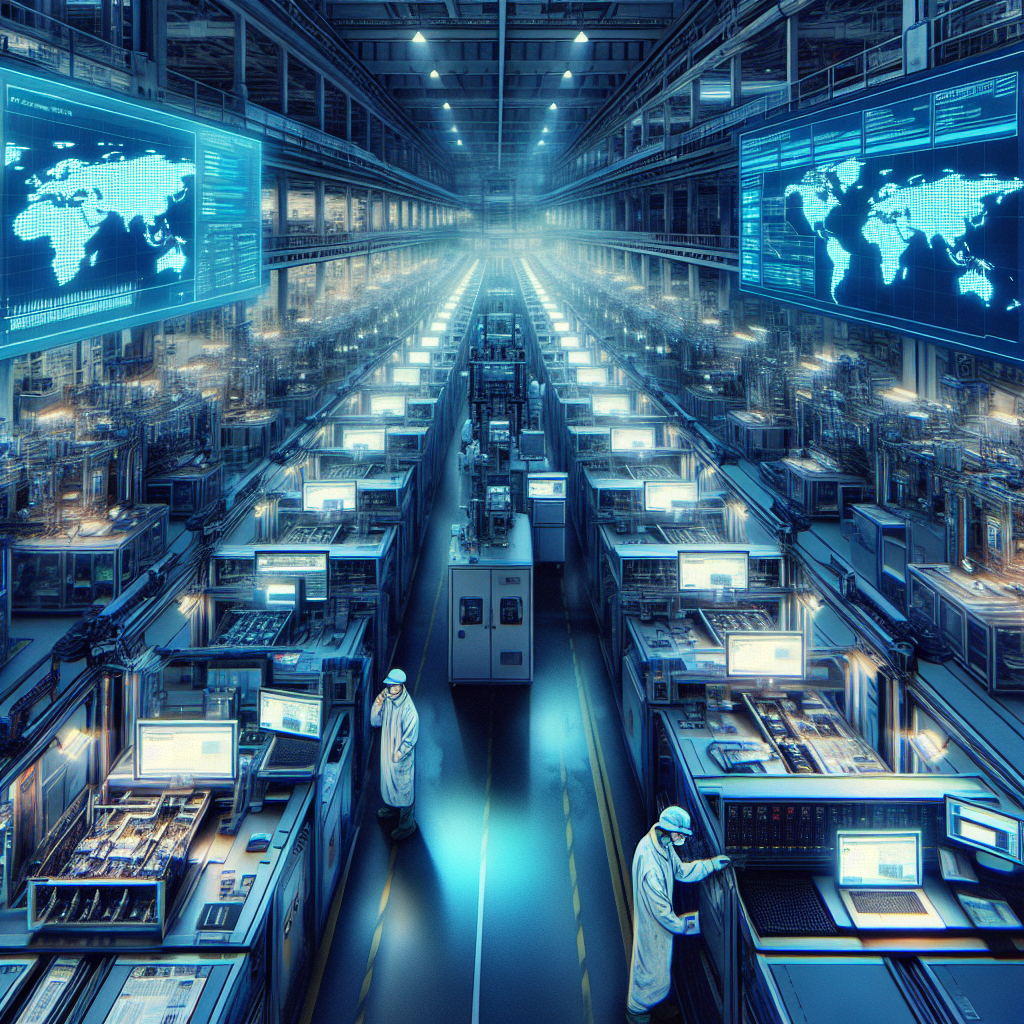
Night Falls in Silicon Valley
The hum of servers barely lit the midnight air as Jia Lin, an engineer at a San Jose fabless chip startup, scrolled through headline after headline. But one message cut through the static: “Trump Warns: ‘Fairly Substantial’ Chip Tariffs Are Coming.” Her cup paused midair. For Lin—and nearly every player from the sun-drenched streets of Phoenix to the rain-washed towers of Taipei—this was no distant skirmish. The battle for silicon supremacy had landed on America’s doorstep[1].
A New Front in the Trade War
On August 7, 2025, former president Donald Trump strode onto a national stage to declare a tariff offensive—aimed squarely at imported semiconductors[1]. These are the tiny components that power everything from your phone’s brain to AI tools reshaping medicine. According to Trump, the tariffs would be “not that high, but fairly substantial”—a phrase that sent chills through Asian tech markets, even as it followed earlier threats of a punishing 100% levy targeting chips made outside the U.S.[1][4].
Why such urgency? America and China have long been racing to dominate the next generation of semiconductors: chips so cutting-edge they’re the nervous system behind artificial intelligence, quantum computing, and the world’s defenses[1][4]. For decades, multinational supply webs let chips flow cheaply across borders. The new rules promised to redraw the map almost overnight.
Anatomy of a Tariff Shock
Tariffs sound simple: slap an extra charge on imported goods to make domestic products more competitive, in this case, America’s own chips. But semiconductors aren’t sneakers or soybeans. They’re hyper-specialized, often passing through dozens of countries and firms before landing inside your laptop—an entangled journey from sand to silicon to circuit.
Trump’s proposed tariffs (reportedly 10-100% depending on details) would tax any chip not built in an American factory[1][3][4]. While the stated goal is to restore U.S. manufacturing and protection of national security, critics warn that higher prices and snarled supply chains would echo through every industry, from cars to cloud computing[1][2][4].
Experts and Insiders Weigh In
“Tariffs this steep don’t just nudge companies—they bulldoze supply chains,” says Dr. Aaron Glass, industry analyst and author of “Crisis in the Silicon Heartland.” He points out that even the newest U.S. fabs, flush with billions in investment, aren’t yet ready to fill a sudden gap if imports dry up.
Speaking for the sector, John Neuffer, President of the Semiconductor Industry Association (SIA), struck a diplomatic but worried note: “Trade is critical to American semiconductor leadership… We hope the tariff exemptions and future trade deals are designed to ensure the U.S. industry retains its pole position”[2].
A Family, Caught in the Middle
Flash to the Ramirez family in Texas. Sofia, a nurse, just scrimped to buy her son Raul a new laptop before high school starts. A few weeks later, she learns through a news alert: “Prices expected to jump due to chip tariffs.” She wonders—will Raul’s education be cut short, or her hospital’s monitors get delayed upgrades[4]? Multiply that uncertainty across millions of households and businesses. The tariff isn’t just theory or politics; it’s the price of staying connected in a digital age.
How the World Reacted
The semiconductor world shuddered. Asian chipmakers saw their stock prices tumble, while European and American firms scrambled to re-calculate supply contracts and price models[1][4]. Taiwan’s Arisa Liu, a longtime semiconductor researcher, warned that “a heavy US chip tariff would impact the strategic direction of global semiconductor companies”—potentially shifting entire R&D hubs or triggering retaliatory tariffs[1].
In Washington, hawks praised the move as long-overdue muscle against Chinese policies deemed unfair. But opponents, both Democratic and Republican, questioned whether the plan risked higher consumer prices and a battered tech ecosystem. Internationally, China signaled “strong countermeasures” if the U.S. pressed forward.
The Ripple Effect
- Industry Uncertainty: Firms rushed to clarify whether domestically-assembled chips—often made with foreign components—would be exempt[2].
- Investment Scramble: Companies considered new American factories, but these take years to build and cost billions[2][4].
- Legal Battles: Trump’s legal maneuvering, invoking the International Emergency Economic Powers Act (IEEPA), faces challenges over whether the tariffs were crafted on solid ground[3].
- National Security: The administration framed the policy as a shield against foreign threats to critical infrastructure[3].
What’s Next? Could It Happen Again?
The dust has far from settled. The administration is huddling with industry leaders, hoping to thread the needle between U.S. security and global leadership[2]. But global chipmaking is a tightrope act: move too slow, and rivals surge ahead; move too fast, and you trip over your own supply chains. Factories aren’t built in a day, and neither are resilient, homegrown tech sectors.
As elections approach and the digital arms race accelerates, the question hangs over everyone from White House advisors to everyday shoppers: Will America’s chip gamble pay off, or will the world simply rewire around us?
What do you think—is the risk worth the reward? Or did the U.S. just spark a high-tech game of chicken with the world’s supply chains? Sound off.
FAQ
What is a chip tariff, and why is it important now?
A chip tariff is an additional tax on imported semiconductor components, aiming to boost domestic industry and protect national security. It’s crucial now because of the ongoing U.S.-China technology rivalry and supply chain disruptions[1][4].
How could chip tariffs affect consumers and businesses?
Chip tariffs could raise prices on tech devices, slow innovation, and disrupt product launches, impacting everyone from students to hospitals and car buyers[2][4].
Are there exemptions for companies building chips in the U.S.?
Yes, early indications are that companies manufacturing semiconductors in America may be exempt to encourage local production[1][2].
How are semiconductor companies responding?
Companies are reviewing supply strategies, considering onshoring factories, and pressing for clear guidance on exemptions to ensure stability and competitiveness[2].
What are the broader implications for the tech industry and global trade?
Global supply chains may reroute, R&D hubs could shift, and technology alliances might realign, fueling a complex new phase in the global tech race[1][2][4].