
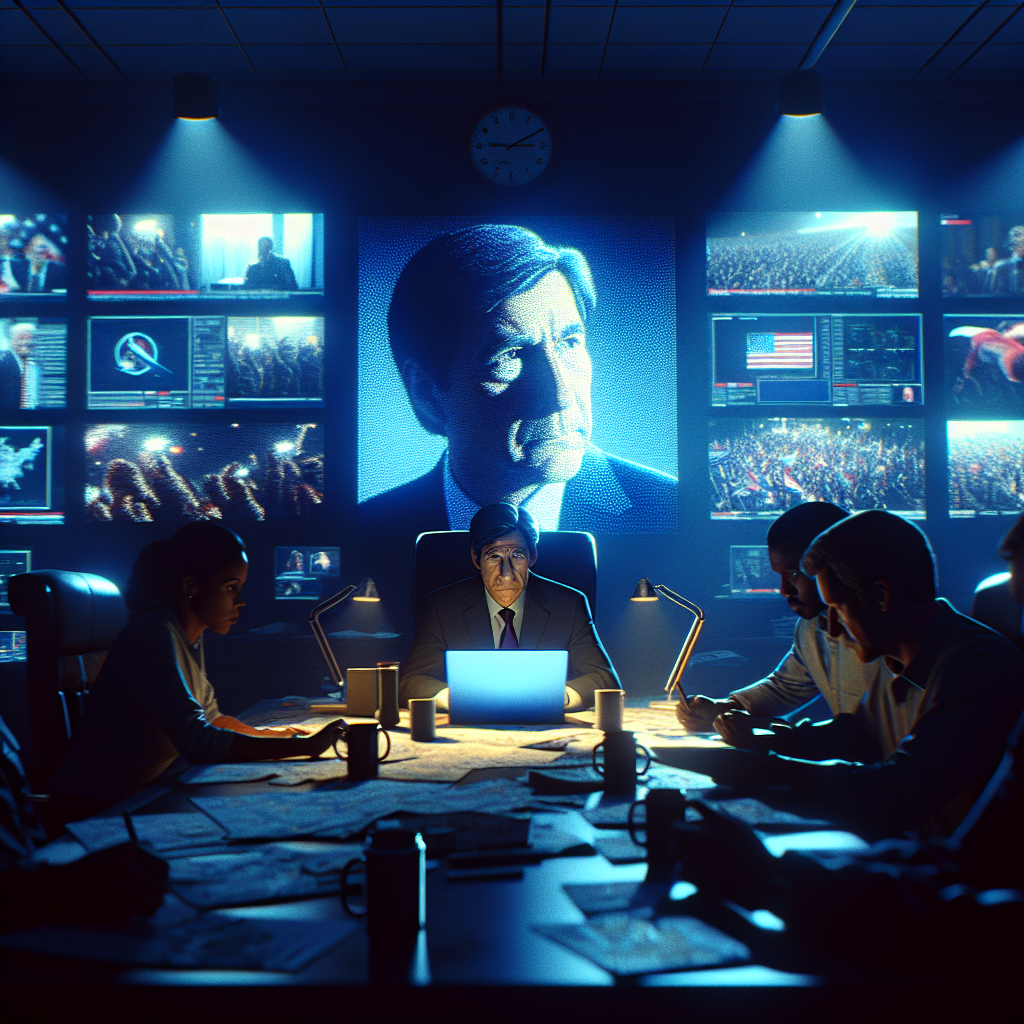
The Night the Screen Lied
It was late, the campaign trail electric with tension. Inside a makeshift war room, former President Donald Trump squinted at a laptop screen, the blue glow illuminating his face. On screen: scenes of chaos—fires in city streets, windows shattered, people scattering in Los Angeles. “Look at this, folks,” Trump said to his aides, voice tightening. “Antifa is destroying America, and they say I’m the problem.”
But there was a problem: the clip wasn’t from 2020. And some frames came not from real life at all, but from old news reports, recycled social media posts, and—unbelievably—a video game, all stitched together and passed off as present-day protest carnage[1].
In that humid, adrenaline-fueled room, a single shared piece of digital misinformation made its way from the internet underground right into the hands of the most powerful office in the world.
The Mirage Machine: How Digital Fakes Work
In the last five years, deepfakes—realistic fake videos generated by artificial intelligence—and “recycled” footage (old content passed off as new) have exploded online. They exploit our brains’ natural tendency to trust what we see, and the windowless speed of our social feeds.
What happened on Trump’s screen wasn’t accidental. Here’s how the attack vector works:
- Desperate for shocking content, political actors or trolls comb through old footage—news archives, viral videos, even action-packed segments from video games.
- Quick edits, misleading captions, and selective pixels create compelling “evidence.”
- Social media algorithms amplify the viral value, spreading the misinformation to millions before there’s time to fact-check[1].
- Even AI “fact-checkers,” like Grok—the built-in verifier for X (formerly Twitter)—can get tripped up, sometimes misclassifying real for fake and vice versa[1].
It’s not that Americans are uniquely gullible, says Dr. Alice Klein, a digital ethics researcher. “We’ve built an outrage economy. The more shocking the image, the further it travels—true or not.”
The Human Toll: When Fiction Hurts Real People
Meet Jamie, a 26-year-old L.A. resident who lives near the epicenter of supposed chaos. She watched in disbelief as her parents, safely hundreds of miles away, called in panic after seeing viral protest footage online.
“I could see over Twitter and Facebook, people were convinced downtown was on fire. I looked out my window—it was quiet. The scary part? Truth doesn’t matter if the video looks real.”
A single fake video had triggered confusion, fear, and even a curfew in some neighborhoods. Businesses boarded up, police patrols doubled, and neighbors grew suspicious—of each other and of the official story.
Official Response: Fact-Checkers vs. The Flood
As the fake riot video ricocheted across social media and aired on conservative channels, official agencies scrambled. The U.S. Northern Command, responsible for troop coordination and emergency response, issued statements confirming the authenticity of some National Guard images while publicly debunking others[1]. California’s governor denounced the falsehoods but acknowledged how fast fiction, especially video fiction, outpaces official truth.
Even so, confusion persisted. Tech companies rushed to deploy AI “fact-checkers” on platforms like X, but these tools remain imperfect—sometimes mislabeling authentic images as fake or vice versa[1]. Isabelle Frances-Wright, a research director at the Institute for Strategic Dialogue, noted, “AI is muddying the landscape, but now people turn to AI for fact-checking. The cycle feeds itself.”
The Ripple Effect: Community, Trust, and Democracy on the Line
Post-incident, software giants and newsrooms held emergency meetings. Platform moderators flagged and removed thousands of misleading posts, but the damage was done.
The real fallout wasn’t just political—it was personal. Trust between neighborhoods eroded. Misinformation spurred emergency responses, drew police away from real crises, and left communities bracing for threats that never materialized. Even now, law enforcement agencies cite the incident as textbook proof: a viral fake can change reality on the ground.
What’s Next / Could It Happen Again?
Experts warn the next wave is coming fast.
-
With 2026 midterms on the horizon and AI generation tools evolving, misinformation may blend fiction and reality more seamlessly than ever before.
-
“Preparedness is low and stakes are high,” says Dr. Klein. “If a single video can confuse a president, what happens when the next wave hits?”
Communities and officials are fighting back with rapid-response verification networks, better AI tools, and digital literacy campaigns, but skeptics say it’s not enough.
In a world where pixels can shape policy, can we ever fully trust our eyes?
FAQ
How did a fake protest video mislead Trump during the 2020 campaign?
A digitally manipulated video compiled from old news footage, unrelated clips, and even video game graphics was presented as evidence of current protests in Los Angeles, influencing statements at high levels and spreading panic[1].
What is a deepfake and how was it used in this context?
A deepfake is an artificial video made to look real, usually by AI. In this case, well-edited recycled footage—not fully AI-generated but similarly deceptive—was deployed to mislead viewers about real events.
What impact did this misinformation have on the community?
The viral fake imagery sparked panic, prompted unnecessary police patrols, closed businesses, and eroded trust between citizens and officials.
What have tech companies done to combat this kind of misinformation?
Social media platforms increased content moderation, deployed AI fact-checkers, and coordinated with fact-checking experts, but tools remain imperfect and the spread of fakes continues[1].
Could this happen again with AI deepfakes?
Absolutely—experts see AI-generated fakes growing in sophistication and influence, especially as major elections approach, underscoring a continual risk to democracy.