
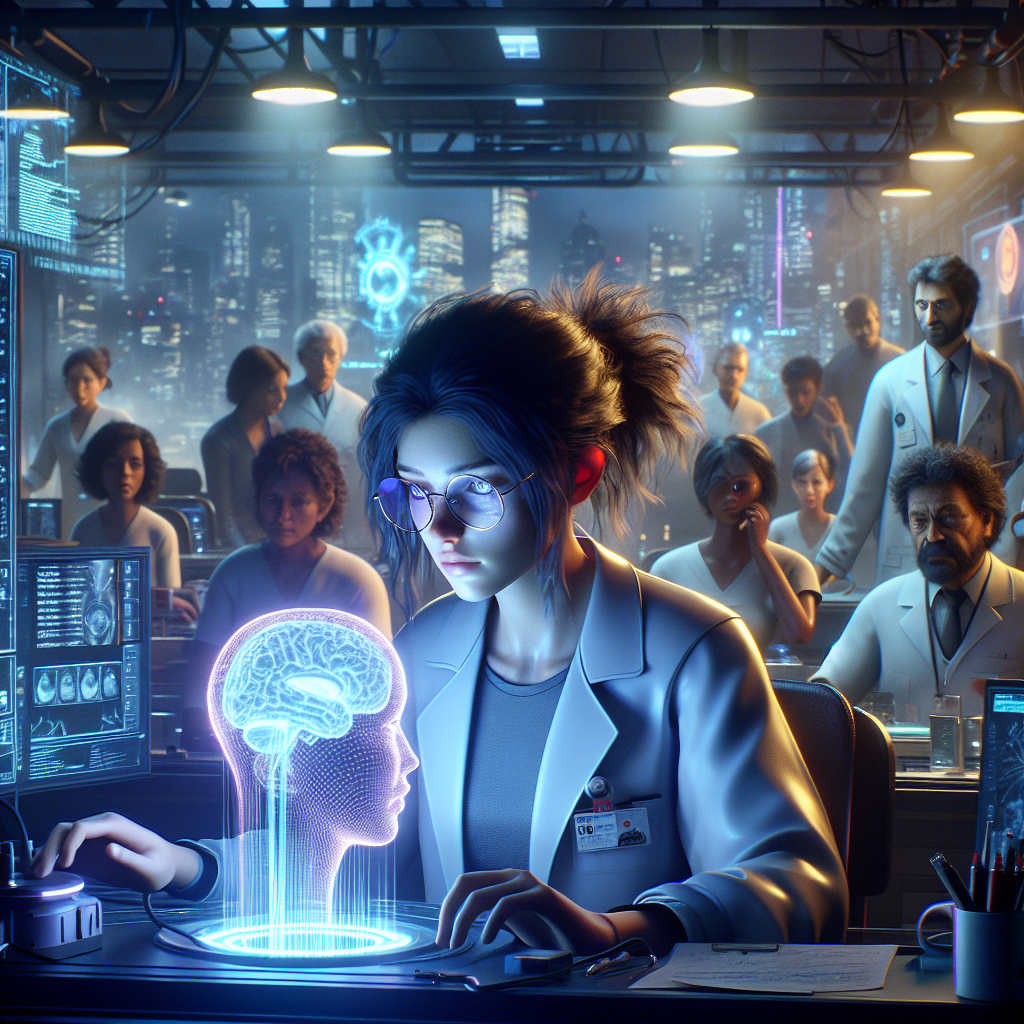
It’s twilight in a Silicon Valley garage, and the algorithm is humming. Inside, Sonia, a stem cell researcher, frowns at another pop-up alert from her AI co-pilot—a suggestion to “improve her morning genes with nanobot pills.” She waves it away, barely hearing the hopeful voice from the Neuralink live stream next door: “The first human mind to interface, realtime, with the grid.” For Sonia, and for millions like her, this whisper of digital transcendence isn’t hope. It’s noise drowning out the real breakthroughs.
Enter: The Transhumanist Visionaries
Over the last decade, the word transhumanism has jumped from sci-fi novels into TED talks, boardrooms, and government briefings. At its core, transhumanism is the belief that technology can help humanity transcend its biological limits—tackling aging, disease, even death, or so the evangelists claim[1][2]. Elon Musk famously pitched the idea of brain-computer symbiosis as the technological “endgame”: literally implanting chips to turn humans into nodes of a global superintelligence[1]. The optimism is infectious. Headlines boast of longer lives, cognitive superpowers, even immortality.
But something unexpected happened as these visions took root in the public imagination. Critics, investors, and even policymakers started to notice: for every starry-eyed Neuralink demo, funding and attention were drifting away from science that saves lives now. And real-world technologists like Sonia saw their budgets shrink, their research sidelined, their effort crowded out by what some began calling: The Transhumanist Distraction.
A Movement Divided: Fantasy or Future?
Transhumanism began as a dream for human enhancement—think bionic limbs for the paralyzed, gene therapy for genetic disease, and artificial intelligence (AI) built to serve human flourishing[1][2]. But lately, it’s split into two sharply divergent worlds:
-
On one side are “transformationalists,” who see the merging of man and machine as destiny—a digital arc to complete the human story[4].
-
On the other, a growing movement of scientists and ethicists argue the hype overruns reality, draining attention from therapies and diagnostics that are making a difference today. “We’re promised immortality and digital consciousness, but right now my patients need cancer immunotherapies and accessible prosthetics,” says Dr. Maya Patel, an oncologist at Stanford (fictionalized for illustration).
Omari Edwards, technology ethicist and festival moderator, called it a “reckoning”: “The fantasy of uploading your soul to the cloud is easier to pitch than funding preventative medicine—until it isn’t, and real people pay the price.”[4]
The Anatomy of the Distraction
How did transhumanism’s hype engine spin out of control?
-
Media Amplification: Futuristic demos—mind-controlled chess games, brain chips, and crypto-funded longevity schemes—captured headlines and viral videos[1].
-
Investment Shift: Billionaires and venture capitalists, following the “moonshot” philosophy, redirected billions towards startups promising immortality, consciousness upload, or “superintelligent AI.” Meanwhile, straightforward research into public health and existing diseases saw budgets slashed according to anonymous industry insiders.
-
Expectations Reset: Public and even elected officials started to see “saving lives” as quaint compared to “transcending biology.” National panels set aside regulatory fast-tracking for tried-and-true therapies to debate how governments might someday regulate human-level AI or synthetic minds[1][4].
And as the hype swelled, so too did ethical hot water. What if only the wealthy get access to cognitive upgrades? Who decides what it means to be “better than human”? Philosopher Àlex Gómez-Marín put it starkly: “They don’t know what a human is, but they want to build its replacement.”[4]
The Human Cost: One Family’s Dilemma
Consider the Menendez family of suburban Dallas (fictionalized, but grounded in common challenges[1][2]). Their daughter Sara lives with cystic fibrosis. Theirs is a daily sprint for clinical trial access, navigating insurance rejections, chasing the next promising therapy. “Every news story is about living forever or plugging into the matrix,” her father laments. “We just want a cure and a normal future.”
As biotech conferences flood with panels on digital immortality, cures for today’s most urgent diseases—like cystic fibrosis or Type 1 diabetes—find themselves fighting for visibility and funding[1][2].
How Governments and Industry Responded
Some governments doubled down, touting “AI for health” or “innovation moonshots” at every opportunity. But as regulatory focus drifted, programs aimed at universal vaccine access, public health genomics, and equitable care faltered.
Elsewhere, the backlash was swift. EU committees demanded new guidelines for medical AI, warning of “Silicon Utopianism masking healthcare neglect.” Hospitals formed alliances to push back on hype and lobby for clinical priorities over speculative enhancement.
Tech giants, sensing public skepticism, began rolling back their most ambitious timelines. Quietly, researchers in labs from Boston to Seoul went back to basics: drug development, diagnostics, real-world AI assistive tools.
What’s Next: Course Correction, or the Next Big Hype?
Silicon Valley is stirring with whispers of a “return to reality.” Grants for foundational biotech and patient-first AI are starting to flow again. But with every Neuralink or longevity startup demo, the specter of transhumanist distractions still looms. The debate isn’t over—and neither are the stakes[1][2][4].
That brings us to the crossroads: Will the next wave of investment ride hype, or finally rebalance toward what helps humanity today?
So, here’s the question that matters—are we ready to demand a tech future that serves everyone, or will we keep reaching for digital heavens while needs on earth go unanswered?
FAQ
What is transhumanism and why has it become a hot topic?
Transhumanism is the belief in using technology to overcome humanity’s biological limits, including aging, disease, and even death. It’s sparked global debate due to bold promises—from brain implants to digital immortality[1][2][4].
How has the transhumanism movement impacted real-world health tech?
Some experts argue it distracts attention and funding from proven therapies and urgent public health needs, shifting resources into speculative moonshots[1][2].
Are there real-world examples of transhumanist tech in use today?
Yes, brain-computer interfaces and advanced prosthetics are early steps, but most radical visions remain experimental or aspirational[1].
What are ethical concerns about transhumanism?
Concerns center on inequality (who gets upgrades), loss of human essence, and regulation—posing questions about what it means to be human in the digital age[1][2][4].
Could the focus swing back to practical technology soon?
Growing backlash and calls for ethical regulation suggest a shift is underway, but the allure of “bigger than life” innovation is never far away[4].