
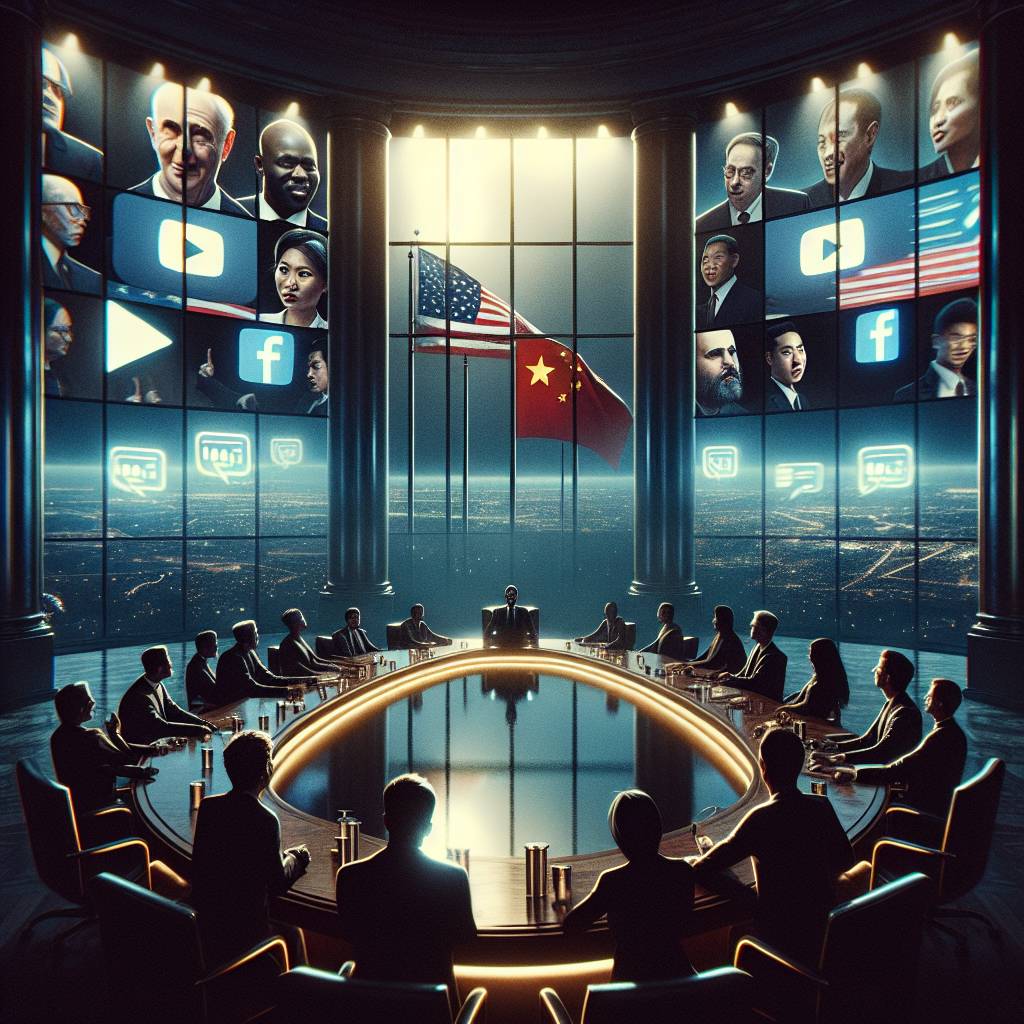
It’s March 2025, and an electric charge hums through the White House war room as former President Donald Trump, now in his second term, sweeps into a hush of anticipation. Phones buzz, advisors murmur, and on every screen glows the looping, hypnotic content of TikTok—the platform captivating over 100 million Americans, now teetering at the edge of an existential cliff.
The App That Shook America
TikTok, once danced into bedrooms and classrooms across the U.S., faces an ultimatum that reads like a movie script: Sell your American operations within weeks, or be wiped from the phones—and minds—of a nation[1][2]. For years, Washington’s suspicion has brewed over TikTok’s Chinese parent, ByteDance. The charge? Possible misuse of American data, fear of foreign influence, and mistrust growing sharper in a divided world[1].
The stakes? Not just a social media feed, but a $50 billion platform pulsing at the heart of the creator economy, cultural influence, and free speech[2].
Deadline Drama and the Four Bidders
Congress, under a bipartisan push, set a hard sell-by date: January 19, 2025. Then, mere hours after Trump retook the Oval Office, he granted a 75-day extension, daring America’s power brokers to broker the unbrokable[1].
Who would dare buy a digital megaphone with strings tied to Beijing and a ravenous, restless audience?
- Elon Musk—already the architect of X (formerly Twitter)—hinted at folding TikTok into his digital empire, promising “radical transparency and free speech.”
- MrBeast—the YouTube phenomenon—talked of democratizing the app for creators, maybe even letting top fans own a slice.
- Larry Ellison—Oracle’s oracle, back for round two, seeking the elusive algorithm fueling TikTok’s rocket growth.
- Kevin O’Leary and “The People’s Bid”—a $20 billion crowdsourced play, fueled by small investors and high hopes.
- Perplexity AI—an unexpected entrant, proposing a hybrid model letting ByteDance keep partial ownership to calm international waters[1][2].
Meanwhile, Trump floated a wild-card proposal: what if the U.S. government itself took a 50% stake in TikTok, anchoring it forever in American soil[2]?
Behind the Curtain: National Security vs. Innovation
At the heart of this tense negotiation lies an almost spy-thriller question: Can the U.S. trust a foreign-owned platform with the data and memes of a generation? National security officials warn that even a sliver of foreign control means risk—data could be siphoned, content subtly warped, influence wielded by unseen hands.
But tech analysts warn of another danger: Break the algorithm and you break TikTok. ByteDance’s AI-driven “For You Page”—prized and zealously guarded under Chinese export rules[2]—is what makes TikTok TikTok.
Rodrigo Stamos, a tech policy expert, sums it up: “You can’t swap out TikTok’s brain. Whoever buys the shell will need to make do or convince China to let the algorithm come Stateside. Good luck with that.”
Upended Lives: The Creators and Kids Caught in the Crossfire
In a two-bedroom apartment just outside Columbus, 16-year-old Maya refreshes TikTok, watching her “For You” jobs evaporate. With the app’s fate in limbo, branded sponsors pause campaigns, followers vote with their feet, and a generation’s digital hustle hangs by a thread.
Maya’s mom, reliant on her side-income as a TikTok arts coach, bites her lip at every news alert. “We built a life on this app. What happens if it just… disappears?”
Multiply Maya’s fears by millions—the dancers, comedians, teachers, and “side hustlers” caught between superpowers.
The Global Shockwave
The sale isn’t just an American earthquake. Regulators in Europe and Asia anxiously scan the tea leaves; in Beijing, ByteDance’s leadership agonizes over whether to consent, or let TikTok in America go dark. Meanwhile, rival platforms—Instagram Reels, YouTube Shorts—circle like sharks, ready to score millions of displaced users in a feeding frenzy[2].
Wall Street shudders: Advertising contracts dangle in suspense. Tech investors, always chasing the next “moonshot,” brace for a multi-billion-dollar transfer of power.
What’s Next? Could It Happen Again?
As the April 5, 2025 deadline closes in, rumors swirl about further extensions, unexpected mergers, or even an unprecedented government “takeover”[1][2]. The question on every American’s lips: What does this mean for the apps we love, and who, if anyone, truly owns our digital lives?
No one knows where the hammer will fall, or whether TikTok’s scroll will ever feel the same. But this battle—over algorithms, influence, and virtual borders—is unlikely to be the last. Could your favorite app be next?
Will a government ever have the power—or the right—to seize and remake the platforms that define our era? Jump into the comments.
FAQ
Q: What’s the latest on the TikTok sale under Trump?
A: As of March 2025, former President Trump is directly negotiating with four potential buyers, following U.S. orders for ByteDance to sell TikTok’s American operations or face a ban[1][2].
Q: Why does the government want to ban TikTok?
A: National security officials cite fears about Chinese ownership and the potential misuse of American user data—concerns that have grown over years of political tension[1][2].
Q: Who are the main buyers trying to acquire TikTok?
A: Key bidders include Elon Musk, MrBeast, Larry Ellison, Kevin O’Leary’s group, and Perplexity AI, each with unique proposals on the table[1][2].
Q: What happens to creators if TikTok is banned or sold?
A: Creators and influencers could see income streams dry up, audiences scatter to rival apps, and years of work potentially wiped away overnight[2].
Q: Is it possible TikTok’s algorithm will stay in China?
A: Yes. The “For You” algorithm is protected under Chinese law, so any U.S. buyer may have to operate with a stripped-down version unless the Chinese government approves a transfer[2].