
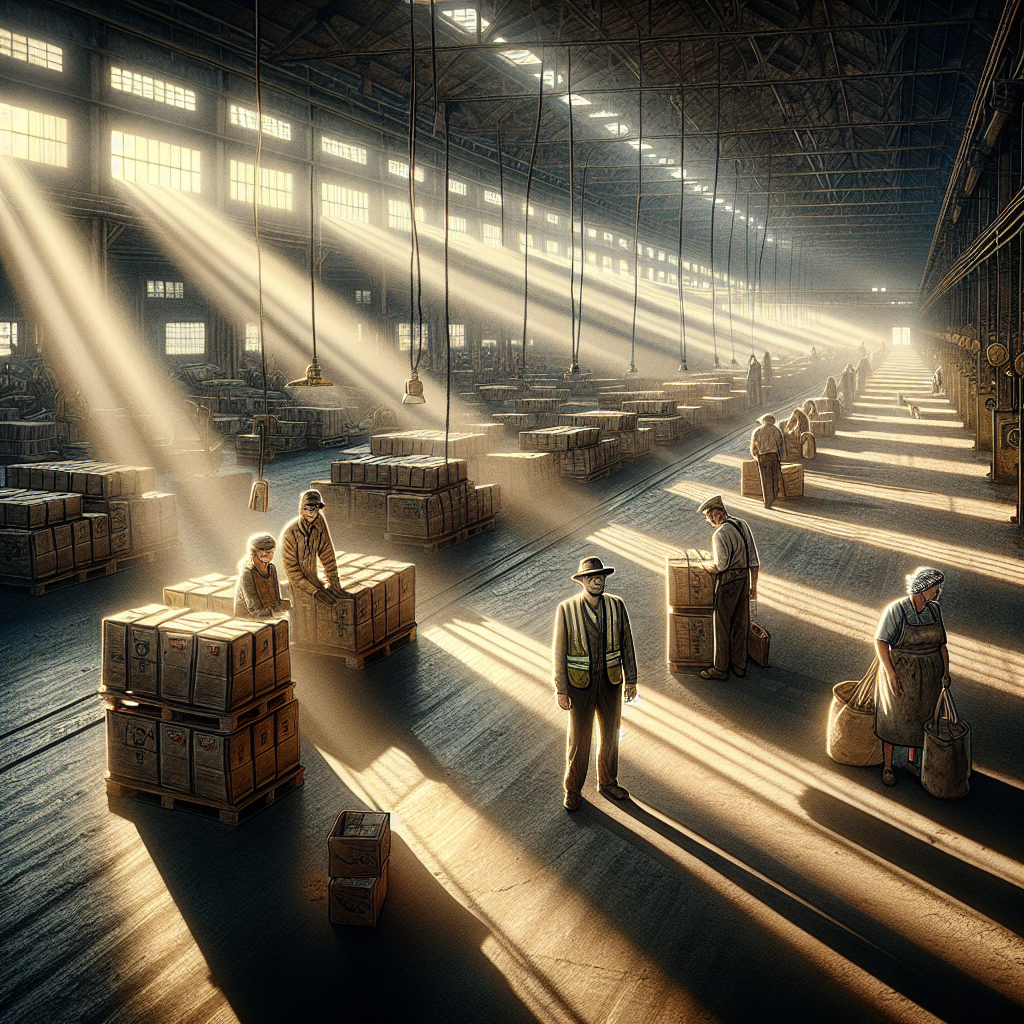
A Factory’s Final Shift
The fluorescent lights flicker above the factory floor as the clock strikes 7:00 a.m.—a moment burned into memory for dozens of veteran workers, bracing for one last shift in a plant where fathers and daughters have clocked in for generations. Presses clang, solder melts, and conveyor belts hum—a symphony of American industry. But behind every machine’s steady rhythm looms a haunting question: What happens when tomorrow’s doors never open?
This isn’t just another story about economic statistics or political sparring. This is the story of how thousands of U.S. manufacturing jobs—once the backbone of working-class prosperity—have quietly vanished, reshaping lives, families, and entire communities[1][4][5].
A Tidal Shift: By the Numbers
The U.S. Department of Labor’s latest statistics are uncompromising in their clarity: 33,000 manufacturing jobs erased in 2025 alone, with durable goods like cars, appliances, and electronics hit hardest[1]. Dig further, and the six-decade decline jumps off the page—manufacturing, once 34% of America’s workforce in 1960, now hovers at just 12.7 million jobs[1]. And as the calendar pages turned from April 2024 to March 2025, a revision from the Bureau of Labor Statistics revealed a starker truth: 911,000 fewer jobs across the country than previously reported, underscoring a labor market more fragile than headline numbers suggested[2][3].
The numbers, dry as they appear, mask a deeply human story.
Why is This Happening?
It’s tempting to point fingers at overseas competition, but the truth is as complex as the whirring assembly lines themselves. Automation—machines replacing people—means fewer workers are needed even as factories remain productive[1]: “Output per worker has been increasing…workers have access to more capital, or better technology, or both.” Offshoring (sending production abroad), trade disputes, and politics have also played headline roles, with recent tariffs and policy changes battling mixed results[1][5].
When Policy Becomes Personal
Let’s zoom in:
Meet Teresa Morales, 46, who spent two decades assembling circuit boards in Michigan. The job brought her a union wage, healthcare, and the pride of providing for her family—all threatened with a single envelope emblazoned “Notice of Layoff.” Nights become restless, savings dwindle, and her youngest son asks why she no longer puts on her blue shirt and steel-toe shoes each morning.
For Teresa, and thousands like her, these shifts aren’t abstract—they’re the difference between a path forward and doors closing, literally and figuratively.
The Ripple Effect: More Than Jobs Lost
When manufacturing jobs leave, it’s not just individual workers who grieve. Towns across the Midwest see hardware stores close, diners lose their morning crowds, and real estate prices limp. The emotional cost? Often invisible, but heavy—a gnawing uncertainty about what’s next for communities once built on the American promise of steady paychecks and upward mobility.
Economists double down on the cascading impact:
- Fewer jobs means less consumer spending.
- Local tax bases shrink, crippling schools and infrastructure.
- Social ties fray as families move in search of new beginnings.
Industry & Government: A Fractured Response
Industry analysts warn that, despite the drumbeat of political promises, automation and continued trade tensions may make deep recovery elusive[1][5]. Some companies try to retrain workers for high-skill-tech jobs, but retraining can be expensive, time-consuming, and fraught with difficulty for workers mid-career.
Government responses have ranged from incentive packages to stimulate factory openings, to protectionist tariffs hoping to restore the “Made in America” brand. Yet, the most recent policy changes—especially tariffs—have often brought unintended pain, impacting not just imports but also domestic supply chains and job stability[1][5].
“The story is larger than party or policy. It’s about a society grappling with how technology, globalization, and politics have fundamentally rewired the contract between worker and employer,” remarks Dr. Alana Freeman, labor economist. “The American middle class is being unstitched, thread by thread.”
What’s Next? Could This Happen Again?
Many workers and policy-makers are pushing for bold action—investment in retraining, community revitalization, and targeted technology grants to foster new industries on U.S. soil. But with automation racing ahead and global supply chains as interwoven as ever, the path forward is far from certain.
The question isn’t just “Can America bring back manufacturing jobs?” It’s also, “What does a good job even look like in the age of AI, robotics, and relentless global change?”
So—for you, your family, your town—what does the new American dream look like now? Is the middle class truly disappearing, or can it be reinvented for a new century?
FAQ: U.S. Manufacturing Jobs
Why are U.S. manufacturing jobs disappearing?
U.S. manufacturing jobs are declining due to automation, trade policies, and offshoring, with companies using technology to produce more with fewer workers[1][5].
How do job losses in manufacturing affect local communities?
Job losses reduce consumer spending, hurt local businesses, and erode tax bases, impacting everything from schools to infrastructure.
What role do government policies play?
Policies such as tariffs or tax credits can impact manufacturing jobs positively or negatively, but recent shifts have often caused more volatility than recovery[1][5].
Is automation the biggest threat to these jobs?
Yes, automation is a major factor—machines and robots are replacing many tasks previously done by humans, making manufacturing less labor-intensive[1].
What are the prospects for American manufacturing jobs?
The future depends on adapting to rapid technological change, with an emphasis on retraining the workforce and expanding innovation-driven industries.